April 24, 2006

BOOK: Mao: The Unknown Story by Jung Chang and Jon Halliday


As the planet starts its tug of war over peaking oil, its instructive to get a real world perspective of two nations who figure to be major players among nascent superpowers. Thomas Friedman gives a brief but illuminating picture of the impact of India on the process of globalization in his book The World is Flat.

But for a glimpse into the cultural evolution of Red China, no author is more qualified than expatriate Jung Change, Ph.D. Her first book "Wild Swans" introduces us to China through the eyes of her grandmother - a foot-bound, concubine at the turn of the century. It follows the rise of nationalist and then communist China through the eyes of her parents, early communist leaders who helped Mao wrest control of the mainland. We see Jung Change develop into a Red Guard at 14 and witness the brutality of the purges that the communists pursued in their relentless campaign to acquire superpower status. We suffer with Jung Chang and her parents as they face fear, deprivation and humiliation at the hands of a diabolical tyranny. Much to our great fortune, Jung Chang, a university student of English, was among the first Red Chinese to leave the mainland to study in England in 1978 - two years after Mao's death. Not much is revealed about Mao himself in "Wild Swans" (published in 1991).

In "Mao: The Unknown Story" we have a throughly detailed, incredibly well-researched biography of one of the most politically and morally corrupt tyrants to ever exist. Uncovering the lies and distortions of the legend of Mao from a culture shrouded in secrecy must have been a huge challenge for the authors. In spite of that, there are photographs, written interviews and corroborated accounts that managed to survive the 27 years of Mao's bloodthirsty reign. It is estimated that 70 million Chinese were starved or murdered during his megalomaniacal rule.

What does this have to do with biomass conversion? China is a great nation who is making up for lost generations and time. From the shambles of many decimated nations (Germany and Japan, for instance) hungry, motivated, powerful economies arise. It is my belief that, unless new decentralized means for the production of energy are developed quickly to slake their thirst for oil, developing superpowers will have to compete with developed high-consuming nations for longterm alliances that will secure their future. China's headlong rush for growth and security raises the spectre of diplomatic and military confrontation coupled with unchecked industrial pollution. In a country of quick, cheap manufacturing, waste-to-energy conversion holds great promise for helping China develop energy independence, or at least lessen fossil fuel dependence, while providing clean technology for reducing pollution.


technorati

April 22, 2006

Earth Day 2006 - Clean Energy: Time to Get Practical

There is a seemingly intractable disconnect among many in our community between the broad perspective of what political, meteorological, socio-economic, and environmental forces are at play in the world and the practical implications in our "own backyard."

Many would say that to pursue alternative, renewable energy without conservation is a fool's play. After all, a gallon saved would be a gallon earned. Yet we hear very little about conservation in the media or political circles - certainly not to the extent that we did in the '70s when we accepted the stern medicine of gas rationing and lowered speed limits to help cope with the fuel crisis.

Similarly, a waste management solution like RENEW LA that simultaneously cuts greenhouse gases and pollution, doubles recycling efficiency, creates tens of thousands of jobs, reduces dependence on fossil fuels, and augurs in a new boom in investment capital and development would seem irresistible to environmentalists. But, incredibly, it only takes a loud group of self-styled "environmental activists" to fight irrationally against it and the hotter heads prevail - as State Assembly "leaders" let necessary permitting legislation (AB 2118 and AB 1090 before it) languish from political fear and inertia.

We need to close that disconnect - and fast. We need to bond as a team to solve these problems - to meet the common challenges with unity and creative solutons so characteristic of this great country. To risk the unfamiliar for a greater good.

It isn't about spending money - its about providing private investors and municipalities security to move forward. Security requires legislative support in the form of expedited permitting and municipal tax credits.

Below are excerpts from a farsighted Earth Day editorial written by the Director of Technology and Policy Development for CalCEF (California Clean Energy Fund). Is it too much to ask Sacramento lawmakers to work out the fine print?

-------------------

Clean energy: Time to get practical
By Dan Adler -- Special To The Bee

As we celebrate Earth Day today in the shadow of skyrocketing oil prices, an ongoing war in Iraq and growing concerns about global warming, we should focus on practical solutions to the pre-eminent challenge of our time - the challenge of energy. Public support for alternatives is advancing across the United States and worldwide, setting the stage for new public-private partnerships to rapidly accelerate and implement energy innovation.

California has recognized the imperative of change, and is legislating and regulating to effect a long-range industrial transformation. We are demanding energy efficiency and renewable technologies, backed by a strong mix of regulatory certainty, robust competition and long-term financing.

The core challenge, one that deserves a major increase in emphasis, is commercialization - getting these technologies to scale, improving their cost and reliability and moving them into society with speed, depth and breadth. It is time to be practical, and to use public-private partnerships to maximize the strengths of the business community and of government.

There is great synergy between the public policy effort to promote renewable energy and the long-term financial needs of pension investors. Power plants are huge, expensive things that produce both energy and revenue for their owners - for upward of 30 years, nicely matching these systems' pension obligations. This is an example of the type of financial innovation that will be just as crucial as science to the success of the sustainable energy effort.

We cannot see the place we need to reach, but it is obvious we must move on from where we are. We are not sending a few of us briefly forward, but forcing all of industrial society through a process of fundamental change. And there is no alternative - all of the major existing energy systems, including those dependent upon water, are depleting or threatened. This is our challenge, and we must face it. Our history of innovation suggests that we can.


technorati

April 21, 2006

Central America: Biofuel Investment Update

The bad news - oil prices are rising once again. The good news - there is a growing economic imperative for developing decentralized energy production facilities using new biomass feedstock. Many of these solutions are modest in scale but provide more third world control over their own energy futures.

From an Reuters article posted on Yahoo News.

-----------------------

Central America Eyes Sweet Alternative to Oil

All the small Central American economies are net oil importers, and record high oil prices are causing economic hardship for local businesses and consumers in a region where a quarter of the population lives on less than $1 a day.

"We need to reduce our dependence on oil by promoting the production of ethanol and biodiesel," Honduran President Manuel Zelaya said recently. "In addition to fuel, what we can generate is a number of important jobs growing sugar cane."


Zelaya's government is also promoting a four-year project to grow 494,000 acres of African palm, a tree with oil that can be converted into biodiesel.

Costa Rica's state-run national gasoline refinery RECOPE began a pilot project last month to add 7.5 percent ethanol to gasoline at 63 gas stations in the country.

The program, funded in part by Brazilian oil company Petrobras, cost $15 million and will eventually be expanded across the country in an attempt to bring down Costa Rica's oil costs, which jumped by 45 percent between 2004 and 2005.

Oil prices and environmental concerns are expanding worldwide markets for ethanol, since burning alcohol instead of gasoline reduces carbon emissions by more than 80 percent.

Green power and nuclear energy are competing to be the solution for reducing pollution from the electricity sector, the main greenhouse gas producer.

"Central American countries can be competitive producing ethanol from sugar and there are strong groups in the private sector who are investing," said Arnaldo Vieira de Carvalho, who promotes lending to alternative energy projects at the Inter-American Development Bank. "If they don't sell it to the local market they can sell it internationally."


BIODIESEL

For those without access to massive sugar refineries, leftover grease from fast-food chains like Taco Bell is enough to run an environmentally friendly car.

Most projects in the region are small-scale, like the grease-powered car used by Ordonez, but El Salvador last month opened Central America's first biodiesel plant with money from Finland, to produce 400 liters (quarts) of the fuel a day.

The plant will process seeds from the Higuerillo tree, commonly used to provide shade for coffee plants in the region and the fruits of the Jatropha bush, a plant native to Mesoamerica and ideal for biodiesel production.

Guatemalan entrepreneur Ricardo Asturias is also launching a biodiesel project using Jatropha plants and already has some 300,000 growing around the country in order to start fuel production next year.

"This boosts agricultural production and helps the environment," said Asturias. "Step by step, we are learning how to make it profitable."


technorati

April 20, 2006

China, Ethanol, and the NY Times

In observance of today's White House visit by the President of China, Hu Jintao, the New York Times wrote an opinion piece that tied the future of peaceful energy co-existence with the vested interest both nations share in the development of alternative fuels made from biomass. Here are the paragraphs that jumped out at me:

---------------------

How Dare They Use Our Oil!
New York Times Opinion, April 20, 2006

The United States doesn't have the right to tell a third of humanity to go back to their bicycles because the party's over. Clearly, Mr. Bush and Mr. Hu must tackle energy in a real and meaningful way. That can be done only if the United States both helps China find alternative energy sources and shows that America is doing the same thing itself.

The best possible course would be for China to leapfrog an oil-based economy and head toward sustainable alternative fuels, just as other countries are jumping past the construction of land lines for telephone service and going straight to wireless systems. China has a lot of biomass — crops, forests and wood products — that could be converted into ethanol.


technorati

April 19, 2006

ACORE's Biomass Coordinating Council Workshop (BCC)

On April 10th, I attended the first ACORE/Biomass Coordinating Council workshop that was part of the 3rd Annual Power-Gen™ Renewable Energy & Fuels Show held in Las Vegas. Attended by wind and solar energy proponents as well, it was good to have a biomass focal point at this pan-renewables event.

There were 50+ people in attendance from all over the United States and a couple of individuals from Europe. Attendees, all of whom had an expressed interest in biomass and energy, represented many different perspectives. Some were consultants, most had something to do with agriculture and sustainability issues, a few represented labor and wildlife interests, a few were investors, some were new technology developers, etc.

All were invited by Bill Holmberg - the Chairman of the BCC of the American Council on Renewable Energy (ACORE) - an experienced man of many interests having worked in the Department of Defense, the EPA, and, most recently, the Department of Energy's Office of Alcohol Fuels which he helped establish and operate. His mission:

BCC is working to accelerate the adoption of renewable biofuels, biopower, and biobased products into mainstream American society through work in policy initiatives, convening, networking, and communications. BCC's goals include reducing America's dependence on oil, creating a cleaner environment, and expanding markets for rural America.


I was brought in as an experienced blogger and Electronic Document Professional to provide recommendations on how the BCC might leverage the internet to help boost membership, provide services, and coordinate activities for BCC members. But I was also representing California's urban waste conversion technology advocacy and the Bioenergy Producers Association.

After self-introductions and networking, general discussion followed thematic lines:

- What are the most important public policy issues for the BCC to pursue? Recommendations included: insuring that biomass received subsidies on a par with other energy alternatives, driving the cost of biofuels down below fossil fuels, boosting flex-fuel car demand, state level adoption of renewable fuels standards, and reducing greenhouse gases.

- How can we support agricultural financial, resource, and social sustainability in a new renewable fuels infrastructure?

- How do we manage favorable employment growth, education, and management during the burgeoning growth of the biofuel industry?

- How do we maintain wildlife preservation standards as agriculture and forestry realigns during rapid growth?

- How should we improve postitive impacts on weather? Are the marketing of carbon credits the answer, as opposed to levying fines?

- How do we secure capital for expensive R&D and deployment without collateral?

It was a workshop that raised more questions than it answered but it was evident that the braintrust assembled could benefit from coordinated and ongoing communication between members. This would provide useful support needed by the whole group.

Below are excerpts from the keynote speech delivered at the Conference:

--------------------------

Advanced Energy Initiative is a "Vision for Victory" by Alexander Karsner, Department of Energy Assistant Secretary for Energy Efficiency and Renewable Energy (EERE)

President Bush's Advanced Energy Initiative is a "Vision for Victory," according to Alexander Karsner, DOE's new Assistant Secretary for Energy Efficiency and Renewable Energy (EERE). Speaking on April 11th before the annual Power-Gen Renewable Energy and Fuels Conference, Assistant Secretary Karsner declared that the energy initiative could lead to victory over U.S. enemies; over U.S. dependence on unstable regimes and ideologies; and over "anxiety and misplaced fears that we are passive and helpless to better this nation and better our planet."

"Maximizing energy efficiency and renewable energy is the domestic epicenter in the war on terror, and it is imperative that we maximize the partnerships between the public and private sectors in new and creative ways with a sense of seriousness, national purpose, and the urgency the situation merits."


technorati

April 18, 2006

Visionary Investors Cast Their Eye on Ethanol

Follow the leaders.

Or is that, follow their money? In this case it's both because leaders with money (aka, "visionary investors") are marshalling their resources to take advantage of "green" and "clean" technologies as they stake a beachhead on our technology future. While the billionaires listed below are beyond personal jeopardy on these ventures, they can't resist the combination of relatively low risk and potentially high pay-off that attends the most obvious business challenge of the 21st Century - replacing the oil paradigm with a renewable energy one.

These are fulfilling gambles. As Steve Jobs fatefully put it to John Scully decades ago, "Do you want to spend the rest of your life selling sugared water or do you want a chance to change the world?"

Excerpts from two recent articles reveal the players and the risks of the new investment game.

----------------------

Internet Visionaries Betting On Green Technology Boom
Vast Market, Huge Profit Potential Beckon Investors
by Annys Shin, Washington Post

Bill Gates, John Doerr and Steve Case believed in the Internet long before Wall Street did. Now, they're betting on the next great "disruptive" technology: alternative fuels and other environmentally friendly products, but this time other investors aren't far behind.

To be sure, the investments don't make up a large proportion of their portfolios, and even with oil at $70 a barrel, alternative energy sources are still at the margins of the market.... But just as two decades ago they saw the Internet as a way to make money and change the world, they now think green technology is poised to make a difference of its own.

Sun founder Vinod Khosla has started his own fund to invest in clean tech companies. And Microsoft co-founder Paul Allen is financing a Seattle company that is trying to turn canola oil into diesel fuel.

"The green, sustainability movement is going mainstream," Case told The Washington Post last year, and "we want to ride that wave."

"Clean technology" in particular is a small but growing area of investment that has attracted tech billionaires.

High oil prices alone are not the reason for the spike in interest. Low corn prices and technological advances have made ethanol a potentially cost-effective alternative to fossil fuels, said Elif Acar, an energy analyst with Standard & Poor's. An energy bill that passed Congress last year has also accelerated the adoption of ethanol by forcing oil companies to eliminate a popular gasoline additive, and it mandates that more biofuel be mixed with gasoline.

There are some parallels between clean tech and the early days of the Internet, Propper de Callejon said. It is starting from a relatively small base, driven by technological innovation and underinvested relative to the size of the potential market.

The impact of tech dollars is being felt already. Until recently, the ethanol industry has been the province of large agribusinesses and farmer cooperatives. Today, Neil Koehler, who relied on one angel investor to finance his first ethanol company, took his latest venture public and received financing from Gates.

-------------------------

Ethanol Stocks: Harvesting Risk
by Joanna Glaner, Wired News

If you're itching to invest in a risky but hot and environmentally friendly niche, here's what to look for.

Supply and demand: Ethanol fuel is an alcohol that can be derived from several types of plants. In the United States, which constitutes about 3 percent of the ethanol auto fuel market, most of it comes from corn. In Brazil, the world's leading ethanol producer, it's mostly derived from sugar cane. But it also can come from other crops or from non-food plant matter, which is called biomass ethanol.

Rising gas prices and government legislation are the two main factors driving up domestic ethanol demand.

"It's growing at a phenomenal pace," said Bob Dinneen, president of the Renewable Fuels Association. "There is probably not a corner of the globe that isn't looking to build a biofuels industry."

Leading firms: Much of the investment in ethanol plants is done by farmer cooperatives, but a few publicly traded companies are also involved. They've been richly rewarded by investors for their efforts.

IPOs to the rescue: Upcoming stock offerings provide perhaps the clearest indicators of ethanol's popularity as an investment.

Ethanol non-pure plays: Given the steep appreciation in shares of companies closely associated with ethanol, investors might want to consider less obvious candidates.

Guesstimating the hype factor: Popular sectors always make for exceptionally risky investments. Ethanol is no exception.


technorati

April 17, 2006

Green Jobs for America: Two Reports

As we near the break point of our oil dependency, a new vision for America's energy future is emerging. Two recently released reports focus on the employment implications of an invigorated changeover from fossil fuels to renewable fuels and green energy systems. New industries will emerge from this transition. Old skill-sets will be applied in new ways. As energy production decentralizes to exploit the myriad feedstocks and generation technologies that will develop, high value jobs will be created.

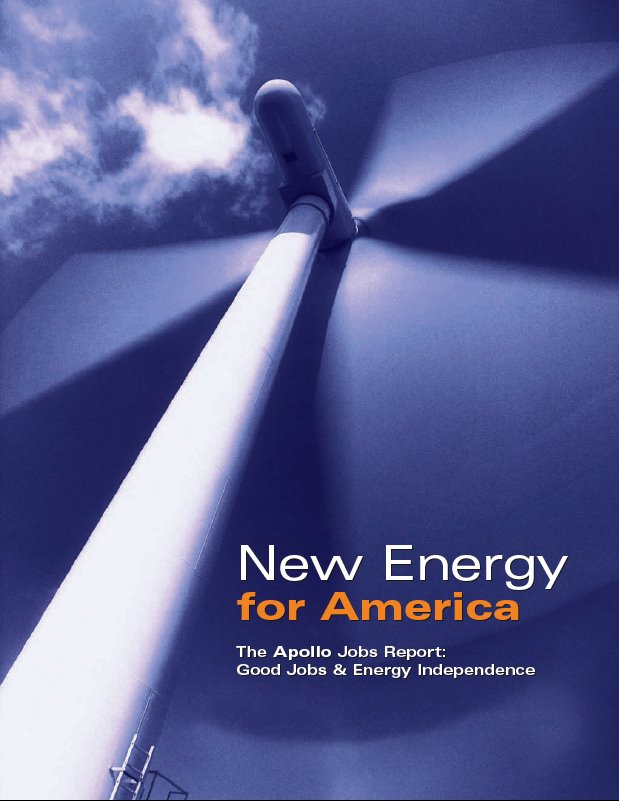
Writer/blogger Joel Makower wrote an article for Clean Edge Technologies that lists a number of regionalized reports on the green employment picture for America. He mentions Apollo Alliance, a highly visible an experienced coalition of labor and environmental groups, in his editorial and their Ten-Point Plan for Good Jobs and Energy Independence (summarized below). Coincidentally, I met Apollo Alliance President Jerome Ringo at the Biomass Coordinating Council meeting at the Power-Gen Conference in Las Vegas last week. As part of the "Apollo Initiative" his group has just published a comprehensive report called New Energy For America: Apollo Jobs Report which identifies job opportunities that will raise America's energy infrastructure while providing a broad range of economic and environmental benefits to the world.

Excerpts from Joel's editorial and each of the two reports are listed below:

----------------------


Clean Technology: Where the Jobs Are
by Joel Makower

Over the past few years, a succession of cities, counties, regions, and states have sought to brand themselves as the "Silicon Valley" of clean technology, or some such moniker. About 18 months ago, Clean Edge prepared a strategy for the city of San Francisco (along with a subsequent progress report) on how to make that city a clean-tech magnet. Other studies have show the potential for clean energy and related technologies to create jobs in Arizona, New Mexico, New York, the Midwest U.S., the Northwest U.S. (PDF), and America as a whole.

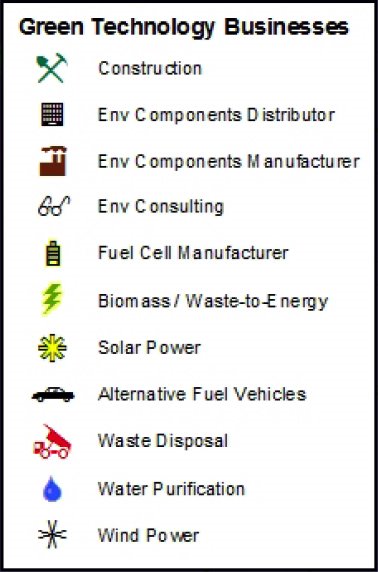
Comes now the City of Angels, heralding "green technology" (in its parlance) as the new job-creation machine for Southern California. According to Jobs in L.A.'s Green Technology Sector, released recently by the Economic Roundtable,

"Los Angeles has unrealized opportunities to become a growing provider of 'green' goods and services, and through this growth to create decent jobs that benefit all residents of the city."


The Los Angeles study is noteworthy for the level of detail it offers, and for the broad occupational territory it covers.

----------------------

Excerpts from the Report, prepared for the Department of Water and Power and the Workforce Investment Board of the City of Los Angeles by the ECONOMIC ROUNDTABLE.

Jobs in L.A.'s Green Technology Sector, 2006

Los Angeles has unrealized opportunities to become a growing provider of “green” goods and services, and through this growth to create decent jobs that benefit all residents of the city. To realize these opportunities Los Angeles has to make up lost ground because, compared to the U.S. economy, it has a below-average share of jobs in every significant green technology industry. Strengths that Los Angeles can build on include:
  • A large diverse economy with significant strengths in many green technology
    industries.
  • Ambitious environmental goals and the need for innovative technologies to
    achieve those goals.
  • A growing consumer market for green products and services.
  • Significant public sector requirements for green products and services.
  • Exceptional intellectual assets in local universities and research institutions.


  • Key Policy Questions
    Can the business establishments that generate green products and services, as well as the manufacturers and service providers that supply them, expand in Los Angeles to create good paying jobs that benefit local residents equitably? The answer to this broad question rests on answers to several smaller questions:
    • How many businesses with environmentally linked activities already operate in
    the L.A. region?
    • Is the green technology sector expanding?
    • How many of their suppliers are locate here?
    • Which suppliers benefit most from growth in this industry?
    • What types of jobs does the green technology sector provide?
    • What types of skills are necessary to work in this sector?
    • Can entry-level workers find job opportunities in this sector?


    ----------------------
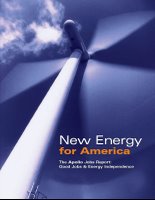

    New Energy For America: Apollo Jobs Report
    from the Apollo Alliance

    The new Apollo Initiative calls for a large scale federal commitment, on the scale of $30 billion/year for 10 years, to achieve a new energy infrastructure that is diversified, environmentally safe, and more efficient. This initiative will turn challenge into opportunity. It will generate good jobs and help US companies capture the green markets of the future. It will reduce dependence on foreign oil. It will rebuild communities, and it will make America an environmental leader again, helping put the world on a path to a sustainable future.

    The new Apollo Initiative will achieve these benefits by pursuing four broad strategies:

  • Diversify our energy sources: making America less dependent on foreign oil, while making energy more secure, more affordable and reliable, and less polluting
  • Invest in the industries of the future: promoting new technology, improving manufacturing processes, and expanding markets for American durable goods.
  • Promote construction of high performance, energy efficient buildings: saving money and rebuilding more livable, more equitable, and healthier environments, and
  • Drive investment in cities and communities: renewing our commitment to building smart public infrastructure for transportation, energy, and other vital public services.


  • Taken together, these strategies combined with national commitment, public investment, meaningful standards, and political will, can bring about enormous benefits for both America and the world.

    And remarkably, by creating jobs and economic growth, this investment will generate sufficient new returns to the US treasury from increased income, to pay for itself over a ten year period.

    The Ten-Point Plan for Good Jobs and Energy Independence

    1. Promote Advanced Technology & Hybrid Cars
    2. Invest In More Efficient Factories
    3. Encourage High Performance Building
    4. Increase Use of Energy Efficient Appliances
    5. Modernize Electrical Infrastructure
    6. Expand Renewable Energy Development
    7. Improve Transportation Options
    8. Reinvest In Smart Urban Growth
    9. Plan For A Hydrogen Future
    10. Preserve Regulatory Protections


    technorati

    April 15, 2006

    ACE's State-by-State Ethanol Handbook


    The American Coalition for Ethanol is a member-based association dedicated to the use and production of ethanol. They have published an online PDF handbook that details the current status of ethanol plants and production throughout the 50 states.


    Welcome to the first edition of the ACE Ethanol Handbook, a state-by-state ethanol reference guide published by the American Coalition for Ethanol (ACE).
    This is the only publication of its kind that provides up-to-date and complete information about U.S. ethanol production, marketing, and use, as well as petroleum refining and marketing on a state-by-state basis. Furthermore, the publication summarizes the public policies and regulations states have adopted affecting ethanol production and use, including retail pump labeling requirements for ethanol-blended fuel, production incentives, and state laws requiring ethanol use.
    We intend this reference guide to serve as a valuable resource for the media, petroleum marketers, policymakers, and others who want to acquire a better understanding of ethanol production and use in the nation.

    Brian Jennings, Executive Vice President
    American Coalition for Ethanol (ACE)


    ------------------------


    ACE's State-by-State Ethanol Handbook

    What’s Inside?
    The U.S. ethanol industry is experiencing rapid change, and as the industry evolves, stakeholders need to have access to the latest and most comprehensive information. The ACE Ethanol Handbook includes state-by-state data on:
    • Gasoline use
    • Ethanol-blended fuel use
    • Total potential ethanol use in E10 blends
    • Specifics of retail labeling requirements for ethanol-blended fuel
    • Ethanol production statistics
    • Laws and regulations relating to ethanol production and use
    • Number of refueling stations supplying E85
    • Total corn production and estimates of corn-for-ethanol
    • Upstream petroleum supply data
    • Major product pipelines for crude and gasoline
    • Downstream petroleum refining and marketing data
    The data contained in this reference guide will be updated on an annual basis.


    technorati

    CA: Bioenergy Action Plan - Final Released

    Just a short note - the California Bioenergy Action Plan has been released in its final form. To see the previous article based on the draft version, click here.


    technorati

    April 13, 2006

    UC/Berkeley Study: Reducing U.S. Oil Dependence

    While perusing the Americans for Energy Independence website, I ran across some research that provides evidence that reducing dependence on fossil fuels for transportation may not be as painful as most of us fear.

    According to a study developed by Professor Daniel M. Kammen and his colleagues at U.C. Berkeley's Renewable and Appropriate Energy Laboratory (RAEL), America could end the need to import fossil fuels from the Persian Gulf region by 2020. Towards Energy Independence in 2025 details immediate and long-term measures, basically increased fuel economy standards that, when applied to the nation's transportation sector and fleet of power plants, could reduce oil imports by more than 30 percent within 20 years.

    Below are excerpts from the editorial posted at the Americans for Energy Independence website. To get a PDF copy of the actual report, click here.

    -----------------------------------

    Achieving Energy Autonomy
    April 5, 2006
    Daniel M. Kammen
    Class of 1935 Distinguished Professor of Energy
    University of California, Berkeley

    What energy independence means to me is the ability to make foreign and domestic policy decisions without being hostage to a resource – in this case oil – addiction, and all of the irrationalities that come with decisions made in the face of an addiction. To date the U. S. has not been able to break that addiction.

    Do we need to go off fossil-fuel cold-turkey? No. As dire as the ever-mounting body of evidence about global warming is, we do have time, several decades in fact, if we begin the transition to a low or no-carbon economy effectively and with the resolve to make it a reality.

    Hybrid cars are now available and plug-in hybrids running on corn-based or, ideally, cellulosic ethanol could get us to the 100 – 200 mile per gallon range with current or near-term technology. We also have the success stories of wind in Denmark and Germany, ethanol in Brazil, and the policy leadership that California, New York and the New England states have shown to point the way to a clean energy future.

    In our report, we examine scenarios to wean the U. S. off of oil by 2025, the super-aggressive path, and by 2050, the less aggressive but still revolutionary future-changing strategy. In both cases we find that the technologies exist today to begin the transition, and that the benefits of embarking on this path are tremendously positive, both locally and globally.


    technorati

    April 10, 2006

    BOOK: A Thousand Barrels a Second by Peter Tertzakian

  • When will we hit the energy break point for oil?

  • Are today's high oil and gas prices part of a routine business cycle, or are there more profound forces at play?

  • Is China's growing thirst for oil sustainable?


  • These and other pertinent questions are the focus of A Thousand Barrels a Second - an excellent read for anyone interested in learning some of the historical lessons of energy development over the past 300 years that can be applied to making investment decisions, managing risks, and finding business opportunities during the emergence of the new energy era.

    Written after the passage of the Energy Act of 2005 and the attempted purchase of Unocal by the Chinese CNOOC - but before President Bush's pronouncement of a national "addiction to oil" during his 2006 State of the Union Address - this book argues for the passage of proactive energy policies by governments and corporations alike while we still have relatively painless options.

    The author, Peter Tertzakian, is a knowledgeable guide for this exposition. His background - as a hands-on oil fieldworker, biophysicist, and as the Chief Energy Economist of a leading private equity firm focused on energy (ARC Financial Corporation) - gives special credibility to his writing.

    Peter never talks over the layman's head. Weaving stories with simply graphed data of the past and present, Tertzakian shows that the oil pressures we are experiencing are similar to the growth, dependency, break points, and rebalancing that always happens as new energy sources and demands develop. The question we need to address is - how long will it take before we enact the legislation and make the investments necessary to minimize the risks and impact of our increasingly expensive "oil addiction"?

    While I would have preferred less emphasis on history and more depth on energy diversity alternatives and policy options, it is a great resource for backfilling one's knowledge of the energy peaks and valleys that preceded the current ones. It is also interesting to see graphed timelines for several countries depicting how they customized their energy mix in response to their natural resources, political strengths, and institutional weaknesses. One glaring omission, IMHO, was an analysis of Brazil - whose farsighted policies in response to the 70's energy crises has enabled the country to develop arguably the most secure and diverse liquid fuel portfolio on the planet.

    Tertzakian does address ethanol and E85 but does not believe that agricultural feedstocks have "sufficient scale to offset near-term demand growth - let alone reversing gasoline demand - to avoid the next break point." Tell that to the Brazilians!

    In researching this book review, I ran across an amusing 5 minute recording of Peter Tertzakian being interviewed by Jon Stewart on The Daily Show.

    This video clip, and the book, are worth a look.


    technorati

    April 5, 2006

    WASHINGTON: Washington State Approves New Biofuels Requirement

    The U.S. Department of Energy Efficiency and Renewable Energy (EERE) website announced the passage of two bills showing Washington State's commitment to biofuels (see below). Said Governor Gregoire:

    “We are moving Washington forward as a leader of a dynamic, 21st century industry,” said Governor Gregoire. “Alternative fuels will help bridge the rural and urban divide in Washington: we can grow these crops in eastern Washington, crush the seeds in places like Moses Lake and ship them across the Cascades for use in busses in Seattle, Tacoma and Olympia.”


    For the "energy freedom program" the state commissioned a comprehensive Biomass Inventory and Bioenergy Assessment - is a detailed accounting of all the biomass and bioenergy potential in the state.
    -------------------

    Washington State Approves New Biofuels Requirement

    Washington Governor Chris Gregoire signed a bill last week that will require fuel suppliers to ensure that ethanol provides 2 percent of the gasoline they sell, and that biodiesel provides 2 percent of the diesel fuel they sell. Senate Bill 6508 sets different timetables for the two biofuels. For ethanol, the 2-percent requirement takes effect on December 1st, 2008. The ethanol requirement could eventually increase to as much as 10 percent of the gasoline sold, so long as sufficient agricultural sources are available in the state and burning the ethanol-rich fuel isn't hurting the state's air quality.

    For biodiesel, the requirement goes into effect on November 30th, 2008, or when in-state agricultural sources can meet the 2-percent requirement, whichever comes first. The biodiesel requirement will increase to 5 percent of the diesel fuel sold once the state has enough agricultural supply and seed-crushing ability to meet a 3-percent requirement. In addition, beginning on June 1st, 2009, all Washington state agencies are required to use diesel blends containing at least 20 percent biodiesel. According to the National Biodiesel Board (NBB), the law is expected to create demand for 20 million gallons of biodiesel annually in the first year.

    Governor Gregoire also recently signed a bill to encourage biomass energy development in the state. House Bill 2939 establishes the energy freedom program to promote research and development in bioenergy and to stimulate the construction of biomass energy facilities in the state. A recent report from the Washington Department of Ecology concluded that underutilized biomass in the state could produce about half of the state's power needs.


    technorati

    April 4, 2006

    CALIFORNIA: Are New Taxes a Viable Option?

    The venture capitalist says YES. The Governor says NO.

    The question is - Are energy consumers willing to pay more at the pump to finance clean energy solutions?

    Yesterday, the Mercury News of the Silicon Valley reported that billionaire Vinod Khosla was bankrolling a new California State initiative to raise $4 Billion through new taxes on oil producers to kickstart development of alternative energy solutions. According to the story: "The revenues could be used for a number of purposes, such as subsidies to buy clean, alternative fuel vehicles or incentives to stimulate alternative fuel production." Excerpts from the story are below.

    Today, the Sacramento Bee reported that Governor Schwarzenegger had rejected a recommended gasoline tax to finance reductions in greenhouse gas emissions originally considered (and then rescinded) by his Climate Action Team before issuing their final CAT Report which was released yesterday. Excerpts from their article below.

    What's your opinion?

    -------------------

    Valley man bankrolls clean-energy initiative
    OIL FIRMS TO PAY TAX TO FUND FUELS, CARS
    By Matthai Chakko Kuruvila
    Mercury News
    Vinod Khosla is bankrolling a ballot initiative that would tax oil producers and subsidize alternative energy -- technologies he invests in as one of the valley's most prominent venture capitalists.

    If California voters embrace the November initiative, the tax on oil companies could generate $4 billion for projects intended to reduce the state's dependence on oil by 25 percent within a decade.

    "We've got a climate crisis on our hands,'' said Khosla, a Republican who is joining Hollywood mogul Stephen Bing, a Democrat, to bankroll the initiative. ``We have an energy crisis on our hands. We have our oil feeding Middle East terrorism, and we need to do something about it. Besides, consumers are paying too much.''


    --------------------

    Bipartisan plans look to cut greenhouse gas
    State could be the first to force industry to reduce emissions linked to global warming.
    By Chris Bowman and Edie Lau
    Sacramento Bee

    California would become the first state to require power plants and other heavy industry to reduce emissions linked to global warming under bipartisan plans released Monday.

    Recommendations from Republican Gov. Arnold Schwarzenegger's environmental advisers and a companion bill introduced by Democratic legislators would require a 10 percent cut in current levels of climate-altering gases by 2020.

    But on Tuesday, Gov. Arnold Schwarzenegger said he hopes to sign legislation this year, and will host discussions in six cities statewide to examine proposals designed to reduce greenhouse gases.

    Schwarzenegger in particular said he would not support a new tax on gasoline, an idea that was once recommended but dropped by the Climate Action Team.

    The proposals, applauded by environmentalists, would require power companies, fuel refineries, oil and gas miners, cement manufacturers and owners of landfills to regularly report emissions of carbon dioxide, the principal "greenhouse gas," so named because of its heat-trapping effect in the atmosphere.

    The governor's advisers recommended a cap-and-trade approach that would allow companies that more than meet the ceilings on global warming pollution to sell emission credits to those that underperform.


    technorati

    April 3, 2006

    Plug-in Partners National PHEV Initiative

    Flex-fuel vehicles can run on gasoline or ethanol or any blend in between. But the liquid fuel MPG is not very good. Hybrid cars can extend the MPG of an automobile by substituting electricity generated within the car in place of liquid fuel - but you need to run the car on fuel to build up the charge. Plug-in cars run on electricity alone without fuel and can be recharged overnight - but their range is not very good.

    Why not build and buy Vehicles that are Hybrids that you can Plug-in for an Electric charge, but that are flex-fuel compatible? The consumer can then choose between the greatest range of options. That's the vision of a group called Plug-In Partners and they are mounting a National Campaign to get automobile manufacturers to build the PHEV cars. Read their Campaign Overview below.

    -----------------

    Plug-In Partners National PHEV Initiative - Campaign Overview

    Plug-In Partners is a national grass-roots initiative to demonstrate to automakers that a market for flexible-fuel Plug-in Hybrid Electric Vehicles (PHEV) exists today.

    Our National Campaign will demonstrate the viability of this market by:
    • Garnering support in the form of online petitions and endorsements by cities across the country
    • Procuring “soft” fleet orders
    • Developing rebates and incentives

    Who Are “Plug-In Partners”?

    The partners envisioned in this campaign are local and state governments, utilities, and environmental, consumer and business organizations. These entities can Become a Plug-In Partner and join the Founding Plug-In Partners in support of the national campaign.

    Online Petitions

    All Plug-In Partners are invited to participate in petition efforts. Petitions are a way for individual citizens and organizations without fleets to make their voice heard in demonstrating a PHEV market among individual consumers. The national campaign will track signatures accumulated from programs across the country through reporting to the Plug-In Partners web site. A template petition form is provided in the Plug-In Partners Packet.

    “Soft” Orders From Government and Business
    A template “soft” fleet order form is provided in the Plug-In Partners Packet. The Plug-In Partners National Campaign will track vehicle commitments through a Reporting option, so to be added to this web site. This will allow us to present automakers with a “soft” order for sedans, vans, SUVs and other vehicles by specific governmental and business entities. Those making fleet order will agree to strongly consider purchasing flexible fuel plug-in hybrids if they are manufactured. There is no financial commitment involved in making a "soft" fleet order.

    Endorsements
    Endorsements also lend a voice by demonstrating organizational support for the commercial production of PHEVs and promoting plug-ins to its membership.
    An endorsement could be several forms:

    • City Council or County Court resolutions
    • Legislative resolutions
    • Statements of support from local or national environmental, consumer or other groups

    Endorsements will be reported to this web site, where a list will be maintained along with membership totals of the endorsing organizations. To date, the production of flexible fuel PHEVs is widely supported by a large number of national groups—environmental and consumer— as well as groups focused on the national security and economic viability of our country.


    technorati

    CALIFORNIA: Cal/EPA Climate Action Team Report Released

    Energy, waste, and emissions are inextricably linked in their impact on our quality of life. The executive agencies of California realize this - unfortunately, implementing solutions through the partisan legislature is another matter. Still, they can't complain that they didn't have enough information to act.

    In a comprehensive report to the legislature, replete with supporting addenda and appendices, the Climate Action Team of the California Environmental Protection Agency (Cal/EPA) provides
    • an evaluation of the impacts of climate change,
    • recommendations for reducing greenhouse gas emissions
    • market-driven and implementation options to pursue
    • economic and environmental impacts

    Below is the entirety of Cal/EPA press release concerning the report:


    ------------------

    Climate Action Team Report: Governor Schwarzenegger’s
    Climate Change Goals Are Achievable, Benefit the Economy

    April 3, 2006

    (SACRAMENTO) – Governor Arnold Schwarzenegger’s goals for reducing greenhouse gas emissions are achievable and beneficial to California’s economy, according to a report by the California Climate Action Team (CAT). The report, submitted to the Governor and Legislature today, recommends a wide range of measures to meet the Governor’s goals. Combined, the measures will reduce greenhouse gas emissions in California by approximately 30% by 2020.

    “Last June, Governor Schwarzenegger set ambitious greenhouse gas emission targets that made California a world leader in combating climate change,” said former California Environmental Protection Agency (Cal/EPA) Secretary Alan C. Lloyd, who led the CAT. “While some said the goals were too ambitious, this report concludes the Governor’s goals can be achieved while saving money and creating jobs.”


    The CAT Report recommends 46 specific strategies to reduce greenhouse gas emissions in California, including implementation of the California Solar Initiative, development of alternative fuels, forest conservation measures, and intelligent transportation systems. In addition, the report includes nine key recommendations to help ensure the Governor’s targets are met, including:
  • A multi-sector, market-based program which considers trading, emission credits, auction and offsets

  • Mandatory greenhouse gas emission reporting from the largest sources, including oil and gas extraction facilities, oil refineries, power plants, cement manufacturing plants, and solid waste landfills

  • Require new electricity generated for use in California to come from sources with climate change emissions equivalent to or less than new combined cycle natural gas power plants

  • Require all utilities, whether publicly or privately owned, to meet the state’s energy efficiency goals and Renewable Portfolio Standard

  • A coordinated investment strategy to develop technologies in California that will reduce greenhouse gas emissions

    The report also includes a preliminary macroeconomic analysis of the recommended strategies. This analysis, conducted using a model developed the University of California, Berkeley, predicted a net increase of 83,000 jobs and $4 billion in income by 2020, due primarily to reduced energy costs.

    In June 2005, Governor Schwarzenegger signed Executive Order S-3-05, establishing the most ambitious greenhouse gas emission reduction targets of any state or nation in the world. The Order directed Cal/EPA lead a multi-agency effort to meet the targets, and to report every two years on the progress toward meeting the targets.


    technorati

  • CA Bioenergy Action Plan - NEVC Recommendations

    The California Energy Commission has developed a Bioenergy Action Plan for the state to assist in implementing the recommendations of the 2005 Integrated Energy Policy Report.

    On behalf of the National Ethanol Vehicle Coalition (NEVC), Gary Herwick has submitted comments on the plan and suggests more specific actions and targets that might be undertaken to advance the use of renewable transportation fuels. Below are some of his comments.

    ---------------------------


    Recommendations for a Bioenergy Action Plan for California
    By Gary Herwick, Transportation Fuels Consulting Inc.
    On behalf of Phillip Lampert, Executive Director, National Ethanol Vehicle Coalition

    The NEVC wishes to express its support for the Draft Consultant Report and its conclusions. While the report represents a good first step in the process of defining a bioenergy action plan, more specific actions and targets are needed. The following comments provide a basis for NEVC’s support of California’s bioenergy plan, and offer several suggested additions to the Action Plan to the Governor on March 31, 2006.

    The 2005 Integrated Energy Policy Report documents California’s concerns about petroleum fuel supply and price issues, and recommends aggressive targets for alternative fuel use that go far beyond national policy goals. Governor Schwarzenegger’s response to the report is an indication of the State’s resolve to address these issues. As a result, California is uniquely positioned to take a leadership role in developing a rational and data driven alternative fuel policy to guide other states and future national energy policy.

    Ethanol and especially E85 represent perhaps the best near term alternative to address petroleum fuel use concerns. A growing body of research indicates that in 15 to 20 years, 30 percent of national gasoline consumption could be supplied by ethanol on an energy equivalent basis. No other alternative fuel offers the supply potential of ethanol in the near term. With only minor modifications, E85 can use the existing liquid hydrocarbon infrastructure. The nearly 5 million flexible fuel vehicles on US roads today make E85 an attractive alternative to increase the use of ethanol as soon as the infrastructure can be built. California is estimated to have approximately 350,000 FFVs that can use any combination of E85 and gasoline.

    In addition to offering the best near term alternative to reducing petroleum fuel consumption, ethanol is one of the most effective ways to reduce greenhouse gases from transportation according to research and analysis by the US Department of Energy Argonne National Laboratory. E85 using ethanol from corn reduces greenhouse gas emissions by more than 20 percent. When ethanol is made from cellulosic biomass sources, greenhouse gases can be reduced 70 percent or more.

    Although almost no public E85 infrastructure exists in California, the successful experiences of several Midwestern states can provide data on the practical level of infrastructure and retail fuel price incentives. NEVC has access to nominal financial support for a limited number of new E85 dispensing stations from US DOE grants. Based on Midwestern state experience, and depending on the price of unleaded regular gasoline (ULR), E85 should be priced between 40 cents per gallon less than ULR and “energy equivalent” (25 percent less than ULR). For example, if ULR is $2.50 per gallon, E85 should be priced at $1.88 to $2.10 per gallon to be attractive to consumers. E85 suppliers have indicated that in 2005 it was possible to be profitable at a discount of 40 cents per gallon. Successful pricing above energy equivalence will be determined by consumers’ willingness to pay a premium for the environmental benefits of E85 compared to gasoline.

    Various states have experience with incentive funding from excise and sales tax programs as well. For example, Illinois has eliminated the state sales on E85; North Dakota has provided a 20 cent exemption for E85 from the states 21 cent per gallon motor fuel tax; Minnesota taxes E85 on a gasoline gallon equivalent basis with ULR resulting in a reduction of 27% from the state excise tax.

    The Consultant Report also touches on the need to mitigate regulatory conflicts and barriers to achieving the IEPR goals without sacrificing environmental benefits. In California, the cost and time associated with certification to “Stage II” vapor recovery requirements has been a deterrent to the development of E85 infrastructure. Recently, the Air Resources Board has provided some helpful assistance with these requirements. However, more is needed to support an aggressive ramp up of E85 dispensing stations to help achieve the time and fuel volume recommendations in the IEPR.

    NEVC appreciates the opportunity to provide comments on California’s Draft Bioenergy Action Plan, and looks forward to working with the Energy Commission, the Air Resources Board and other agencies and groups in the further refinement and implementation of the plan. We look forward to providing support on technical and policy issues related to ethanol and E85, possible limited financial support from US DOE grants and public education and marketing support.


    technorati

    April 2, 2006

    FLORIDA: Farm to Fuel Program

    Florida is a state rich in cash crops, timber, and agricultural waste. A recent study showed Florida ranked first in the nation in the availability of biomass production area because of its farms, forests and climate.

    In addition to a desire to participate in reducing the country's dependence on oil, Florida is interested in technologies that will enable farmers to turn a profit from the conversion of crops to green electricity, ethanol, and biodiesel - even during harsh winters that would ruin a year's harvest. According to Florida's Department of Agriculture and Consumer Services Commissioner Charles Bronson:

    "Right now, in South Florida, there is a corn crop that was destroyed by Hurricane Wilma," he said, referring to the storm that hit the southern part of the state last fall.

    "If we had a biofuel production facility, that corn could be picked up off the ground and used to produce ethanol and the farmer wouldn't lose all his money," Bronson said.


    His department is implementing a "Farm to Fuel" program to promote their vision to the farming community. Below are excerpts from the department's website.

    -------------------

    Farm To Fuel

    Florida Agriculture and Consumer Services Commissioner Charles H. Bronson is assisting Florida farmers and ranchers in producing bio-fuel crops to help reduce the nation’s dependency on foreign oil.

    The goal of the nation’s agriculture industry is to produce 25 percent of the energy consumed in the U.S. by the year 2025 -- a program known as “25/25.”

    Bronson believes that Florida can be a leader in the effort of producing energy from crops and timber because of the vast amount of farm acreage in the state and its mild climate, which permits crops to be grown virtually year round.

    On January 12, 2006, more than 50 agricultural producers, researchers and those already in the business of producing commercial fuel-grade ethanol and bio-diesel crops attended the Commissioner’s ambitious “Farm to Fuel” meeting in Tallahassee. Powerpoint presentations from the meeting can be viewed by clicking on the links below.

    In the coming months, Commissioner Bronson will be working with Governor Bush and the Florida Legislature, Florida’s Congressional Delegation, and colleagues from other states to develop and implement strategies to assist farmers and producers of bio-fuels in Florida.


    technorati

    March 31, 2006

    March 2006 Digest

    Here is a Digest of articles posted on the BioConversion Blog during the month of March, 2006.

    General Topics--------------
    • DOE Supports Biorefinery Construction
    • Governors Support Ethanol from Biomass
    • Virgin's Branson Talks Money for Cellulosic Ethanol
    • CLEAN EDGE: Global Biofuels Market to Grow 3.3x to $52.5 Billion by 2015
    • Americans Overwhelmingly Support Renewable Fuels Legislation
    • The Benefits of BioEnergy
    • BIO Panel supports Cellulosic Ethanol
    • States with Renewable Fuels Standard Initiatives are Increasing
    • ADM CEO - Biofuels to shift agriculture markets
    • Corporations Collaborate to Market Ethanol
    • U.S. Senate Hearing: The Hidden Cost of Oil

    Oil Producers--------------
    • Ethanol Industry Braces for Growing Pains

    Around the Nation --------------

    California
    • CALIFORNIA: Recommendations for a BioEnergy Action Plan
    • CALIFORNIA: Extending Waste Recycling
    • CALIFORNIA: Los Angeles Waste-to-Energy Plan Passed Unanimously
    • BioEnergy Action Plan is not a "California Dream"
    • St. Patrick's Day was "green" indeed for Wisconsin and Los Angeles
    • Environmental Impacts of Conversion Technologies using MSW Feedstocks

    New Jersey
    • Tires-to-Ethanol Facility Planned for New Jersey

    Ohio
    • OHIO: Governor's BioFuels Energy Plan

    Wisconsin
    • St. Patrick's Day was "green" indeed for Wisconsin and Los Angeles

    Environmental Impacts of Conversion Technologies using MSW Feedstocks

    A highly anticipated research report has been delivered to the California Integrated Waste Management Board. Prepared by the highly respected UC/Riverside College of Engineering - Center for Environmental Research & Technology (CE-CERT), it was commissioned specifically to resolve questions about the emissions of conversion technologies that use municipal solid waste (MSW) as feedstock for thermochemical conversion technologies. Several sites were used for the testing: IES' pyrolysis facility in Romoland, California; BRI Energy's Consutech gasification pilot plant in Fayetteville, Arkansas; and IET Technologies' Plasma Enhanced Melter (PEM™) system in Richland, WA.

    This report substantiates the claim that the emissions of these conversion technologies fall well below the permit limits set by the Southern California Air Quality Management District as well as US EPA and German limits (which are usually more stringent). CE-CERT also included additional analysis of the "Indirect Impacts of Conversion Technologies" - i.e., the energy and environmental savings that result from potential truck trip reductions by diverting landfill deliveries to localized conversion facilities.

    The conclusion of the report is republished below:

    ---------------------------

    Evaluation of Environmental Impacts of Thermochemical Conversion Technologies Using Municipal Solid Waste Feedstocks
    -Summary Report-
    Prepared for: California Integrated Waste Management Board.
    March 29, 2006
    University of California, Riverside
    College of Engineering-Center for Environmental Research and Technology

    Conclusion

    Thermochemical conversion technologies are technically viable options for the conversion of post-recycled municipal solid waste (MSW) and offer betters solutions to landfilling and transformation. This conclusion is based on the peer-reviewed information from the Evaluation of Conversion Technology Processes and Product report prepared by UC Riverside, the Life Cycle and Market Impact Assessment of Noncombustion Waste Conversion Technologies prepared by RTI International, the independent evaluation of emissions from three US facilities, and reports from other organizations. Thermochemical conversion technologies possess unique characteristics that have potential to substantially reduce the amount of material that is ultimately landfilled.

    While no one technology is suitable for all waste streams, no single waste management practice, be it landfilling, recycling, composting, or conversion, can handle the full array of waste sources. Each can form part of an integrated waste management system, which is based on the idea of an overall approach for the management of waste streams, recyclable streams, treatment technologies, and markets.

    AB 2770 requires the CIWMB to identify the cleanest, least polluting technologies. Biological technologies and thermal technologies may each have advantages and disadvantages when compared to each other. However, the studies contain no scientific basis to classify one technology class as less favorable based solely on temperature ranges or the resulting product, which is subsequently combusted. If these were the sole criteria, then secondary smelting of aluminum and glass recycling would be looked at less favorably because of their high temperatures, which lead to dioxin formation. In addition, electricity production from biogas derived from anaerobic digestion or methane from landfills would also be looked at less favorably because the gas is combusted.

    Independently-verified emissions test results show that thermochemical conversion technologies are able to meet existing local, state, and federal emissions limits. Today, there are advanced air pollution control strategies and equipment that were not available even ten years ago. It is obvious from the results that emissions control of thermochemical conversion processes is no longer a technical barrier. That said, it is recommended that facilities and agencies provide both continuous and periodic monitoring to keep the public informed and ensure ongoing compliance.

    Thermochemical technologies can process a wider variety of feedstocks and can have a greater effect on landfill reduction. Thermochemical technologies can also produce a larger variety of products, which can displace the need for non-renewable traditional sources of energy and fuels. Other indirect effects include eliminating diesel truck trips and reducing landfill gas emissions.


    technorati

    March 30, 2006

    U.S. Senate Hearing: The Hidden Cost of Oil

    There are many "hidden costs" that are associated with fossil fuels. However, our slavish dependence on oil for gasoline creates, many would contend, unacceptably high risks for American foreign policy. So the U.S. Senate Committee on Foreign Relations conducted a hearing on March 30, 2006 to consider what those risks are and what "price" we pay for them.

    A previous article of this blog deals with The Military Surcharge for Oil. The hearing dealt more specifically with:

  • the consequences of disruption of the oil supply either by accident or through intentional acts due to the political instability of the foreign sources of oil

  • the "social cost of carbon" - that is, the indeterminable costs that extraction, transport, refining, distribution, and consumption have in terms of damage to air quality and the potential for abrupt climate change due to greenhouse gas emissions.

    Below are excerpts from the opening statement by Committee Chairman Richard G. Lugar (R-Indiana).

    -------------------


    The Hidden Cost of Oil
    Senate Committee on Foreign Relations, Chairman Richard G. Lugar
    March 30, 2006

    With less than five percent of the world’s population, the United States consumes 25 percent of its oil. If oil prices remain around $60 a barrel through 2006, we will spend approximately $320 billion on oil imports this year. Most of the world’s oil is concentrated in places that are either hostile to American interests or vulnerable to political upheaval and terrorism. More than three-quarters of the world’s oil reserves are controlled by national oil companies. And within 25 years, the world will need 50 percent more energy than it does now.

    These basic facts demand a major reorientation in U.S. policy aimed at reducing U.S. dependence onfossil fuels. Our goals must be to mitigate the short term costs of our dependence on oil, while pursuing energy alternatives that would reduce the international leverage of petro-superpowers, improve environmental quality, cushion potential oil price shocks, stimulate new high-tech energy industries, and ground the American economy on energy sources that will neither run out nor be cut off by a foreign supplier.

    There are at least six basic threats associated with our dependence on fossil fuels.

  • First, oil supplies are vulnerable to natural disasters, wars, and terrorist attacks that can produce price shocks and threats to national economies. This threat results in price instability and forces us to spend billions of dollars defending critical fossil fuel infrastructure and choke points.

  • Second, over time, finite fossil fuel reserves will be stressed by the rising demand caused by explosive economic growth in China, India, and many other nations. This is creating unprecedented competition for oil and natural gas supplies that drives up prices and widens our trade deficit. Maintaining fossil fuel supplies will require trillions in new investment – much of it in unpredictable countries that are not governed by democracy and market forces.

  • Third, energy rich nations are using oil and natural gas supplies as a weapon against energy poor nations. This threatens the international economy and increases the risk of regional instability and military conflict.

  • Fourth, even when energy is not used overtly as a weapon, energy imbalances are allowing oil-rich regimes to avoid democratic reforms and insulate themselves from international pressure and the aspirations of their own people. In many oil rich nations, oil wealth has done little for the people, while ensuring less reform, less democracy, fewer free market activities, and more enrichment of elites. It also means that the United States and other nations are transferring billions of dollars each year to some of the least accountable regimes in the world. Some of these governments are using this money to invest abroad in terrorism, instability, or demagogic appeals to anti-Western populism.

  • Fifth, reliance on fossil fuels contributes to environmental problems, including climate change. In the long run, this could bring drought, famine, disease, and mass migration, all of which could lead to conflict and instability.

  • Sixth, our efforts to facilitate international development are often undercut by the high costs of energy. Developing countries are more dependent on imported oil, their industries are more energy intensive, and they use energy less efficiently. Without a diversification of energy supplies that emphasizes environmentally friendly options that are abundant in most developing countries, the national incomes of energy poor nations will remain depressed, with negative consequences for stability, development, disease eradication, and terrorism.


  • Each of these threats comes with short and long term costs. As a result, the price of oil dependence for the United States is far greater than the price consumers pay at the pump. Some costs, particularly those affecting the environment and public health, are attributable to oil no matter its source. Others, such as the costs of military resources dedicated to preserving oil supplies, stem from our dependence on oil imports. But each dollar we spend on securing oil fields, borrowing money to pay for oil imports, or cleaning up an oil spill is an opportunity missed to invest in a sustainable energy future.


    technorati