April 3, 2006

Plug-in Partners National PHEV Initiative

Flex-fuel vehicles can run on gasoline or ethanol or any blend in between. But the liquid fuel MPG is not very good. Hybrid cars can extend the MPG of an automobile by substituting electricity generated within the car in place of liquid fuel - but you need to run the car on fuel to build up the charge. Plug-in cars run on electricity alone without fuel and can be recharged overnight - but their range is not very good.

Why not build and buy Vehicles that are Hybrids that you can Plug-in for an Electric charge, but that are flex-fuel compatible? The consumer can then choose between the greatest range of options. That's the vision of a group called Plug-In Partners and they are mounting a National Campaign to get automobile manufacturers to build the PHEV cars. Read their Campaign Overview below.

-----------------

Plug-In Partners National PHEV Initiative - Campaign Overview

Plug-In Partners is a national grass-roots initiative to demonstrate to automakers that a market for flexible-fuel Plug-in Hybrid Electric Vehicles (PHEV) exists today.


Our National Campaign will demonstrate the viability of this market by:
• Garnering support in the form of online petitions and endorsements by cities across the country
• Procuring “soft” fleet orders
• Developing rebates and incentives

Who Are “Plug-In Partners”?

The partners envisioned in this campaign are local and state governments, utilities, and environmental, consumer and business organizations. These entities can Become a Plug-In Partner and join the Founding Plug-In Partners in support of the national campaign.

Online Petitions

All Plug-In Partners are invited to participate in petition efforts. Petitions are a way for individual citizens and organizations without fleets to make their voice heard in demonstrating a PHEV market among individual consumers. The national campaign will track signatures accumulated from programs across the country through reporting to the Plug-In Partners web site. A template petition form is provided in the Plug-In Partners Packet.

“Soft” Orders From Government and Business
A template “soft” fleet order form is provided in the Plug-In Partners Packet. The Plug-In Partners National Campaign will track vehicle commitments through a Reporting option, so to be added to this web site. This will allow us to present automakers with a “soft” order for sedans, vans, SUVs and other vehicles by specific governmental and business entities. Those making fleet order will agree to strongly consider purchasing flexible fuel plug-in hybrids if they are manufactured. There is no financial commitment involved in making a "soft" fleet order.

Endorsements
Endorsements also lend a voice by demonstrating organizational support for the commercial production of PHEVs and promoting plug-ins to its membership.
An endorsement could be several forms:

• City Council or County Court resolutions
• Legislative resolutions
• Statements of support from local or national environmental, consumer or other groups

Endorsements will be reported to this web site, where a list will be maintained along with membership totals of the endorsing organizations. To date, the production of flexible fuel PHEVs is widely supported by a large number of national groups—environmental and consumer— as well as groups focused on the national security and economic viability of our country.


technorati

CALIFORNIA: Cal/EPA Climate Action Team Report Released

Energy, waste, and emissions are inextricably linked in their impact on our quality of life. The executive agencies of California realize this - unfortunately, implementing solutions through the partisan legislature is another matter. Still, they can't complain that they didn't have enough information to act.

In a comprehensive report to the legislature, replete with supporting addenda and appendices, the Climate Action Team of the California Environmental Protection Agency (Cal/EPA) provides
• an evaluation of the impacts of climate change,
• recommendations for reducing greenhouse gas emissions
• market-driven and implementation options to pursue
• economic and environmental impacts

Below is the entirety of Cal/EPA press release concerning the report:


------------------

Climate Action Team Report: Governor Schwarzenegger’s
Climate Change Goals Are Achievable, Benefit the Economy

April 3, 2006

(SACRAMENTO) – Governor Arnold Schwarzenegger’s goals for reducing greenhouse gas emissions are achievable and beneficial to California’s economy, according to a report by the California Climate Action Team (CAT). The report, submitted to the Governor and Legislature today, recommends a wide range of measures to meet the Governor’s goals. Combined, the measures will reduce greenhouse gas emissions in California by approximately 30% by 2020.

“Last June, Governor Schwarzenegger set ambitious greenhouse gas emission targets that made California a world leader in combating climate change,” said former California Environmental Protection Agency (Cal/EPA) Secretary Alan C. Lloyd, who led the CAT. “While some said the goals were too ambitious, this report concludes the Governor’s goals can be achieved while saving money and creating jobs.”


The CAT Report recommends 46 specific strategies to reduce greenhouse gas emissions in California, including implementation of the California Solar Initiative, development of alternative fuels, forest conservation measures, and intelligent transportation systems. In addition, the report includes nine key recommendations to help ensure the Governor’s targets are met, including:
  • A multi-sector, market-based program which considers trading, emission credits, auction and offsets

  • Mandatory greenhouse gas emission reporting from the largest sources, including oil and gas extraction facilities, oil refineries, power plants, cement manufacturing plants, and solid waste landfills

  • Require new electricity generated for use in California to come from sources with climate change emissions equivalent to or less than new combined cycle natural gas power plants

  • Require all utilities, whether publicly or privately owned, to meet the state’s energy efficiency goals and Renewable Portfolio Standard

  • A coordinated investment strategy to develop technologies in California that will reduce greenhouse gas emissions

    The report also includes a preliminary macroeconomic analysis of the recommended strategies. This analysis, conducted using a model developed the University of California, Berkeley, predicted a net increase of 83,000 jobs and $4 billion in income by 2020, due primarily to reduced energy costs.

    In June 2005, Governor Schwarzenegger signed Executive Order S-3-05, establishing the most ambitious greenhouse gas emission reduction targets of any state or nation in the world. The Order directed Cal/EPA lead a multi-agency effort to meet the targets, and to report every two years on the progress toward meeting the targets.


    technorati

  • CA Bioenergy Action Plan - NEVC Recommendations

    The California Energy Commission has developed a Bioenergy Action Plan for the state to assist in implementing the recommendations of the 2005 Integrated Energy Policy Report.

    On behalf of the National Ethanol Vehicle Coalition (NEVC), Gary Herwick has submitted comments on the plan and suggests more specific actions and targets that might be undertaken to advance the use of renewable transportation fuels. Below are some of his comments.

    ---------------------------


    Recommendations for a Bioenergy Action Plan for California
    By Gary Herwick, Transportation Fuels Consulting Inc.
    On behalf of Phillip Lampert, Executive Director, National Ethanol Vehicle Coalition

    The NEVC wishes to express its support for the Draft Consultant Report and its conclusions. While the report represents a good first step in the process of defining a bioenergy action plan, more specific actions and targets are needed. The following comments provide a basis for NEVC’s support of California’s bioenergy plan, and offer several suggested additions to the Action Plan to the Governor on March 31, 2006.

    The 2005 Integrated Energy Policy Report documents California’s concerns about petroleum fuel supply and price issues, and recommends aggressive targets for alternative fuel use that go far beyond national policy goals. Governor Schwarzenegger’s response to the report is an indication of the State’s resolve to address these issues. As a result, California is uniquely positioned to take a leadership role in developing a rational and data driven alternative fuel policy to guide other states and future national energy policy.

    Ethanol and especially E85 represent perhaps the best near term alternative to address petroleum fuel use concerns. A growing body of research indicates that in 15 to 20 years, 30 percent of national gasoline consumption could be supplied by ethanol on an energy equivalent basis. No other alternative fuel offers the supply potential of ethanol in the near term. With only minor modifications, E85 can use the existing liquid hydrocarbon infrastructure. The nearly 5 million flexible fuel vehicles on US roads today make E85 an attractive alternative to increase the use of ethanol as soon as the infrastructure can be built. California is estimated to have approximately 350,000 FFVs that can use any combination of E85 and gasoline.

    In addition to offering the best near term alternative to reducing petroleum fuel consumption, ethanol is one of the most effective ways to reduce greenhouse gases from transportation according to research and analysis by the US Department of Energy Argonne National Laboratory. E85 using ethanol from corn reduces greenhouse gas emissions by more than 20 percent. When ethanol is made from cellulosic biomass sources, greenhouse gases can be reduced 70 percent or more.

    Although almost no public E85 infrastructure exists in California, the successful experiences of several Midwestern states can provide data on the practical level of infrastructure and retail fuel price incentives. NEVC has access to nominal financial support for a limited number of new E85 dispensing stations from US DOE grants. Based on Midwestern state experience, and depending on the price of unleaded regular gasoline (ULR), E85 should be priced between 40 cents per gallon less than ULR and “energy equivalent” (25 percent less than ULR). For example, if ULR is $2.50 per gallon, E85 should be priced at $1.88 to $2.10 per gallon to be attractive to consumers. E85 suppliers have indicated that in 2005 it was possible to be profitable at a discount of 40 cents per gallon. Successful pricing above energy equivalence will be determined by consumers’ willingness to pay a premium for the environmental benefits of E85 compared to gasoline.

    Various states have experience with incentive funding from excise and sales tax programs as well. For example, Illinois has eliminated the state sales on E85; North Dakota has provided a 20 cent exemption for E85 from the states 21 cent per gallon motor fuel tax; Minnesota taxes E85 on a gasoline gallon equivalent basis with ULR resulting in a reduction of 27% from the state excise tax.

    The Consultant Report also touches on the need to mitigate regulatory conflicts and barriers to achieving the IEPR goals without sacrificing environmental benefits. In California, the cost and time associated with certification to “Stage II” vapor recovery requirements has been a deterrent to the development of E85 infrastructure. Recently, the Air Resources Board has provided some helpful assistance with these requirements. However, more is needed to support an aggressive ramp up of E85 dispensing stations to help achieve the time and fuel volume recommendations in the IEPR.

    NEVC appreciates the opportunity to provide comments on California’s Draft Bioenergy Action Plan, and looks forward to working with the Energy Commission, the Air Resources Board and other agencies and groups in the further refinement and implementation of the plan. We look forward to providing support on technical and policy issues related to ethanol and E85, possible limited financial support from US DOE grants and public education and marketing support.


    technorati

    April 2, 2006

    FLORIDA: Farm to Fuel Program

    Florida is a state rich in cash crops, timber, and agricultural waste. A recent study showed Florida ranked first in the nation in the availability of biomass production area because of its farms, forests and climate.

    In addition to a desire to participate in reducing the country's dependence on oil, Florida is interested in technologies that will enable farmers to turn a profit from the conversion of crops to green electricity, ethanol, and biodiesel - even during harsh winters that would ruin a year's harvest. According to Florida's Department of Agriculture and Consumer Services Commissioner Charles Bronson:

    "Right now, in South Florida, there is a corn crop that was destroyed by Hurricane Wilma," he said, referring to the storm that hit the southern part of the state last fall.

    "If we had a biofuel production facility, that corn could be picked up off the ground and used to produce ethanol and the farmer wouldn't lose all his money," Bronson said.


    His department is implementing a "Farm to Fuel" program to promote their vision to the farming community. Below are excerpts from the department's website.

    -------------------

    Farm To Fuel

    Florida Agriculture and Consumer Services Commissioner Charles H. Bronson is assisting Florida farmers and ranchers in producing bio-fuel crops to help reduce the nation’s dependency on foreign oil.

    The goal of the nation’s agriculture industry is to produce 25 percent of the energy consumed in the U.S. by the year 2025 -- a program known as “25/25.”

    Bronson believes that Florida can be a leader in the effort of producing energy from crops and timber because of the vast amount of farm acreage in the state and its mild climate, which permits crops to be grown virtually year round.

    On January 12, 2006, more than 50 agricultural producers, researchers and those already in the business of producing commercial fuel-grade ethanol and bio-diesel crops attended the Commissioner’s ambitious “Farm to Fuel” meeting in Tallahassee. Powerpoint presentations from the meeting can be viewed by clicking on the links below.

    In the coming months, Commissioner Bronson will be working with Governor Bush and the Florida Legislature, Florida’s Congressional Delegation, and colleagues from other states to develop and implement strategies to assist farmers and producers of bio-fuels in Florida.


    technorati

    March 31, 2006

    March 2006 Digest

    Here is a Digest of articles posted on the BioConversion Blog during the month of March, 2006.

    General Topics--------------
    • DOE Supports Biorefinery Construction
    • Governors Support Ethanol from Biomass
    • Virgin's Branson Talks Money for Cellulosic Ethanol
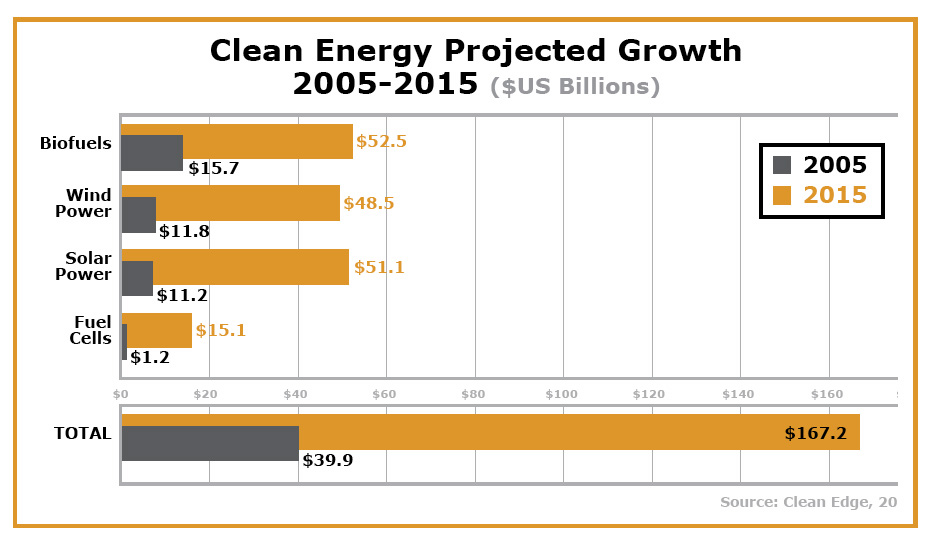
    • CLEAN EDGE: Global Biofuels Market to Grow 3.3x to $52.5 Billion by 2015
    • Americans Overwhelmingly Support Renewable Fuels Legislation
    • The Benefits of BioEnergy
    • BIO Panel supports Cellulosic Ethanol
    • States with Renewable Fuels Standard Initiatives are Increasing
    • ADM CEO - Biofuels to shift agriculture markets
    • Corporations Collaborate to Market Ethanol
    • U.S. Senate Hearing: The Hidden Cost of Oil

    Oil Producers--------------
    • Ethanol Industry Braces for Growing Pains

    Around the Nation --------------

    California
    • CALIFORNIA: Recommendations for a BioEnergy Action Plan
    • CALIFORNIA: Extending Waste Recycling
    • CALIFORNIA: Los Angeles Waste-to-Energy Plan Passed Unanimously
    • BioEnergy Action Plan is not a "California Dream"
    • St. Patrick's Day was "green" indeed for Wisconsin and Los Angeles
    • Environmental Impacts of Conversion Technologies using MSW Feedstocks

    New Jersey
    • Tires-to-Ethanol Facility Planned for New Jersey

    Ohio
    • OHIO: Governor's BioFuels Energy Plan

    Wisconsin
    • St. Patrick's Day was "green" indeed for Wisconsin and Los Angeles

    Environmental Impacts of Conversion Technologies using MSW Feedstocks

    A highly anticipated research report has been delivered to the California Integrated Waste Management Board. Prepared by the highly respected UC/Riverside College of Engineering - Center for Environmental Research & Technology (CE-CERT), it was commissioned specifically to resolve questions about the emissions of conversion technologies that use municipal solid waste (MSW) as feedstock for thermochemical conversion technologies. Several sites were used for the testing: IES' pyrolysis facility in Romoland, California; BRI Energy's Consutech gasification pilot plant in Fayetteville, Arkansas; and IET Technologies' Plasma Enhanced Melter (PEM™) system in Richland, WA.

    This report substantiates the claim that the emissions of these conversion technologies fall well below the permit limits set by the Southern California Air Quality Management District as well as US EPA and German limits (which are usually more stringent). CE-CERT also included additional analysis of the "Indirect Impacts of Conversion Technologies" - i.e., the energy and environmental savings that result from potential truck trip reductions by diverting landfill deliveries to localized conversion facilities.

    The conclusion of the report is republished below:

    ---------------------------

    Evaluation of Environmental Impacts of Thermochemical Conversion Technologies Using Municipal Solid Waste Feedstocks
    -Summary Report-
    Prepared for: California Integrated Waste Management Board.
    March 29, 2006
    University of California, Riverside
    College of Engineering-Center for Environmental Research and Technology

    Conclusion

    Thermochemical conversion technologies are technically viable options for the conversion of post-recycled municipal solid waste (MSW) and offer betters solutions to landfilling and transformation. This conclusion is based on the peer-reviewed information from the Evaluation of Conversion Technology Processes and Product report prepared by UC Riverside, the Life Cycle and Market Impact Assessment of Noncombustion Waste Conversion Technologies prepared by RTI International, the independent evaluation of emissions from three US facilities, and reports from other organizations. Thermochemical conversion technologies possess unique characteristics that have potential to substantially reduce the amount of material that is ultimately landfilled.

    While no one technology is suitable for all waste streams, no single waste management practice, be it landfilling, recycling, composting, or conversion, can handle the full array of waste sources. Each can form part of an integrated waste management system, which is based on the idea of an overall approach for the management of waste streams, recyclable streams, treatment technologies, and markets.

    AB 2770 requires the CIWMB to identify the cleanest, least polluting technologies. Biological technologies and thermal technologies may each have advantages and disadvantages when compared to each other. However, the studies contain no scientific basis to classify one technology class as less favorable based solely on temperature ranges or the resulting product, which is subsequently combusted. If these were the sole criteria, then secondary smelting of aluminum and glass recycling would be looked at less favorably because of their high temperatures, which lead to dioxin formation. In addition, electricity production from biogas derived from anaerobic digestion or methane from landfills would also be looked at less favorably because the gas is combusted.

    Independently-verified emissions test results show that thermochemical conversion technologies are able to meet existing local, state, and federal emissions limits. Today, there are advanced air pollution control strategies and equipment that were not available even ten years ago. It is obvious from the results that emissions control of thermochemical conversion processes is no longer a technical barrier. That said, it is recommended that facilities and agencies provide both continuous and periodic monitoring to keep the public informed and ensure ongoing compliance.

    Thermochemical technologies can process a wider variety of feedstocks and can have a greater effect on landfill reduction. Thermochemical technologies can also produce a larger variety of products, which can displace the need for non-renewable traditional sources of energy and fuels. Other indirect effects include eliminating diesel truck trips and reducing landfill gas emissions.


    technorati

    March 30, 2006

    U.S. Senate Hearing: The Hidden Cost of Oil

    There are many "hidden costs" that are associated with fossil fuels. However, our slavish dependence on oil for gasoline creates, many would contend, unacceptably high risks for American foreign policy. So the U.S. Senate Committee on Foreign Relations conducted a hearing on March 30, 2006 to consider what those risks are and what "price" we pay for them.

    A previous article of this blog deals with The Military Surcharge for Oil. The hearing dealt more specifically with:

  • the consequences of disruption of the oil supply either by accident or through intentional acts due to the political instability of the foreign sources of oil

  • the "social cost of carbon" - that is, the indeterminable costs that extraction, transport, refining, distribution, and consumption have in terms of damage to air quality and the potential for abrupt climate change due to greenhouse gas emissions.

    Below are excerpts from the opening statement by Committee Chairman Richard G. Lugar (R-Indiana).

    -------------------


    The Hidden Cost of Oil
    Senate Committee on Foreign Relations, Chairman Richard G. Lugar
    March 30, 2006

    With less than five percent of the world’s population, the United States consumes 25 percent of its oil. If oil prices remain around $60 a barrel through 2006, we will spend approximately $320 billion on oil imports this year. Most of the world’s oil is concentrated in places that are either hostile to American interests or vulnerable to political upheaval and terrorism. More than three-quarters of the world’s oil reserves are controlled by national oil companies. And within 25 years, the world will need 50 percent more energy than it does now.

    These basic facts demand a major reorientation in U.S. policy aimed at reducing U.S. dependence onfossil fuels. Our goals must be to mitigate the short term costs of our dependence on oil, while pursuing energy alternatives that would reduce the international leverage of petro-superpowers, improve environmental quality, cushion potential oil price shocks, stimulate new high-tech energy industries, and ground the American economy on energy sources that will neither run out nor be cut off by a foreign supplier.

    There are at least six basic threats associated with our dependence on fossil fuels.

  • First, oil supplies are vulnerable to natural disasters, wars, and terrorist attacks that can produce price shocks and threats to national economies. This threat results in price instability and forces us to spend billions of dollars defending critical fossil fuel infrastructure and choke points.

  • Second, over time, finite fossil fuel reserves will be stressed by the rising demand caused by explosive economic growth in China, India, and many other nations. This is creating unprecedented competition for oil and natural gas supplies that drives up prices and widens our trade deficit. Maintaining fossil fuel supplies will require trillions in new investment – much of it in unpredictable countries that are not governed by democracy and market forces.

  • Third, energy rich nations are using oil and natural gas supplies as a weapon against energy poor nations. This threatens the international economy and increases the risk of regional instability and military conflict.

  • Fourth, even when energy is not used overtly as a weapon, energy imbalances are allowing oil-rich regimes to avoid democratic reforms and insulate themselves from international pressure and the aspirations of their own people. In many oil rich nations, oil wealth has done little for the people, while ensuring less reform, less democracy, fewer free market activities, and more enrichment of elites. It also means that the United States and other nations are transferring billions of dollars each year to some of the least accountable regimes in the world. Some of these governments are using this money to invest abroad in terrorism, instability, or demagogic appeals to anti-Western populism.

  • Fifth, reliance on fossil fuels contributes to environmental problems, including climate change. In the long run, this could bring drought, famine, disease, and mass migration, all of which could lead to conflict and instability.

  • Sixth, our efforts to facilitate international development are often undercut by the high costs of energy. Developing countries are more dependent on imported oil, their industries are more energy intensive, and they use energy less efficiently. Without a diversification of energy supplies that emphasizes environmentally friendly options that are abundant in most developing countries, the national incomes of energy poor nations will remain depressed, with negative consequences for stability, development, disease eradication, and terrorism.


  • Each of these threats comes with short and long term costs. As a result, the price of oil dependence for the United States is far greater than the price consumers pay at the pump. Some costs, particularly those affecting the environment and public health, are attributable to oil no matter its source. Others, such as the costs of military resources dedicated to preserving oil supplies, stem from our dependence on oil imports. But each dollar we spend on securing oil fields, borrowing money to pay for oil imports, or cleaning up an oil spill is an opportunity missed to invest in a sustainable energy future.


    technorati

    Corporations Collaborate to Market Ethanol

    Ethanol producers often engage in multi-corporation collaborations to guarantee a market for their products. Such plans fill the gaps of understanding between, for instance, flex-fuel car manufacturers and their purchasers and/or between energy producers and their distributors, while contributing stability to the transition from gasoline to E85 and other blends of ethanol. They also provide each collaborator's marketing departments opportunities to advertise messages that deliver customers for their products. General Motors, Abengoa Bioenergy (an international ethanol producer), and Kroger Stores have entered into such an agreement to help build a market in Texas. Part of a recent news release found at Trading Markets website is below.

    -------------------------

    General Motors, Abengoa Bioenergy, Kroger Stores And Governors' Ethanol Coalition To Jointly Promote Alternative Fuel E85 - Update
    Thursday, March 30, 2006

    (RTTNews) - Thursday early morning, the Detroit, Michigan-based General Motors Corp. world's largest automaker, announced plans to enter into a collaborative arrangement with Abengoa Bioenergy and Kroger Stores to help more Texas motorists power their GM FlexFuel Vehicles with environment friendly, alternative fuel E85, a blend of 85 percent ethanol and 15 percent gasoline. FlexFuel vehicles can run on any combination of gasoline and/or E85. In a separate press release, the company also announced it's partnership with the Governors' Ethanol Coalition or GEC to provide E85 capable vehicles for use in GEC member states.

    -------------------------

    1 - Abengoa Bioenergy is a subsidiary of Abengoa S.A., a 2.0 billion euro holding company headquartered in Seville, Spain. The company owns and operates five facilities throughout the United States and Europe.
    2 - Headquartered in Cincinnati, Ohio, Kroger Stores is one of the nation's largest retail grocery chains.
    3 - Governors' Ethanol Coalition is a bipartisan group of governors devoted to the promotion and increased use of ethanol.


    technorati

    March 28, 2006

    Tires-to-Ethanol Facility Planned for New Jersey

    Startech Environmental Corporation and Fuel Frontiers, Inc. (FFI - formerly known as Future Fuels, Inc.), a subsidiary of Nuclear Solutions Inc., have announced a Strategic Alliance Agreement and progress toward establishment of a waste-to-ethanol facility in Toms River, New Jersey by late 2007. Initially, the facility is expected to process 100 tons of tires per day with additional modules added later. The Startech Plasma Converter system will convert the feedstock into Plasma Converted Gas (PCG)™, a syngas, which FFI will, in turn, convert into ethanol using a catalytic process.

    The press release, without background information on the principals, is provided below.

    ----------------

    Startech Environmental and Future Fuels Form a Strategic Alliance for the Production of Ethanol Fuel from Tires
    First-of-its-kind Project to be the $84 Million Future Fuel Tires-to-Ethanol Facility in Toms River, New Jersey

    WILTON, Conn., March 15 /PRNewswire-FirstCall/ -- Startech Environmental Corporation (OTC Bulletin Board: STHK), a fully reporting company, announced today that Startech and Future Fuels, Inc., (FFI) a subsidiary of Nuclear Solutions, Inc., (OTC Bulletin Board: NSOL) of Washington, D.C., have formed a Strategic Alliance Agreement to mutually obtain contracts for waste-to-ethanol facilities and also for FFI's own $84 million Waste-to-Ethanol Facility to be constructed in Toms River, New Jersey.

    The Company has also received the Letter Of Intent from FFI for FFI's purchase of a 100 ton-per-day Startech Plasma Converter System (PCS) for installation in the first-of-its-kind Waste-to-Ethanol Facility in Toms River, scheduled to go on-line in late 2007. The PCS will safely and completely destroy the tires in its process that results in a clean synthesis gas product called Plasma Converted Gas (PCG)™. The Plasma Converter will be attached to the front of the FFI system. PCG produced will be piped directly into the FFI system to make commercial fuel-grade ethanol for sale. Plans also call for the Toms River Facility expansion to include a series of additional Startech 100 ton-per-day modular Plasma Converter Systems.

    President of FFI, Jack Young, said, "We welcome partnering with Startech to fuse their expertise and commercial experience in plasma processing technology with FFI's unique business model to convert abundant waste feedstocks into ethanol. Where Startech provides front-end technology to transform a variety of waste products into syngas, FFI provides the back-end catalytic process to convert that syngas into useful products such as ethanol, higher alcohol fuels and synthetic fuels, like diesel, gasoline and kerosene (jet fuel). The Strategic Alliance between FFI and Startech will open more doors into the U.S. ethanol market for both companies as well as to customers in Europe, Asia and South America where Startech currently has initiatives underway," states FFI President Jack Young.

    Joseph F. Longo, Startech president said, "The Startech-FFI teaming is a perfect fit that will help increase Startech's market penetration and sales at home and overseas. As a result of the FFI press release on March 13, 2006 announcing the Alliance, we have already received lively interest from our Sales Representatives, Distributors and potential customers in the U.S., Central America, Australia, Asia and the European Union.

    "We are especially pleased to know that we will be a significant part of the new $84 million FFI Toms River Ethanol Facility.

    "Ethanol is an important renewable fuel, derived from ubiquitous feedstock materials previously regarded as wastes. When added to gasoline, it will help America move further towards energy independence and actually reduce greenhouse gas emissions.

    "Startech processing customers are paid for receiving waste feed stocks at the front-end of the System and paid for producing and selling the resulting commercial products at the back-end. To the many commodity products that can be made from PCG, we have now added FFI fuel-grade ethanol fuel. Fuel-grade ethanol is about 199 Proof. Two hundred proof is 100% ethanol. Industrial ethanol, for paint thinners, solvents and so forth, is typically about 160 Proof.

    "An important fact sometimes overlooked is that waste is an inexhaustible, renewable, ever-recurring resource."

    ---------------

    Additional technical information is published at The Energy Blog by James Fraser - thanks James!


    technorati

    March 24, 2006

    Ethanol Industry Braces for Growing Pains

    Even with U.S. production of ethanol trending upward at a geometric rate and flex-fuel auto technology starting to receive the attention it deserves, journalists are drafting stories about higher oil pump prices being blamed on the ethanol industry (see below).

    We expect jumps to happen for any commodity when a spike in demand outstrips supply. However, this spike is the result of oil companies finally deciding to substitute ethanol as an oxygenate in place of MTBE in advance of state legislatures mandating that they do so. So who's to blame?

    I think it is a good sign. To make an omelet, you have to break some eggs. We should expect that a rapid acceptance of ethanol as a renewable fuel will create infrastructure overloads and a period of adjustment for both producers and buyers - and, incidentally, the oil companies. Meanwhile the benefits of bioenergyfar outweigh the liabilities we face longterm from over-dependence on fossil fuels.

    --------------------------

    Ethanol Industry Braces for Growing Pains
    By BRAD FOSS
    AP Business Writer

    WASHINGTON (AP)-The ethanol industry might not be ready to satisfy the expected summertime jump in demand. And by crimping the overall supply of motor fuel, this could contribute to a spike in gasoline pump prices at the start of the country's peak driving season.

    That, at least, is the view of the Energy Department, which issued a report last month detailing the challenges midwestern ethanol producers will have in getting their fuel to key markets along the East Coast because of railroad, trucking and other distribution bottlenecks. The report also highlighted concerns about the limited output capacity of an industry still in its infancy.

    The Renewable Fuels Association, a trade group representing ethanol producers such as Archer Daniels Midland Co. and Pacific Ethanol Inc., says the industry's challenges and their influence on gasoline prices are being overblown. The association sent an angry letter to the Energy Department last week, questioning the overall thoroughness of its research and accusing it of creating "unnecessary fears in the marketplace."

    Now it is up to ethanol producers to bridge the gap. While U.S. ethanol producers have the capacity to produce roughly 4.3 billion gallons - or 280,000 barrels per day - in 2006, the near-term crunch means more imports will be needed from Brazil, Dinneen said. The United States imported more than 150 million gallons of ethanol in 2005.

    Dinneen said part of the problem for the U.S. ethanol industry right now is that it was caught off guard by the oil industry's faster-than-expected phaseout of MTBE. "Refiners made the decision to accelerate the removal of MTBE, not ethanol producers," Dinneen said.

    Perhaps the biggest issue is distribution.

    Gasoline with or without MTBE can be shipped in large quantities through an extensive network of pipelines. But ethanol, which tends to corrode pipelines, must be transported on trucks, trains and barges in relatively small batches to storage terminals where it is then blended with gasoline.


    technorati

    ADM CEO - Biofuels to shift agriculture markets

    Food crops are not the only feedstock for the fermentation of ethanol. Development of cellulosic ethanol production methods for the conversion of not just crops but also switchgrass, agricultural waste, and other forms of biomass is gaining attention as the most promising field of renewable fuels research.

    The development of enzymes for breaking down cellulosic sources (such as other crops and switchgrass) and agricultural waste (like corn stover and rice straw) broadens the scope of what farmers can grow to satisfy ethanol production demand. Enzymes also provide a means for treating some forestry waste for conversion to ethanol. However, unblended sources require specific enzymes to be most effective.

    Syngas fermentation is, however, the most universal biomass conversion technology because gasification allows any carbon-bearing resource to be used as feedstock. Perhaps, more importantly, the feedstock for syngas fermentation can be blended - even with coal and other fossil fuels - for maximum yield. As a result, agricultural communities can balance crop production and profitably dispose of waste (even during bad years) in concert with nearby forestry and urban waste sources of biomass. This will free agriculture to produce more food crops and use less petroleum-based fertilizer.

    Below are excerpts from a marketwatch article reporting what the CEO of Archer Daniels Midland has to say about impact of demand on agriculture. ADM is the biggest U.S. producer of ethanol.

    -------------------

    ADM CEO says biofuels to shift agriculture markets

    WINNIPEG (MarketWatch) -- The growing international renewable fuels industry will cause major shifts in the global grain and oilseed markets, as many new dynamics never before faced work themselves out through the supply chains, said Allen Andreas, chairman and chief executive of Archer Daniels Midland (ADM).

    Citing the increasing demand for renewable fuels, due to environmental concerns and supply issues with traditional energy supplies, Andreas said global ethanol and biodiesel production was on the rise, with the U.S., Brazil and China accounting for the most notable production increases. Andreas gave a Monday evening speech as part of the Canada Grains Council's annual meeting being held in Winnipeg through Tuesday.

    At the same time, the global population is also growing and with it, food demand, said Andreas. He forecast the global demand for food and livestock feed to double within the next 25 years.
    While there have been "food versus fuel" arguments put forward claiming that increased renewable fuel production would take away from food for human consumption, Andreas did not think that was the case. Rather, he thought distribution of resources was the primary issue when it comes to feeding the hungry.

    As far as agriculture and the growing renewable fuels industry is concerned, Andreas said he sees the markets changing dramatically over the next few years as industry participants, such as ADM, work out how all the various byproducts relate to each other.


    technorati

    March 22, 2006

    States with Renewable Fuels Standard Initiatives are Increasing

    Green Car Congress has published the map above showing the "states with Renewable Fuels Standard initiatives. Dark green are states where the law is enacted, light green are in legislative process." Montana passed an act requiring E10 but it won't go into effect until the state begins producing a certain minimum volume of ethanol.

    There will be fits and starts on these initiatives as politicians test the waters with their constituents and their interest groups. For instance, Wisconsin just defeated its RFS E10 initiative, AB 15 but within the same month passed legislation requiring utilities to generate 10 percent of their electricity from renewable fuels by 2015. Idaho suffered a similar setback. However, public opinion and political pressure for renewables is clearly mounting. Hawaii which desperately needs to establish a renewable fuels industry may become the second state to enact RFS E10 legislation on April 2.


    technorati

    March 19, 2006

    BIO Panel supports Cellulosic Ethanol

    As reported by Green Car Congress, the Biotechnology Industry Organization (BIO) sponsored a panel presentation in Washington, DC to discuss processes used to convert cellulosic feedstocks into sugars preparatory to fermenting into ethanol.

    Supporting cellulosic ethanol is a good thing. However, there are processes other than those discussed by the panel that should be considered in any discussion about bioconversion of cellulosic feedstock. Noticably missing was BRI Energy, LLC which employs syngas fermentation to convert biomass to ethanol.

    The companies that participated in the panel use enzymatic hydrolysis which involves developing (to date) expensive enzymes to break down the feedstock into sugars before using conventional fermentation processes to distill the sugars to ethanol. The problem I see with that is that: 1) each feedstock requires enzymes customized for it, 2) the feedstock cannot be blended and 3) the process takes a long time (days).

    BRI Energy employs a simpler and more efficient conversion process. It gasifies the feedstock which means that the biomass can be pure or blended. The gasification step generates heat (which can be used to co-generate electricity). The now gasified syngas, when cooled, can then be scrubbed and bio-converted to ethanol by feeding it to anerobic bacteria that eats up the gas and secretes ethanol in a closed fermenting chamber. The process takes about 7 minutes. Zero emissions with benign purge and ash.

    I believe BIO is right - cellulosic ethanol is the way to go. But they should seat syngas fermentation technology on the panel.

    ------------------

    BIO Pushes for Cellulosic Ethanol
    17 March 2006
    Cellulase enzymes will play a critical role in the enabling of the production of cellulosic ethanol.

    BIO, the Biotechnology Industry Organization, organized a panel in Washington this week to describe the industrial biotechnology processes that enable large-scale production of cellulosic ethanol from biomass such as crop waste and switch grass. The panel included representatives from biotech and biofuel firms Diversa, Novozymes and Abengoa Bioenergy, as well as BIO itself and the Natural Resources Defense Council (NRDC).

    Panelists at the event described how industrial biotechnology—called the third wave in biotechnology innovation—is using novel biotech tools to identify or improve enzymes from microbes for use in converting the hard, fibrous content of plants, primarily cellulose and lignin, to sugars.

    The resulting sugars can then be fermented by biotech-improved bacteria to make ethanol transportation fuel or biobased plastics. Recently completed research on enzymes makes possible large-scale production of cellulosic ethanol from dedicated energy crops—such as switch grass—or crop wastes such as corn stover and wheat straw or rice straw at a cost competitive with that of petroleum-based fuels.

    Industrial biotech is the enabling technology that will allow farmers to harvest two crops from every field—a food crop and a biomass crop for fuel production. Biotech breakthroughs mean that the nation’s breadbasket could also become the energy fields of the United States. The question is not when, but how soon this will happen.

    —Brent Erickson, BIO EVP for industrial and environmental biotechnology


    technorati

    February 2006 Digest

    Here is a Digest of articles posted on the BioConversion Blog during the month of February, 2006.

    General Topics--------------
    • The Military Surcharge for Oil
    • White House: The Advanced Energy Initiative
    • New Ethanol Study Supports CTs and Cellulosic Ethanol
    • Replacing Petroleum with Biofuels and Renewable Energy
    • President Discusses the Advanced Energy Initiative
    • RFA: Ethanol Industry Outlook 2006
    • NRDC: Simultaneous Ethanol R&D and Deployment

    Oil Producers--------------
    • Chevron's "Will You Join Us?" Campaign
    • Big Oil Throws Down the Gauntlet
    • CFA: Oil Companies Have Us "Over A Barrel"

    Vehicle Technology--------------
    • General Motors - Live Green/Go Yellow Campaign

    Around the Nation --------------

    California
    • California's Experts Seek More Aggressive Ethanol Policies
    • Governor Candidate Campaigns on "Clean California" Plan
    • Los Angeles City Council Votes for Waste-to-Energy Policy
    • CALIFORNIA: A Dearth of Assembly Leadership on Conversion Technologies

    Wisconsin
    • WISCONSIN: American Lung Assoc. - E85 Less Harmful than Gas

    Around the World--------------

    Europe
    • EUROPE: European Strategy for Biofuels

    St. Patrick's Day was "green" indeed for Wisconsin and Los Angeles

    St. Patrick's Day 2006 saw the simultaneous adoption of two "green" measures in Wisconsin and Los Angeles.

    Wisconsin: Governor Jim Doyle signed Senate Bill 459, the Energy Efficiency and Renewables Legislation, that had passed the State Assembly unanimously March 8th (see article below).

    Los Angeles: The first concrete action toward total landfill diversion in Los Angeles was passed by the Los Angeles City Council. In February, the Council voted unanimously for R.E.N.E.W. LA - a comprehensive 20-year plan to significantly reduce its landfill dependency with an environmentally just solution that includes building geographically distributed waste-to-energy facilities throughout the county. On St. Patrick's Day, the Council again voted unanimously to begin in July to reduce dumping at the current Sunshine Canyon landfill by shipping 600 tons/day (1/6th of the total) to landfills outside Los Angeles. Lessening the city's dependence on Sunshine Canyon would help gain support for later initiatives - such as increasing recycling and building the clean waste-to-energy facilities - to reduce the city's need for landfills.

    -----------------

    Renewable Energy and Energy-Efficiency Bill Passes the Senate

    MADISON, Wis. (March 8, 2006)—Wisconsin made an important commitment to clean energy and energy efficiency when the state legislature passed Senate Bill 459 yesterday. This energy legislation requires utilities to generate 10 percent of their electricity from renewable energy resources by 2015. It also emphasizes energy efficiency by increasing the funding for the Focus on Energy program, and most importantly, preventing the diversion of those funds for purposes other than delivering energy efficiency and renewable energy programs.

    "The implementation of these renewable energy and energy efficiency programs will have far reaching impacts," according to Susan Stratton, Executive Director of the Energy Center of Wisconsin. "Electricity usage could be reduced by as much as 20-30%, many full-time jobs will be created, the amount of coal being burned in Wisconsin will be reduced and result in less CO2 being released into the air."


    This legislation is a great example of consensus and collaboration on the part of Senator Robert Cowles (R-Green Bay), Representative Phil Montgomery (R-Ashwaubenon), the Governor's Task Force on Energy Efficiency and Renewables and the entire legislature. The bill passed the State Assembly by a vote of ninety-four to zero.

    Many of the recommendations in the legislation resulted from the work of the Governor's Task Force on Energy Efficiency and Renewables. The Energy Center of Wisconsin contributed to their efforts with a study* providing critical information on the achievable potential from investment in energy efficiency and renewable energy in Wisconsin. The study examined 30 energy efficiency markets and six customer-sited renewable energy markets.

    The major provisions of the bill require:

  • State utilities to generate 10% of their electricity from renewable resources by 2015.

  • The state to purchase 20 percent of its electricity from renewable resources by 2010.

  • Changes to the Focus on Energy fund to prevent diversion of funds.

  • Utilities to collect and contribute 1.2% of their annual gross revenues to Focus on Energy.

  • The state to upgrade the Commercial Building Code to current International Energy Conservation Code (IECC) efficiency standards.

  • The purchase of Energy Star or equivalent high efficiency standards for all equipment (computers, copiers, lighting, etc.) for state buildings.


  • *Energy Efficiency and Customer-Sited Renewable Energy: Achievable Potential in Wisconsin 2006-2015
    A technical analysis of options for investment in energy efficiency and customer sited renewable energy as an alternative to electric generation and natural gas usage.


    technorati

    March 16, 2006

    Bioenergy Action Plan is not a "California Dream"

    At the recent BioEnergy Interagency Working Group meeting in Sacramento, attendees were invited to make recommendations on their BioEnergy Action Plan drafted by Navigant Consulting. The plan was greeted with nearly unanimous, broad-based support by the attendees.

    Below is the complete testimony of Jim Stewart - Chairman of the BioEnergy Producers Association and Vice President for BRI Energy LLC - who has spearheaded worldwide efforts to build awareness of breakthrough waste-to-energy conversion technologies.

    As Chairman of the BioEnergy Producers Association, Jim Stewart has been a strong advocate for legislation that would expedite the permitting and construction of renewable energy plants that would employ clean 21st Century Conversion Technologies in California.

    -----------------------

    Testimony RE: Recommendations for the BioEnergy Action Plan for California
    March 9, 2006

    My name is Jim Stewart and I am Chairman of the BioEnergy Producers Association, an association of companies, including engineering firms, utilities and waste haulers, whose mission is to advance the development and commercialization of sustainable, environmentally preferable industries that produce power, fuels, and chemicals from agricultural, forestry, and urban sources of biomass and plastic wastes.

    We commend the Bioenergy Interagency Working Group for commissioning the preparation of the Bioenergy Action Plan and endorse its findings. Biologically-derived renewable materials represent perhaps the most practical and most readily available resource for achieving energy independence for our state and nation. For the first time, California has a comprehensive and constructive road map, which, if implemented, could enable us to reach this goal.

    Conversion technologies, which produce low-cost liquid and electric energy from organic wastes and hydrocarbons, could provide our citizens with relief from the escalating cost of gasoline. They could provide our farmers and dairy industries with productive alternatives to the open-field burning of agricultural residues and the disposal of animal wastes. They could significantly reduce greenhouse gas emissions, while at the same time, lowering the cost of waste disposal for our municipalities, reducing their dependence on landfills and eliminating their need to spread sewage sludge on agricultural lands, usually in some other county or state than their own.

    Just from the 40 million tons of post-recycled municipal waste that are placed in California’s landfills each year, conversion technologies hold the potential to produce locally more than two billion gallons of ethanol for blending with gasoline--more than twice the amount that was imported to California from the Midwest in 2005. They could simultaneously co-produce some 2700 MW of green power, providing utilities with perhaps their best opportunity to meet the state’s mandate for renewable electricity, while reducing our dependence on coal-fired electrical power generation, the nation’s leading source of industrial pollution.

    Achieving these goals, however, will require the commitment of both the executive and legislative branches of government.

    The BRI Energy technology, which I represent, will co-produce ethanol and/or hydrogen and green power for any organic wastes or hydrocarbons—and in doing so, it creates zero air emissions from the gasification step and generates electricity without combustion. These are major environmental breakthroughs.

    The BRI technology can efficiently produce ethanol for blending with gasoline at approximately one-quarter of the current retail cost of gasoline and can market green power for five to ten cents per kWh.

    And this is not a dream for the future, as has been reported in the press. Our company expects to begin construction of commercial plants this year in other states and nations, where we have been assured of obtaining permits in from 60 days to six months, and where these plants will be permitted as energy generation facilities and not as major solid waste disposal facilities, i.e., landfills, as is currently the case in California.

    I mention this only because, in other states, the executive and legislative branches of government, as well as their Congressional delegations, regardless of political party, are united in their commitment to implement 21st Century conversion technologies for the production of low-cost liquid and electric energy, and are determined to take advantage of the extensive incentives for waste-to-ethanol and waste-to-electricity plant construction contained in the 2005 energy bill, incentives valued in the billions of dollars, which will be lost to California because it could take as many as three years or more to permit one of our plants in this state.

    The prevailing statute that governs the definition, permitting and operation of conversion technologies in California, and which make their construction virtually impossible in this state, was written 15 years ago when many of these clean 21st Century technologies had not even begun development.

    AB 1090, a clean and straight-forward bill sponsored by the BioEnergy Producers Association, designed to update this antiquated statute and expedite the introduction of conversion technologies in California, did not even receive a hearing in the Assembly Natural Resources Committee last January and we are now attempting to craft new legislation, AB 2118, that will be acceptable to all stakeholders. We are not certain that this can be achieved. We have been forced to accept major compromises, such as the elimination of diversion credits for conversion technologies, something that is of great importance to our local communities, in order to move the bill forward.

    The opposition to AB 1090 was led by Californians Against Waste, an organization that has made an important contribution to the introduction of recycling programs in California. However, their primary function is to serve as an advocacy group for the traditional recycling industry, and in this case, their goal is to force communities to rely upon current recycling methods to meet their mandate for 50% diversion of wastes from landfills, and to slow or prevent new industries from obtaining access to California's waste streams.

    Scott Smithline of CAW was quoted in the Los Angeles Daily News as saying, “We are concerned that demand, that hunger for feedstock, is going to pull materials from other traditional recycling uses.”

    And yet, our bill fully protects the interests of the traditional recycling industry, specifically limiting conversion technologies to the use of post-recycled materials--those 40 million tons of municipal waste that have no sustainable value and are now being placed in landfills.

    The fact that these materials are being placed in landfills means that CAW’s members are finished with them and that they have no further economic value or interest to them. We therefore find it interesting that the BioEnergy Producers are being forced by the legislature to negotiate with CAW over the terms under which we can permit and operate our plants.

    We will be watching carefully over the next several weeks to see if all stakeholders, including the legislature itself, are truly committed to providing low-cost liquid and electric energy for the citizens of California.

    The Bioenergy Action Plan clearly outlines the changes in statute that are needed to implement biomass-derived renewable fuels in California. We commend the authors for acknowledging that this is a key element in this plan and we offer our full support to the Bioenergy Interagency Working Group as it moves forward to act on its recommendations.

    The concept that today's waste streams can become tomorrow's liquid and electric energy supersedes all other solutions in our 21st Century quest for energy independence.


    technorati

    March 14, 2006

    The Benefits of BioEnergy

    There is a section in the Recommendations for a BioEnergy Action Plan for California that neatly summarizes the benefits of BioEnergy to California - and to most of the world for that matter. As stated in the report, "These benefits provide strong motivation for developing a larger, sustainable bioenergy industry."

    Thanks to Navigant Consulting for summarizing these benefits in their plan - which are paraphrased here.

    -------------------

    THE BENEFITS OF BIOENERGY (SECTION 3, page 20-22)

    Bioenergy provides a range of strategic, energy, economic, and environmental benefits to the people of California. Not only is greater use of bioenergy critical to achieving existing regulatory and policy objectives, but it is also consistent with a range of state environmental goals and provides unique economic development benefits relative to other energy options. Biofuels represent one of the few practical near-term renewable energy alternatives to petroleum transportation fuels.

    Specific benefits include:
    • Renewable Portfolio Standard. Biopower is critical to helping the state reach the accelerated goals of 20 percent of the electricity used coming from renewable resources by 2010 and 33 percent by 2020.
    • Resource Adequacy Contribution. Use of biomass power facilities for this purpose could help reduce the amount of incremental new gas-fired facilities that would otherwise be required to meet resource adequacy requirements of the utilities.
    • Petroleum Dependency Reduction. The 2003 Joint Report by the California Energy Commission and the Air Resources Board titled Reducing California’s Petroleum Dependence has set goals for 20 percent non-petroleum fuel use by 2020 and 30 percent by 2030. Developing in-state biofuels production will help to meet these objectives and stimulate the development of new jobs, while contributing to the overall fuel supply for the state.
    • Greenhouse Gas (GHG) Reduction. Using biomass instead of fossil fuels reduces GHG emissions. Also, conversion of landfill gas to energy and the adoption of animal waste conversion systems can substantially reduce fugitive methane emissions, a powerful greenhouse gas.
    • Air Quality. Biofuels are naturally low in sulfur, aromatics, and other toxic compounds that impact human health.
    • Forest Health and Wildfire Prevention. Forest thinning and other improvements in forest health, when coupled with bioenergy production, can create a statewide wildfire prevention strategy that reduces fire suppression costs and enhances the supply of renewable energy.
    • New Opportunities for Agriculture. Biomass constitutes new potential opportunities for agriculture, both in terms of improved use of the non-crop portion of current production and in new crops addressing new markets in energy, fuels, chemicals, and bio-based products.
    • Landfill Diversion. California disposes over 38 million tons of waste annually, approximately 70 percent of which is composed of various forms of biomass. Biomass conversion technologies have the potential to return a significant portion of this post-recycled fraction of the waste stream to an economic stream in the form of power, fuels, and chemicals.
    • Economic Development. Creation of a diversified bio-based economy in California will help to revitalize rural communities and the State’s agricultural base by creating new value-added markets and new local jobs.
    • Water Quality and Watershed Protection. Petroleum-based fuels and chemicals are toxic to the environment and continue to constitute a major source of pollution to surface- and ground-waters. In contrast, biofuels, such as ethanol and biodiesel, are less toxic and are biodegradable.


    technorati

    March 11, 2006

    CALIFORNIA: Los Angeles Waste-to-Energy Plan Passed Unanimously

    The Los Angeles' City Council has enacted bold moves to lead America's cities to a new era of trash-to-energy conversion alternatives to landfill operations.

    In a series of recent decisions, the City Council not only unanimously adopted a 20-year plan to permanently alter waste removal in Los Angeles - Councilman Greig Smith's RENEW LA plan - but also began implementation of the plan by firmly voting (10-1) to divert 1/6th of the L.A.'s daily 3,600 tons of waste to landfills outside of Los Angeles County for the next 5 years at a cost of nearly $2 million more a year.

    This obligates the utilities of the City of Los Angeles to identify, site, and build waste conversion facilities within the next five years to reduce and convert the trash into CT products such as heat, electricity, fuel, and benign chemical products without violating air quality restrictions. It is believed that 75%-85% of trash not already being recycled could be converted through technologies like gasification, pyrolysis, thermal depolymerization, catalytic cracking, and hydroysis/fermentation into CT products.

    ----------------

    RENEW LA PASSES UNANIMOUSLY
    Los Angeles City Councilman Greig Smith’s RENEW LA policy was unanimously passed Friday, Feb. 17 by the City Council as the resource management blueprint to guide the City for the next 20 years. It leads Los Angeles out of landfilling and uses the material that has traditionally been disposed of and recovers it for beneficial use in the form of green electricity, alternative fuel sources and manufacturing feedstocks. Smith also persuaded the Council to back his efforts to form a negotiating team to vet out alternate plans for disposal of the City’s waste, rather than renew the City’s contract with BFI to dump it in Sunshine Canyon Landfill in the North San Fernando Valley.

    Daily News Editorial on Sunshine Canyon
    The Daily News ran an editorial Feb. 12, urging the City to find an alternative to extending BFI's five-year contract to dump all of its trash in Sunshine Canyon landfill in Granada Hills. The editorial said that Councilman Greig Smith's RENEW LA plan was "the first time anyone has come up with an actual time line for the end to the city's dumping."
    Diverting 600 tons of trash to remote landfills is considered a crucial first step in Los Angeles' plan to end its use of Sunshine Canyon within five years. Officials also hope to increase recycling and develop trash-to-energy plants.

    Dump deal in works
    Council supports costly diversion

    Kerry Cavanaugh of the Daily News wrote a story about L.A. Council approval (10-1) of a costly plan to divert "600 tons of trash daily to dumps in Riverside and Kings counties, even though it would cost nearly $2 million more a year."

    City Council Approves Deal to Reduce Dumping at Sunshine Canyon Landfill by 600 Tons per Day
    Voting unanimously on March 17, 2006 the Los Angeles City Council voted to break the status quo of renewing a single site exclusive landfill contract to handle L.A. residential waste.

    SCAG Supports RENEW LA as Model For Other Cities
    The Southern California Association of Governments sent a letter to Mayor Villaraigosa and Council President Garcetti in support of Councilman Greig Smith's RENEW LA plan. SCAG, the nation’s largest regional planning agency, is updating its policy plan for handling solid waste and said RENEW LA's conversion technologies could serve as a model for other cities.


    technorati

    CALIFORNIA: Extending Waste Recycling

    California has made great progress over the past 15 years in conserving natural resources and reducing our dependence on landfills. Major accomplishments include:
    • Establishment of statewide recycling goals & local planning requirements
    • Development of an extensive recycling & composting infrastructure
    • Increased removal of hazardous materials from the waste stream
    • Establishment of advanced disposal fees and other manufacturer responsibility measures

    However, most waste is not currently recycled. Together with plastics, biomass fractions of the waste stream constitute 75%-85% of the postrecycled materials disposed in CA landfills.

    What is the composition of the materials now being landfilled? And what is the total otherwise unrecyclable biomass potential of California that could be converted to liquid and electrical energy? Two California state sponsored reports give us quantified numbers. The second report, Brief on Biomass and Cellulosic Ethanol by Rosa Maria Moller, Ph.D., also lists federal and state policies that support biomass utilization and help the ethanol industry.


    ------------------------


    California Statewide Waste Characterization Study
    Integrated Waste Management Board
    Study conducted by Cascadia Consulting Group
    December 2004

    The primary objectives of this project were to quantify and characterize the residential, commercial, and self-hauled sectors of the disposed waste stream in 2003. Part of this effort involved quantifying and characterizing important subsectors of the disposed waste stream including single-family residential and multifamily residential waste, commercial self-hauled and residential self-hauled waste, and self-hauled waste generated by several common commercial activities.

    [The numbers in the chart above summarize the findings of this report. - Ed.]

    ------------------------

    Brief on Biomass and Cellulosic Ethanol
    By Rosa Maria Moller, Ph.D. (CRB-05-010 , December 2005)

    This report provides information on (1) the availability of biomass, (2) potential for cellulosic ethanol production in California, and (3) federal and state policies that support the use of biomass, particularly for ethanol production. There is a large amount of biomass in California. Nearly 90 million tons of biomass (agricultural residues, forest materials, and municipal waste) are produced annually in California, and 30 to 40 million tons are estimated to be technically feasible to collect and use in producing renewable electricity, fuels, and biomass-based products. According to energy experts, there is enough biomass to support the production of as much as 1.5 billion gallons of ethanol per year. However, the cellulosic ethanol industry faces challenges related to biomass collection, costs, price variability, competition from Midwest corn based ethanol industry, mitigating environmental effects, and the need of more efficient technologies for the processing of biomass to ethanol.


    technorati

    March 9, 2006

    Americans Overwhelmingly Support Renewable Fuels Legislation

    The battleground for moving the United States toward less dependence on foreign oil is taking place in state legislatures. The lack of leadership in California has been documented elsewhere on the BioConversion Blog. Unfortunately, politicians from other states are just as out of touch concerning the opinions and attitudes of their constituencies.

    Wisconsin's Senate just defeated a modest proposal to mandate a 10% blend of ethanol in their gasoline after their Assembly and Governor supported it. In a classic response to the vote, Senator Plale of Wisconsin stated "“I am relieved that we were finally able to defeat this measure. I share the view of so many of my constituents that this legislation is simply not in best interests of consumers in the 7th Senate district.” That's inconsistent with what the survey below cites as an overwhelming support for just this kind of legislation by Americans nationally.

    The status quo must be pretty bad if a Texas oil President is forced to admit our national "addiction to petroleum." So what alternatives do these state "leaders" offer to the status quo? Indications are that they better come up with some proposals quick - "Just Say No" isn't working.

    -------------------

    New Survey Shows Overwhelming Support for Renewable Energy

    Washington, D.C. - A new national public opinion survey demonstrates overwhelming public support for government policies and investments that will support development of renewable energy sources like solar, wind and ethanol.

    "This survey underscores a major shift in public opinion," says Read Smith, co-chair of the 25 x '25 Work Group. "Americans want to invest in renewable energy right here at home so that we are less dependent on countries in unfriendly and unstable parts of the world."

    The survey of 1,000 registered voters was conducted by Public Opinion Strategies of Alexandria, VA, for the Energy Future Coalition, a non-partisan public policy initiative that sponsored the research for the 25x'25 Work Group. Results were released on March 8th at the 25x'25 Agriculture and Forestry Renewable Energy Summit. Among the findings:

    There is nearly unanimous support for a national goal of having 25% of our domestic energy needs met by renewable resources by the year 2025. Ninety-eight percent of voters see this goal as important for the country, and three out of four (74%) feel that it is "very important." Ninety percent of voters believe this goal is achievable.

    Similar majorities support government action to encourage greater use of renewable energy. Eighty-eight percent of voters favor financial incentives, and 92% support minimum government standards for the use of renewable energy by the private sector.

    Nearly all voters (98%) say the costs, such as the cost of research and development and the cost of building new renewable energy production facilities, would be worth it to move us toward the 25x'25 goal.

    Voters consider energy to be an important issue facing the country, rating it similarly with health care, terrorism and national security, and education, and ahead of taxes and the war in Iraq. Half (50%) of voters believe America is headed for an energy crisis in the future, and 35% believe the country already is facing a crisis.

    Voters see many convincing arguments for a shift to renewable energy – the need to reduce U.S. dependence on foreign oil, protection of the environment for future generations, the readiness of these technologies to contribute today, and the opportunities they present to create new jobs, especially in rural communities.


    technorati

    March 8, 2006

    CLEAN EDGE: Global Biofuels Market to Grow 3.3x to $52.5 Billion by 2015

    With passage of last year's Energy Bill and the promotion of an Advanced Energy Initiative - not to mention advances in technology - now is the time to invest in the global biofuels market. That appears to be the recommendation of many respected sources and the conclusion of this Clean Edge Trends report:


    ----------------------------


    Clean Edge's Annual Trends Report Finds that Global Clean Energy Revenues Soared to $40 Billion in 2005
    March 7, 2006
    Source: Clean Edge News

    Markets for biofuels, photovoltaics, wind energy, and fuel cells are poised to expand four-fold in the next decade, growing from $40 billion in global revenues in 2005 to $167 billion by 2015, according to a report released today by Clean Edge, Inc. The research and publishing firm has issued its annual Clean Energy Trends report since 2002.

    For the first time, the 2006 report tracks the burgeoning biofuels market (ethanol and biodiesel), which Clean Edge reports hit $15.7 billion globally in 2005 and is projected to grow to $52.5 billion by 2015. Up more than 15 percent from 2004, biofuels exceeded wind or solar in 2005 global revenues. Clean Edge projects that markets for solar photovoltaics (modules, system components, and installations) will grow from $11.2 billion in 2005 to $51.1 billion by 2015; wind power installations will expand from $11.8 billion last year to $48.5 billion in 2015; and fuel cells and distributed hydrogen will grow from $1.2 billion in 2005 to $15.1 billion by 2015.

    The free report, entitled Clean Energy Trends 2006 examines factors that are influencing clean-energy market growth and tracks five key trends:

  • Clean Energy Becomes a U. S. Security Issue

  • Innovation Stretches Silicon for Solar

  • Renewables Cross a Tipping Point

  • Flex Fuels Gain Power and Speed

  • China and India Loom Large


  • Clean Edge, in collaboration with Nth Power, a leading energy-tech venture firm, also released Nth Power’s annual energy-tech venture data. This year’s findings, contained in “Clean Energy Trends 2006,” show that venture capital (VC) investors poured $917 million, an increase of approximately 28 percent from 2004, into more than 80 private companies. These investments, primarily in distributed energy, energy intelligence, power reliability, advanced materials and nanotechnology and related services, represented more than 4 percent of the $21.7 billion U.S. venture capital market, up from 3.3 percent in 2004.

    “2005 marked a sharp rise in venture capital dollars invested in energy-tech companies,” explains Rodrigo Prudencio, principal, Nth Power. “Each of the five principal energy-tech categories rose from 2004 and are getting a bigger slice of the venture capital pie.”

    “Last year was a seminal point in the growth of the clean energy markets, as investors, innovations, and industries converged to dominate the headlines,” explains Clean Edge co-founder Ron Pernick. “With clean energy reaching price parity with “dirty” counterparts and solar claiming the three largest tech IPOs in 2005, it’s clear that clean energy is becoming a critical and lucrative factor in the global economy.”


    technorati

    March 6, 2006

    CALIFORNIA: Recommendations for a BioEnergy Action Plan

    Editor's NOTE: The Final Version of the BioEnergy Action Plan was released in April, 2006. To view the final version, click here.

    ----------------------

    In Sacramento on March 9, 2006 the California Energy Commission is holding a public meeting and workshop to solicit public review and comments on a Draft BioEnergy Action Plan prepared by Navigant Consulting, Inc. under contract to the CEC. This document holds a key to understanding many of the issues facing California and offers insight into how the state may deal with them. The Table of Contents is broken down by Section including: Current Profile and Future Bioenergy Potential in California, The Benefits of Bioenergy, Impediments and Challenges, The Role of the State in Bioenergy, Recommendations for the California Bioenergy Action Plan.

    On August 23, 2005, the Governor expressed his support for the California Biomass Collaborative and asked that the Bioenergy Interagency Working Group, composed of state agencies with important biomass connections, be reinvigorated. He asked the Working Group to develop an integrated and comprehensive state policy on biomass, which includes electricity, natural gas and petroleum substitution potential. The policy should also reflect the substantial potential benefits, such as reducing municipal solid waste, which a wide range of conversion technologies can capture. The Governor further asked the Energy Commission's Public Interest Energy Research Program to support this initiative.

    The Bioenergy Interagency Working Group is comprised of: Air Resources Board, California Energy Commission, California Environmental Protection Agency, California Public Utilities Commission, California Resources Agency, Department of Food and Agriculture, Department of Forestry and Fire Protection, Department of General Services, Integrated Waste Management Board, and the State Water Resources Control Board.

    Anyone who is interested in participating in the expansion of bioenergy in the state should read the final version of this draft, when it becomes available. Below are some excerpts from the the Executive Summary of the draft:

    --------------------------

    Recommendations for a BioEnergy Action Plan

    Bioenergy provides a range of strategic energy, economic, and environmental benefits to the people of California. Maximizing these benefits is the main objective of this Action Plan. Not only is greater use of bioenergy critical to achieving existing regulatory and policy objectives, such as the Renewable Portfolio Standards (RPS), greenhouse gas reduction targets, and non-petroleum transportation fuel targets, it addresses a range of state environmental goals and provides unique economic development benefits relative to other energy options.

    California is a national leader in the production of biomass power. More than 4 million dry tons (MDT) of solid biomass were used in 2005 by 28 biomass power plants to generate 615 megawatts (MW) of baseload renewable energy. Another 360 MW was generated using landfill gas and biogas from sewage treatment, food processing waste, and animal waste digestion. Combined, these resources meet 2 percent of present total electric demand in the state and can produce as much electricity per year as about 2,500 MW of wind power.

    California also leads the nation in the consumption of ethanol, a plant-based renewable transportation fuel, consuming more than 900 million gallons in 2005. This accounted for approximately 25 percent of all the ethanol produced in the United States in 2005. However, California produces less than 5 percent of the ethanol it consumes. California also consumed approximately 5 million gallons of biodiesel, a renewable, clean diesel substitute made from vegetable oils or animal fat in 2004.

    California’s current use of bioenergy represents a small fraction of what is technically feasible. It is estimated that California has approximately 30 MDT of technically recoverable solid biomass resources – enough to power more than 3 million homes or produce enough biofuel to run more than 2 million automobiles at today’s efficiencies. These resources are derived mainly from residues associated with agriculture, forestry, municipal waste, representing a value-added use of materials that would otherwise be considered waste or that pose a significant threat to the California environment, such as the substantial deadfall and fuel overloadings that constitute extreme fire hazards in California’s forests and shrub lands. Despite the many benefits of using bioenergy, California’s existing bioenergy industry faces a range of technical, market, and regulatory challenges.

    Consistent with the Governor’s direction, the recommendations contained in this Action Plan are intended to create the necessary institutional and regulatory changes that will substantially increase the production and use of bioenergy in California.The recommendations are founded on four broad policy objectives, which are to:

  • Create a positive environment, including the establishment of targets, for bioenergy production and consumption, and create the necessary impetus for investment in new facilities that use California’s abundant biomass resources.

  • Address areas where greater state agency coordination could enhance the opportunities for bioenergy products to contribute to a stable and economically competitive power and fuel supply in California, without sacrificing other state mandates such as environmental protection.

  • Enhance and accelerate California’s existing research, development, and demonstration (RD&D) programs to address all aspects of biomass resource production and use and to capture the benefits of new technologies that use biomass resources more cleanly, efficiently, and economically.

  • Promote awareness to inform the general public and policy makers of the importance and benefits of bioenergy.


  • California is at a crossroads regarding biofuels. With the elimination of the federal oxygenate requirements for gasoline in the Energy Policy Act (EPAct) of 2005, and the current lack of rules regarding the new Federal Renewable Fuel Standard (RFS), absent other actions, ethanol use in California could decrease at a time when the strategic value of petroleum displacement has never been greater. The State of California needs to work to preserve this existing market while addressing emissions issues associated with ethanol use in gasoline. The state should also place stronger emphasis on commercializing new biofuels production technologies that can use California’s abundant biomass resources for biofuels production.


    technorati