Showing posts with label emissions. Show all posts

May 28, 2009

Dirty oil's direct land change impact


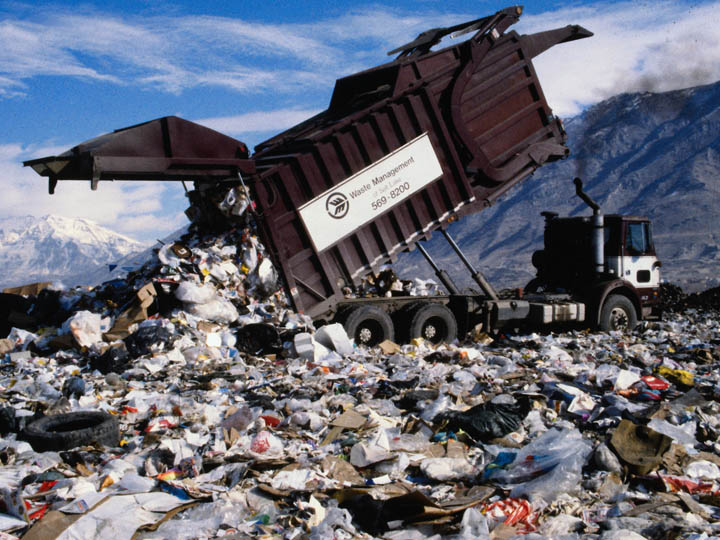
Photograph by Peter Essick for National Geographic magazine.

Once considered too expensive, as well as too damaging to the land, exploitation of Alberta's oil sands is now a gamble worth billions.

So intones an article in this month's issue of National Geographic magazine titled "The Canadian Oil Boom: Scraping Bottom." Its opening shot shows how arbitrary standards that attribute direct and indirect land use change factors can be when comparing fossil fuels vs. biofuels created from cultivated crops.

Corn and energy crops are being held to a high standard in new Low Carbon Fuel Standard legislation passing through California's legislature. This standard is reflected in U.S. EPA presentations which assign an arbitrarily high factor in assessing the indirect (aka "international") land change impact of producing the fuel (shown in bright green in the graph above). Without the assessment, even the worst case scenario for producing ethanol (dry mill using coal for heat) including the GHG tailpipe emissions passes the standard set by gasoline tailpipe emissions alone.

But there is no attribution for direct land use change from gasoline production even though this article provides clear evidence that there is for mining Canadian tar sands. This is the kind of arbitrary comparative accounting that has biofuel producers claiming that the standard that applies land use factors is, at best, artbitrary and, at worst, biased.

As a native Californian, I too think that CARB is being incredibly arbitrary on defining indirect effects. What if, in addition to indirect land use change (iLUC) CARB considered a new factor – “indirect cultural abuse change” (iCAC). If they did, the oil benchmark would be pushed up off the chart.

The argument would be that our addiction to oil wreaks cultural abuse worldwide – including military manufacturing and logistics expenditures, war damage to existing utility infrastructure, pollution from sabotaged wells during conflict, and the transfer of wealth from democracies to tyrannies – who exploit natural resources and have much less stringent environmental and workplace controls than most democraciees do. Surely these add carbon to the atmosphere (not to mention carnage, health, environmental, and human rights abuse).

Bottomline – until we deploy emerging technologies and a progressive infrastructure path to distribute alternative products we should build upon what already gives us options and makes us more self-reliant. Otherwise we have no choice at the pump and we remain pawns to those who profit from and control the status quo.

----------------
technorati , , , , , , decentralization,

February 16, 2009

"FUEL" - an interview with Josh Tickell and Rebecca Harrell

In January 2008, Josh Tickell screened his new documentary “Fields of Fuel” at the Sundance Film Festival to rave reviews (see trailer here). It won the Audience Award for Best Documentary. After a full year of more development, it has recently been released to a few theaters in the L.A.

I was invited to attend a pre-premiere green carpet party at one of only two gas stations in Los Angeles that sell both E85 and biodiesel fuels. It was cold (for L.A. in the high 40’s) and threatened rain but it still drew a number of celebrities – Peter Fonda, James Cromwell, Mariel Hemmingway, Stephen Collins, and others – who wanted to support the movie’s successful release.

I caught up with Josh and his fiancée, Rebecca Harrell, on the green carpet and conducted this interview.

Scott: I know that leading up to this, you have had trailers at various conferences. Two years ago I saw it at a Farm to Fuels conference in St. Petersburg Florida. What’s happened since?

Josh: It was quite a journey from Sundance a year ago to here. We cut the movie and added a whole new section about sustainability and the solutions that people were asking for. So the movie grew up a little bit in the year – and we got it ready to come out to the movie theaters as well.
Hello Rebecca, what is your role?

Rebecca: I am Rebecca Harrell and I am a producer of the film as well as Josh’s fiancée… and the Marketing Director during this evolving process for this “labor of love.” We have had to address all the controversy that has been erupting around biofuels. So we couldn’t release the movie without proving that. I think watching the movie will spark your interest and make you more aware of how you can help move biofuels forward.
Why did you make the film?

Josh: We started shooting the film in 1997 when I started driving the “Veggie Van” around the country. We didn’t originally go out with the objective of making a movie so much as the objective to see if these solutions are viable. For two years we just drove it around, making my own fuel, looking for solutions.

What started out as a two month journey turned into an eleven year journey to not just find solutions but to bring them to the public in a way that is accessible so people can understand. What better way than in the form of a movie!
Can you give us some highlights of the film?

Josh: One of the best parts of the film is what we call “the sustainable barrel.” It’s an animated barrel of solutions that replace an oil barrel. People love that part and all the things that people can do themselves that are shown in the movie. It is not often that you can see a movie and then you can do the things in the movie as soon as you’re done.

Rebecca: It is certainly an environmental documentary but it doesn’t make you want to jump off a bridge at the end. It leaves you inspired and uplifted and full of things you can do right now and that’s not usually the way green activists look at this.

Josh: This isn’t a movie that your vegetarian girlfriend is going to drag you to and you end up feeling depressed. She might drag you to it but it’s actually fun.
I think you’d agree that stakeholder engagement is going to be key to the environmental community to accept the deployment of any new technologies. Sustainability being a huge issue, are you prepared to go and help educate America that there can be alternatives?

Josh: Absolutely, the film is about outreach, it is about communities, its about individuals banding together to understand the solutions and act on them. We’ve got a “Big Green Energy Bus”, we’ve got this big inflatable screen – this is really about a community coming together and getting out on the road and activating America. Not around problems but around solutions, especially those that can help us get out of this economic crisis. That’s what green energy and green collar jobs really is.
Do you see an advantage to decentralization of our energy paradigm that seems locked into going further and further to tap fewer and more remote reserves that are dirtier and dirtier to distill?

Josh: Yes, I think the core message of the sustainability movement is that it has got to be local, it’s got to be recyclable. The core of sustainability is non-centralized energy sources – energy you and I can help make – whether it is in my apartment, my house, or my ranch.

Rebecca: It’s also about using our waste streams as fuels.
You are to be congratulated on the work you have done so far. It will be interesting to see where you take it after the flurry of interest in the film itself.

Rebecca: It isn’t just a movie. We are going to take the educational portion of the film and turn it into a 45 minute entertaining, rock and roll, educational film that we distribute for free to every school in America. We will go along with our Big Green Energy Bus and educate people how to be green and sustainable.
You have a wonderful website at ( www.thefuelfilm.com > that’s beautiful, number one, but also very functional.

Josh: Yeah, that’s Rebecca’s creation.
Is that going to be a keystone as part of this movement?

Rebecca: What you see there is just the tip of the iceberg for our website. We are going to use it as a way for people to broadcast their own green message. We developed it so that people will be the eventual owners of that site and we will be facilitating it.

Josh: Everything – the movie, the bus, the website – is for the people and generated by the people as well. Every ticket that is sold for this movie is a vote for green energy, it’s a vote for change. People around the world see those ticket numbers. People ask, “What can we do?” – well right away people can get to the theater and get others to the theater. We will be building a whole network for people to act on as the movie rolls out across the country.
Well we vote with our dollars in this country. And the problem is that, at our gas stations, you can get whatever fuel you want - as long as its petroleum based. We are desperate for fuel alternatives. This fuel station, called Conserv Fuel, is one of the only one’s selling alternatives in all of Los Angeles.

Rebecca: You’re right and they almost stopped selling biodiesel a few weeks ago. When we got that email we were pretty shocked and depressed and then we realized it doesn’t have to be this way. So we started writing and we got others to write also. Within literally five days we got a notice from the gas station that they changed their minds and were going to sell biodiesel. We wanted to celebrate with them and that’s one of the reasons we are here today – I don’t think anyone has ever had a film opening at a gas station before.
Well I hope you can roll this out to other bloggers and the bioenergy conferences that are going on around the country on this very subject. There is a Waste to Fuels conference in San Diego in mid-May – maybe we can show your movie there as well, with your blessing.

Rebecca: Great! We’ll definitely be in contact to set that up.

----------------
technorati , , , , decentralization

January 28, 2009

Perspectives on Sustainability Standards for Biofuel Production

This article is a response to a call for comments on Version Zero of the draft Principles and Criteria for Sustainable Biofuels written by the Roundtable for Sustainable Biofuels after extensive, multi-stakeholder, international collaboration. A running public dialog on these standards is available online at the Bioenergy Wiki.

We need change to a renewable fuels paradigm and we need it to be sustainable.

How do we engage in a massive overhaul of our energy paradigm that impacts on the quality of life of future generations without disturbing the natural order of things?

According to the preponderance of current research on "global warming" we have already disrupted the natural order of things. We need to quickly learn to responsibly manage Earth's resources to correct an imbalance that will not correct itself.

One only has to look at 2008's headlines and editorials to see how important the concept of "sustainability" has become to a wide swath of stakeholders as we move into the renewable energy era. Unfortunately, good news is rarely considered news-worthy to major outlets of opinion journalism. Instead, useful debate about certain sustainability issues has been, in far too many cases, distorted far out of proportion to their real significance. Controversy over "energy return on investment", "food vs. fuel", and "indirect land use change" stole much of the momentum that was being generated in support of advanced biofuel production. Some promising and sustainable projects were lost in the process.

Still, the artificiality of the controversy perpetuated by some of the media is no excuse to disengage from a discussion of the issues. To an extent, controversies draw valuable public interest to the topics under debate. In a sincere attempt to contribute a constructive opinion on these issues, I submit the following comments:

Recognize the threat posed by the status quo.

Renewable biofuels are carbon neutral (or negative) and are getting more plentiful and cleaner (fewer noxious byproducts and a reduction in greenhouse gases). Contrast that with fossil fuels that are carbon positive and getting dirtier (more greenhouse gases emitted from harder to extract and refine resources like tar sands and oil shale).

Before biofuels sustainability criteria are promulgated, it is important to ascertain the level of the challenge and the cost of doing nothing. Even prolonged delay has consequences. Lifecycle analyses of fossil fuel production should be used as a standard for comparison. Distance from well to wheel is a very important variable because it take energy to transport (and transmit) energy.

Credit the achievers.

Creating biofuel alternatives require innovation, creativity, and a significant amount of investment risk-taking.

In the fog of adversarial journalism, it is easy for the general public to lose focus on the clear benefits and achievements of the corn ethanol industry during the past few years. Few recognize the credit the ethanol industry deserves for replacing ALL groundwater contaminating MBTEs with clean, biodegradable corn ethanol as an oxygenate blended into gasoline. This simultaneously extended the volume of non-imported fuel used in American cars (roughly 3% nationwide) and resulted in cleaner running, less polluting vehicles.

Without the ethanol industry's rapid growth, there would be far fewer alternative fuel vehicles on the road, less developed infrastructure for supply and delivery, increased dependence on foreign sources of energy, more expensive gasoline during the recent price spike, and many lost opportunities to bolster a revitalized generation of Midwestern rural communities. This is an industry that has not only doubled production within the last few years, but is also moving forward with retooling agricultural practices, reducing fossil energy usage, and expanding the variety of feedstock that can be converted. With deployments come improvements.

We should continue to build and improve on models that have been successful.

The perfect is the enemy of the good.

The deleterious impacts from the status quo energy paradigm is the reason that we seek alternative technologies. It is not likely that new innovations will meet all criteria upon first deployment. And raising the bar and adding new criteria - like water usage, land use change, and greenhouse gas emissions - often arise after high capital expenditure deployment. By penalizing innovation we risk total inertia. Doing nothing is not an option.

All too frequently innovative processes are compared to theoretical concepts and abstract ideals that have remained pure because they have never been deployed so their impacts can be measured. Some may never be viable economically whether they meet sustainability criteria or not.

Biorefineries can cure environmental ills.

Conversion technologies can be used to turn environmental blights into fuels and power. Waste-to-energy power plants have helped municipalities reduce the amount of post-recyclables destined for landfills while creating new electricity. Similarly, biorefineries are being proposed to utilize environmental waste as biomass feedstock - trash and tires; bug infested forest timber; wildfire salvage; chicken litter; food scraps; forest management trimmings; hurricane, flood, and tornado debris; forest knockdown; and industrial wastes. These biowastes emit greenhouse gases as they decay so lack of management contributes to global warming.

Cleanly harnessing the btus contained in biomass waste completes a cradle-to-cradle energy value chain. The commercial value of biofuels and biopower can help fund environmental cleanup. We need as many conversion technology approaches as possible because the range of environmental challenges are vast and the resources available are becoming ever more precious.

Sustainability standards should be inclusive and regional.

To achieve the ends that we all want - more sustainable energy processes to pass on to future generations - we must deploy the most promising technologies now so we can perfect them. Multiple approaches provide options that can be tailored to specific resource, climate, and local stakeholder acceptability.

One of the prime characteristics of the bioenergy paradigm is the shift from centralization to decentralization. Fossil fuels are found at specific locations and, over time, the hunt for new reserves ranges further, wider, deeper - and dirtier. By comparison, biomass is relatively ubiquitous. It can be found everywhere except the most extreme conditions - like the deserts and the arctic regions.

The logistics for bioenergy solutons are based on short radius resources basins of 75 miles or less. Rather than expending vast sums for shipping remotely accessed raw materials from the corners of the world, biorefineries will depend on utilizing resources indigenous to the immediate vicinity. What is sustainable in one resource basin is totally different than another. Soil fertility, water availability, climate, and cultural mores vary greatly as do stakeholder interests. To mandate global sustainability criteria without factoring in indigenous variables would be pure folly.

This has already happened. The definition of "renewable fuel" in the groundbreaking 2007 Energy Independence and Security Act excluded classifications of different feedstock (notably woody biomass from federal forest lands). To many in the industry this seemed very arbitrary. Those that it did not specifically exclude were couched in terms that could lead to litigious action in the future against biorefiners attempting to receive the benefits outlined in the renewable fuel standard. The definition should be inclusive of a broad range of feedstock from private and public sources - not exclusive - because every resource basin is different.

Add concerns over the use of water, depletion of soil, deforestation, wildlife diversity, pesticides, energy return on investment, and fertilizers and the obvious question becomes "is there any biofuels production technology that will deployable?" If so, will it be so hamstrung by over-analysis and red tape that it never achieves its potential as a reasonable alternative to the status quo?

Even if a developer successfully threads the needle of expectation this year, will increasingly restrictive standards make duplication of the feat impossible to permit?

What ends might we sacrifice if we focus solely on the means?

Our dependence on fossil fuels is playing havoc with our economy, national security, environmental quality, and the climate predictability of our atmosphere. Just because fossil fuel industries existed before lifecycle analyses were required does not mean that they should forever be immune to measurement and sanction. The social, economic, health, climate, and military costs of fossil fuels are profoundly high.

We need to incentivize the development of many technologies to leap the hurdles of our paradigm challenge. Let's be careful that we don't handicap entrepreneurship with restrictions that will serve mainly to hamper creativity, slow the pace of change, and stifle investment.

----------------

technorati , , , <, , decentralization,

December 16, 2008

Galvanizing Congress to move renewable energy forward

On December 5th, the American Council on Renewable Energy (ACORE) hosted its annual Phase II meeting in Washington D.C. in the U.S. House of Representatives Cannon Caucus Room. Its theme this year was "The Next Presidency and Congress." Distinguished speakers addressed the state of renewable energy policy today, presented a range of policy options, and made recommendations for the new administration’s policy framework.

There was a deep sense of purpose and commitment in the room as luminary after luminary spoke of the challenges and opportunities before us. There was also a palpable sense of urgency due to the country's economic crises - as auto industry bailout talks were taking place in another room of the building.

Archived videos of the six hours of speeches are available online. Michael Eckhart (ACORE President) marked the growth in significance of this 7th annual convening of an ACORE Phase II meeting - which formed in 2001 one week before 9/11. John Geesman (former California Energy Commissioner) introduced Dan Reicher who is the Director or Climate Change and Environmental Initiatives for Google.org. Their venture makes investments and advocates policy in the areas of climate change and energy, global development, and global health. General Wesley Clark made an impromptu appearance and speech on national security and ACORE's role in effecting positive change in America's energy independence.

The keynote address was delivered by Iowa Governor Chet Culver who avered that thirty years ago Iowa was ranked 49th in energy production by state. Since that time Iowa has become a net exporter of energy thanks to the diligence and innovation of Iowa state government, academia, and farmers to build a renewable fuels industry. "If you can't get pumped about this opportunity, then you are not 'pumpable,'" he said. He gave way to Jeff Broin, President of Poet Industries - now the nation's largest ethanol producer, who talked about the technology innovations taking place at their corn plants to reduce their carbon footprint, higher per acre crop yields as a panacea for global economic malaise, and Poet's construction of the Liberty, Iowa Plant that will create cellulosic ethanol using corn cobs as feedstock.

Senator Tom Daschle gave a detailed analysis of biomass conversion technologies - the allied food, fiber, fertilizer, and fuel impacts and the nine policies that should be pursued by Capitol Hill and the administration to advance them. He was followed by former Director of the CIA Jim Woolsey who talked about coupling biofuels production with the development of flex-fuel, plug-in hybrids like the experimental car he drives. In tandem, these two technology sectors can deflate the strategic value of oil - which is effecting the largest transfer of wealth in human history while making the U.S. and freedom-loving people more and more vulnerable.

N.Y. Times columnist Thomas Friedman then made a memorable address that was a walkthrough of his book "Hot, Flat, and Crowded" urging Congress to help launch and enable a Energy Technology revolution. His conclusion was that it wasn't the government's job to bailout a sick and ailing economy. It was their job to set the price points - whether through carbon taxes or cap and trade or other mechanisms - that make clean, renewable technologies economically viable.

The afternoon sessions focused on policies that were needed to help private industry finance Electric Power and the scale-up of renewable energy and summations by ACORE leaders advising the "Next President and Congress."

Below is an announcement from ACORE about the immediate impact of the meeting on negotiations concerning the economic stimulus bill.


----------------------
Impact of Speeches at ACORE’s Phase II National Policy Conference
December 5, 2008

Congressional sentiment about how to deal with renewable energy tax incentives as part of a national economic stimulus bill may have changed in the past 48 hours as a result of speeches that were given by financial leaders at a renewable energy policy conference on Capitol Hill on Thursday and by the continuing effort of other renewable energy leaders.

The American Council On Renewable Energy held its 7th annual national policy conference, entitled “Phase II of Renewable Energy in America: The Next Presidency and Congress” yesterday in the Cannon Caucus Room in Washington, DC. The event held a packed room of 350 policy experts and was webcast to over 4,200 others around the world.

Keynote speeches by Iowa Governor Chet Culver, former Senator and Majority Leader Tom Daschle, Retired General Wesley Clark, former Director of Intelligence Jim Woolsey, and award-winning journalist Tom Friedman ignited the conference with a sense of determination to push the policy agenda forward on renewable energy in the new Congress and Administration.

However, the highest-impact speeches seemed to come from four top-tier financiers who came to Washington to speak about the urgent and near-crisis need to amend and refine the Production Tax Credit (PTC) for wind power and other renewable energy generators, and for the Investment Tax Credit (ITC) for solar power.

Prior to the conference, the word from Congressional staff was that there will be no tax provisions in the upcoming economic stimulus bill, to avoid slowdowns in tax committees. This would put the renewable electricity markets in a decline just as the nation is looking for economic growth and jobs.

But, after hearing the finance speeches, Congress may have turned around on the question, as there is reportedly talk now of getting the refinements into the stimulus package.

“It is absolutely urgent that this be done,” said John Cavalier, Managing Partner of Hudson Clean Energy Capital. He outlined a set of refinements including making the tax credits refundable, able to be carried back ten years, allowed in lease finance structures, and applicable to manufacturing equipment to support new factories for wind turbine components and solar cells.

These changes are necessitated by the financial crisis which has reduced the availability of credit, caused the number of tax equity investors to be reduced, and increased the cost of capital across the board, according to Tracy Wolstencroft, Managing Director at Goldman Sachs.

“We are not asking for any new money,” said Kevin Walsh, Managing Director at GE Energy Financial Services. ”We are asking for technical refinements of tax credit rules that will allow funds to flow that Congress has already approved. This will open up the availability of equity capital for renewable energy projects, back to what was contemplated with the tax credits were passed originally. It is vitally important that this get done immediately to protect jobs in 2009.”

The fourth finance speaker at the conference was Michael Ware, Managing Director of Good Energies, and one of the few in finance today who served in the original Federal Energy Office in the 1970s.
“Our nation needs to back up its commitment to clean energy by extending the incentives for a longer time, and by continuing to refine the incentive rules to match market conditions. Congress could not have foreseen the extent of the credit crisis when they passed the PTC and ITC in September. No one is to blame. We are using our collective expertise to suggest how the Congress can relatively easily amend the rules to keep capital flowing into the U.S. market, keep our companies producing, and keep Americans employed. And again, this requires no additional money, just refinements to how the tax credits can be used – credits that Congress has already passed.”

Reports are coming in to ACORE from the Hill this morning that, as a result of the presentations at the Phase II conference and the work of other renewable energy leaders, there is a new good-faith intention to get the renewable energy provisions into the stimulus package to protect jobs in the sector. One lobbyist reported to ACORE that: ‘The message was heard by the staff, many of whom were in the conference or watching on the webcast.”
“We are very pleased by the quality of the Phase II conference, the motivation that came form the keynote speakers, and the immediate impact that our financial speakers seem to have had on public policy thinking in Washington. ACORE’s role is educating public officials about the issues, and it seems to have been accomplished in this case," said ACORE President, Michael Eckhart.


----------------
technorati , , , , , decentralization,

October 26, 2008

Canada's biofuels promise

An article giving an overview of Canada's bioenergy potential has been published on the Renewable Energy World.com website.

The author, Douglas Bradley, is president of the Canadian Bioenergy Association (CANBIO) a national, industry-driven, non-profit organization supporting promotion and use of bioenergy.

If possessing sustainable quantities of biomass alone is the measure of bioenergy potential of a country then Canada should be a world leader in bioenergy. Not only are its forests and thick farming belts teeming with biomass, its vast size and small population means that there is more than enough to satisfy the national hunger for bioenergy with plenty of sustainable supplies to export.

It has implications for global warming as well.

We need to see this as a great opportunity to reduce emissions by turning the massive amounts of forest residue, much of which is sitting at roadsides, into bioenergy. Using this fibre for energy enables us to use less fossil fuel, resulting in an immediate net reduction in carbon dioxide emissions. This forest fibre doesn’t compete with food production, making it an attractive and sustainable renewable resource. Some innovative companies and municipalities have already integrated bioenergy into their processes, either as an energy resource, or as bioenergy producers – and they are thriving.

In his article, Putting Canada on Track
The keys to a bioenergy-rich future Bradley depicts the major drivers that make development desirable, the status of some biomass feedstocks and their locations, and then he spotlights the major players that are leading development. Included are Iogen, http://www.enerkem.com/index.php?module=CMS, Lignol Energy Corp, Dynamotive Energy, Woodland Biofuels, and Advanced Biorefinery with a brief description of how they fit in the fabric of Canadian bioenergy technologies.

He concludes by suggesting how Canada can "catapult bioenergy development...
This year has been the most exciting yet in terms of bioenergy development in Canada. But for Canadian bioenergy to catch up with its EU counterparts, a number of key barriers need to be addressed. One of the most visible problems facing small and medium-scale biomass heat and power projects is the requirement that any steam installation have a steam engineer on-site 24-hours per day. The high staffing cost simply destroys the economics of most projects under 17 MW in Canada. In Europe, different guidelines exist for smaller power plants and this has helped small and medium-scale biomass heating to thrive. Other barriers that exist for small and medium-scale projects are high capital equipment costs, where a government subsidy of around 25% is sorely needed to make a strong business case for potential investors. And such an incentive would certainly help the government achieve GHG emission targets. CANBIO is creating an alternative proposal to the 24-hour a day requirement, and is working with government to propose better solutions. The Ontario and Quebec government’s announcement of an emission cap-and-trade system is a step in the right direction, but only a strong, nationwide carbon-trading system can have a real impact on bioenergy development. Nonetheless, while there is much work to be done to develop favourable market conditions in Canada, bioenergy can provide one of the sustainable solutions to combat climate change and there are plenty of opportunities for international investors, technologies and buyers.

----------------
technorati , , , ,

September 23, 2008

Comments on Friedman's "Hot, Flat, and Crowded"

Thomas Friedman has a terrific platform from which to interview energy experts globally, write opinion pieces that are distributed through the New York Times, and participate in the production of cable television documentaries. Occasionally he pumps out a book that coalesces all of his research and synthesizes his prescriptions for solving the energy, environment, and global warming challenges that face us.

His The World is Flat book documented the changes in demographics and economic parity that will define the global rise of the middle class. Wonderful on the face of it, the consequences of this metamorphosis could challenge America's position and security as the leading consumer nation in the world - leading to competition for resources with developed and currently under-developed countries worldwide.

Since the release of that book (in 2005) the stakes have risen with an acceleration of demand for fossil energy, heightened concern about the global warming impacts of human behavior, and the sharp spike in gas prices - not to mention the crisis on Wall Street.

This book Hot, Flat, and Crowded takes on a broader perspective and a sharper call to action. The broader perspective intends to address the dual-headed energy and environment challenge with the clean tech alternatives he particularly espouses - solar, wind, and energy efficiency. His call to action compares the energy lethargy of the fractious U.S. policymaking machine with the frantic and command structured action of the Peoples Republic of China.

My primary reservation about the book is that it has a typically urban perspective on the problems without giving rural world economies (particularly in developed countries) their due. Friedman believes that ethanol subsidies are bad policy - in spite of the fact that the ethanol producers of America reflect the most immediate example of entrepreneurism contributing and innovating new solutions. He also doesn't distinguish between corn ethanol and cellulosic regarding the value of subsidies.

And then he decries policymakers for not committing to long-term guarantees like the production tax credit for solar and wind. What's bad for the goose is bad for the gander. Pulling the ethanol subsidies out from under any kind of ethanol developments would set a bad precedent impacting investor confidence.

Chapter 18

That being said, Friedman's website allows readers to contribute to the next edition of the book! A project he calls "Chapter 18" seeks reader input:

Hot, Flat, and Crowded has seventeen chapters. What's Chapter 18? Chapter 18 will be a completely new chapter that I’ll add to the next edition of the book: Version 2.0. In it I hope to include the best ideas and proposals sent in from readers: ideas about clean energy, energy efficiency, and conservation; about petropolitics and nation-building in America; about how we can help take the lead in the renewal of our country and the Earth alike by going Code Green. I am eager for your suggestions — please post them here.

So I sent in my two cents worth and I suggest you do the same. Here's what I wrote:

---------------------
Loved your new book - I recommend that all of my colleagues read it.

My only disappointment is that you almost completely left out discussion of biomass conversion technologies (CTs) - the single biggest source of renewable power in the U.S. today (more than hydroelectric, solar, wind, and geothermal combined).

Wind and solar are carbon neutral. Plants are carbon negative and their biomass can be converted to directly replace fossil liquids for fuels and fossil solids for baseload power.

Wind and solar will not revive the decentralized rural economies of the world the way that bioenergy will (reference 25x'25 and ACORE's Biomass Coordinating Council).

I have come to the opinion that the key to sustainably sourcing biomass for CTs is finding waste streams and disaster debris that has a social cost attached to it (and very often a tipping fee or government incentive to remove it). This biowaste needs to be cleaned up before it decays into methane, CO2, and other GHGs. I include in these waste streams (1) wildfire salvage wood in CA, (2) hurricane debris and forest knockdown in the Gulf states, (3) mountain pine beetle infested wood in British Columbia and Colorado, and (4) unrecycled MSW at all the major cities. These problem accumulations of biomass are massive and will get much worse with "global weirding."

California's AB32 - the Global Warming Solutions Act - has entrusted its Air Resources Board to devise and execute solutions to reduce GHG emissions in California. CARB has fashioned a Scoping Plan and sought comments from Californians at large. I have written an article with links to the three comments I made based on my research and travels and invite you to check them out.

One comment advocates reducing significant amounts of GHG by thinning forests to preempt unprecedented "megafires", salvage carbon laden tree remains for conversion, and replant forests to sequester CO2 anew. You should interview Sen. Feinstein about the pitifully low amount of forest management work that has been accomplished since the passage of her Healthy Forest Initiative Act of 2003. Only 77,000 acres have been treated out of 20 million acres funded. This institutional lethargy is largely because there is no forest products industry left in those forests to buy the wood which would fund the programs. (BIOstock Blog)

Another comment focuses on diverting unrecyclable wastes (40 million tons/year in CA alone) from landfills by instead using CTs to produce biopower and biofuels at the Municipal Sorting Facilities (as L.A. is planning to do with its RENEW L.A. plan). (BIOwaste Blog)

My third comment is titled Challenge the Status Quo which aligns with your BANANA (Build Absolutely Nothing Anywhere, Not Anytime) lament. Too much current policymaking and regulations handicap initiative for action. For instance, thermochemical CTs are hogtied with the same EIA and LCA impediments as landfills (which means that it takes 5 to 10 years to permit them). As a consequence, the status quo wins.

----------------
technorati , , , , decentralization,

July 5, 2008

Comments on the California Climate Change Draft Scoping Plan

The California Air Resources Board (CARB) has just released its Climate Change Draft Scoping Plan in accord with its responsibilities for implementing AB32 - the Global Warming Solutions Act. Its objective is to lay the foundation for an enforceable approach to reduce California's anticipated greenhouse gas emissions for the year 2020 by 30% (estimated to be equivalent to California's GHG levels of 1990). Like AB32, the scope of the plan is broad with anticipated environmental and economic impacts that are breathtaking. Sustainability is the key.

In my opinion this draft of the scoping plan leaves out some significant sources of GHG for which there are promising mitigation technologies available. These involve low-value biomass (like fuelwood thinnings and municipal solid wastes) that can be used as feedstocks for conversion to bioenergy.

I have written three blog articles to address my main concerns and ideas regarding:
1- Challenging the Status Quo in the Scoping Plan
2- The Sustainable Forests emissions reduction measures outlined in the plan.
3- The Recycling and Waste Management section of the plan.

CARB is now soliciting draft comments from all stakeholders over the next 45 days. I encourage all Californians to submit your comments concerning this important Scoping Plan. The electronic form is accessed from the CARB website.

----------------
technorati , ,

July 4, 2008

CA Draft Scoping Plan comment:
Challenge the Status Quo

This is one of a series of comments submitted to the California Air Resources Board for their draft version of the California Climate Change Draft Scoping Plan. Other BIOenergy BlogRing comments are linked here:
• Challenge the Status Quo
• Recycling and Waste
• Sustainable Forests

----------------

Achieving the goals of this Climate Change Scoping Plan (an ambitious 30% reduction of greenhouse gases projected for 2020) will require major changes in the status quo fossil fuel paradigm - not only how electricity and biofuels are produced, but also the manufacture of a generation of new bioproducts based on biobased chemicals to replace fossil-based ones.

We live in the most dynamic state in the U.S. with research, manufacturing, investment capital, manpower, infrastructure, and natural resources that are the envy of the world. This combination has led to the achievement of many paradigm shifts in the past - aerospace, atomic energy, computers, software, telecommunications, biotechnology, and the internet. We are poised to develop the next paradigm in energy coupled with environmental sustainability.

However, to achieve our goals will require flexibility in our permitting standards. Currently, the choke point on energy and environmental technological deployments are held by state agencies - particularly CARB - housed in Sacramento. Our standards have become so idealistically high - i.e., Zero waste, Zero emissions - that promising technologies cannot be permitted for deployment within California. Specific examples include conversion technologies using thermochemical means that can convert municipal and environmental waste into carbon-neutral fuels and power.

The thresholds for permitting must enable promising innovations to be deployed. Without deployment most technologies will never be refined at commercial scale to approach delivering the highest standards expected by the idealists.

I recommend a graduated permitting scheme be developed by CARB for technologies of promise. Instead of comparing performance to an idealistically high standard, let's first compare it to the status quo. If, after deployment, the technologies cannot meet the graduated standards specified, the businesses can lose their permit to operate. But let's encourage deployment of first generation technologies in California.

Without deployment of promising technologies, the aims of this Scoping Plan will fail and the status quo will remain.

--------------------------------
technorati , , , decentralization

June 30, 2008

Converting Smoke into Energy using Algae

Solena Group - an innovative international company whose mission is "committed to combating climate change by promoting renewable bio-energy to replace fossil fuel" - has projects deployed or under development for using plasma arc technology to cleanly gasify feedstock into syngas. Teamed with Rentech Technologies, they can convert the syngas into bio jet fuel. Otherwise they can use the syngas to produce clean, green electricity.

But what about emissions? Turns out they have an answer for that as well citing their development of air filtering technology at their Alicante, Spain research facility that take manufacturing fumes and, using algae to absorb the greenhouse gases, create new biomass that can be converted into bioenergy.

Here are some excerpts from a NY Times article that cited the company's carbon sequestering technology...

--------------------------
March 26, 2008
For Carbon Emissions, a Goal of Less Than Zero
By MATTHEW L. WALD

Algae, which have a high energy value per pound and consume carbon dioxide, are being cultivated at a biofuel demonstration facility run by the Solena Group in Alicante, Spain.

IF the world is going to sharply reduce the amount of carbon dioxide pumped into the atmosphere by midcentury, then many businesses will have to go carbon neutral, bringing their net emissions of the greenhouse gas to zero.

But some could go even further by removing more CO2 than they produce. Instead of carbon neutral, how about carbon negative?

In academic and industrial labs worldwide, researchers are working on technologies to reach that goal. Success could create the ultimate green business — for example, one that produces fuel whose emissions are more than offset by carbon dioxide stored during production. The businesses would be successful if, as anticipated, Congress puts a tax on emissions or starts a trading plan that makes carbon credits valuable.

For some experts, it’s not a question of whether businesses will go carbon negative but when.

Carbon-negative technologies of some sort will be essential, said Daniel M. Kammen, director of the Renewable and Appropriate Energy Laboratory at the University of California, Berkeley. The world is facing the certainty of massive emissions for decades to come from plants already running, he said, adding that atmospheric concentrations must be stabilized. “We’ve got such a carbon overshoot looming in the future that this is going to have to happen,” he said.

The United Nations Intergovernmental Panel on Climate Change said that an 80 percent cut in carbon dioxide emissions was necessary to avoid the worst consequences of climate change. But capturing the gas from coal plant smokestacks or switching to fuels that produce less of it when burned goes only so far.

“The great problem is actually removing carbon dioxide from the atmosphere,” said Geir Vollsaeter, an environment expert and former general manager of carbon dioxide at Shell International, a subsidiary of the oil giant.

While much engineering work would have to be done to make a business carbon negative, the outlines are clear.

Take the concept of building a coal plant that captures and stores carbon dioxide. Such a plant could have zero emissions, because the coal would be turned into gas and processed to produce hydrogen and carbon dioxide. The hydrogen, a pollution-free fuel, would be burned, and the CO2 pumped underground for permanent storage.

But Robert Williams, a research scientist at Princeton University, said that not only coal could be gasified; you could also make the same fuel by starting with plant matter or other biomass.

And then, he said, “if you put any CO2 underground that is derived from biomass, that’s negative CO2 emissions.” That is because plants or trees — the raw material for the fuel —pull carbon dioxide from the atmosphere as they grow, and the gasification and storage takes that carbon out of circulation.

Mr. Williams said the more likely route would be to gasify a mixture of coal and biomass to keep the process carbon neutral. But the balance depends on the cost of separation and storage versus what kind of tax or other fee Congress might put on emissions.
...

A Washington company, the Solena Group, also has a carbon-negative plan, which emerged from the decision by regulators in Kansas last year to turn down a permit for two new coal-burning power plants because of the millions of tons of carbon dioxide they would produce. The regulators insisted that the builder of the plants, an electric co-op called Sunflower, had to permanently remove the carbon from circulation. Gov. Kathleen Sebelius and the Kansas State Legislature are still arguing over whether the plants should be built.

Solena says it can use the carbon. The company employs a high-temperature process to break up anything organic into a flammable gas. The organic material could be algae, which have an extremely high energy value per pound. And algae eat carbon dioxide.

Solena is in discussion with Sunflower to build a 40-megawatt power plant that would run on gasified algae; the algae would be grown in thousands of clear plastic cylinders, 3 feet wide by 10 feet tall, sitting in the Kansas sun and fertilized with sodium bicarbonate, made with carbon captured from Sunflower’s coal plant. For each 1.8 tons of carbon dioxide, the columns would yield a ton of algae.

----------------
technorati , , , , , ,

November 30, 2007

Bioenergy's "Top Five" List.


From a speech delivered at the Capitol Hill Club in Washington DC on November 28, 2007.

Besides writing blogs, I am a Communications Director* of the Biomass Coordinating Council (BCC) of the American Council on Renewable Energy (ACORE). ACORE is a Washington-based advocacy association that promotes all renewable energy forms. The BCC, led by the intrepid Bill Holmberg, focuses attention on bioenergy technology, as well as environmental and economic sustainability issues.

America is still the “Can do” leader of the world. It is heartening to travel to recent national and international conferences, expos, and workshops to sense the excitement and see the vision that researchers, government agencies, technologists, and investors are proposing as we face the daunting challenges of the new millennium.

It is time to assess bioenergy’s attributes to see how they fit into the renewable energy paradigm shift sweeping the nation.

We need to help American business, community, educational, state, and federal leaders to understand the opportunities these attributes represent. Doing so will not only raise awareness of bioenergy, but also help persuade policy makers to ACT NOW to support our critically important research, development, and deployment with new policies, loan guarantees, and incentives.

The five key messages are:
1. Bioenergy can convert solar energy into liquid fuel.
2. Bioenergy can reduce greenhouse gas emissions.
3. Bioenergy can remediate ecological disasters.
4. Bioenergy can revive depressed economies.
5. Bioenergy can expand energy freedom of choice.

Each message above is linked to article that briefly outlines how bioenergy is able to accomplish these socially beneficial actions. They are at the heart of what motivates leaders from all walks of life to get involved in the most significant paradigm shift of our time.

*In the interest of full disclosure, I am also a Marketing Consultant for Price BIOstock Services - the logistics support company responsible for procuring, delivering, and preparing woody biomass to paper and pulp mills and biorefineries – like Range Fuels’ landmark cellulosic ethanol biorefinery in Georgia.

technorati , , ,

#2 Bioenergy Can... Reduce Greenhouse Gases

What are the capabilities of bioenergy technologies that make them unique as a means of reducing greenhouse gases?

Bioenergy comes from the processing of biomass. Biomass "refers to living and recently dead biological material that can be used as fuel or for industrial production. Most commonly, biomass refers to plant matter grown for use as biofuel, but it also includes plant or animal matter used for production of fibres, chemicals or heat." (Wikipedia)

The carbon cycle is the sustained transfer of carbon between the atmosphere, geosphere, and hydrosphere and then back again. The current concern about fossil fuels is that they are corrupting the carbon cycle by adding below ground carbon to the above ground cycle. NASA estimates the worldwide amount of fossil fuel carbon added to the atmosphere each year to be a colossal 5.5 billion metric tons (see red graphic above). These are the dread greenhouse gases blamed for global warming. This addition of subterranean carbon to the atmosphere is termed "carbon positive."

It is possible to use fossil fuels in the production of electricity, capture most of the carbon dioxide from the process, and inject it back into the ground. This is called carbon geo-sequestration and it is used primarily to increase oil production by using gas pressure to force deposits of oil to the surface. However, most carbon dioxide from fossil resources - car emissions for example - can't be captured and returned underground (see orange graphic representation above).

One characteristic of renewable energy is that they are, by definition, "carbon neutral" (see gray graphic) - neither adding nor reducing the amount of above carbon used in the carbon cycle. Most forms of renewable energy - solar, wind, hydroelectric, tidal, and geothermal - don't involve the use or conversion of carbon at all.

In contrast to other renewable energy processes, bioenergy involves the conversion and combustion of the carbon content of biomass. Through photosynthesis carbon dioxide is pulled out of the air and stored as sugars (see green cycle above). As long as the carbon stays in the plant or in plant products, the biomass is essentially a carbon sink, temporarily removing the carbon out of the carbon cycle. Through roots, which are not harvested, a good portion of each plant's carbon capture is left in the ground.

If the carbon emissions from combustion are captured and injected into oil fields, then this would be "carbon negative." Unlike fossil fuel emissions, any emissions from biofuel is "carbon neutral" because the carbon was derived from carbon already converted into sugars and cellulose in the biomass. The net effect of bioenergy is at worst carbon neutral but, through best practices of the forest products industry, often carbon negative.

One other option for subterranean sequestration is being researched by agronomists. There is an ancient practice of using the char from burned biomass as a fertilizer or soil amendment for growing crops. This is variously termed terra preta, biochar, or agrichar.

A recent article in the Biopact Blog discusses the four generations of biofuels. It describes recent research into ways to maximize the "carbon negative" impact of bioenergy:

In fourth generation production systems, biomass crops are seen as efficient 'carbon capturing' machines that take CO2 out of the atmosphere and lock it up in their branches, trunks and leaves. The carbon-rich biomass is then converted into fuel and gases by means of second generation techniques. Crucially, before, during or after the bioconversion process, the carbon dioxide is captured by utilizing so-called pre-combustion, oxyfuel or post-combustion processes. The greenhouse gas is then geosequestered - stored in depleted oil and gas fields, in unmineable coal seams or in saline aquifers, where it stays locked up for hundreds, possibly thousands of years.

According to scientists who looked at this concept of 'bio-energy with carbon storage' (BECS) within the context of a strategy to counter 'abrupt climate change', these systems, if applied on a global scale, can take us back to pre-industrial levels of atmospheric CO2. The concept would be more efficient than techniques that are limited to scrubbing CO2 out of the atmosphere without tackling the source of the problem: the combustion of fossil fuels. BECS intervenes at the source and replaces fossil fuels with renewable biomass; the systems scrub CO2 out of the atmosphere while delivering clean energy. As such, they are seen as one of the only low-risk geo-engineering methods that could help us tackle climate change without powering down our societies.

In summary, Bioenergy is the only renewable energy technology that can reduce greenhouse gases.

-------------
This article is the second in a series of five about the unique capabilities of bioenergy.

On November 28th I made a presentation at the Capitol Hill Club to the Biomass Coordinating Council (BCC) of the American Council on Renewable Energy (ACORE) titled "BioEnergy Can Do." My aim was to list what I considered to be the top five unique capabilities of bioenergy that should drive legislative action on Capitol Hill. The five capabilities are:
1. Bioenergy can convert solar energy into liquid fuel.
2. Bioenergy can reduce greenhouse gas emissions.
3. Bioenergy can remediate ecological disasters.
4. Bioenergy can revive depressed economies.
5. Bioenergy can expand energy freedom of choice.

-------------

technorati , , , ,

September 29, 2007

Woody Biomass: Feedstock for BioEnergy


This article contains the text and some images from the second half of a speech I presented at the Energy from Biomass and Waste conference in Pittsburgh, PA on September 27. It follows from the first half of the presentation titled Woody Biomass: Fuel for Wildfires which shows recent increased wildfire activity and the consequent greenhouse gas emissions from public forests. It suggests that private industry has a strong role to play to help deploy the necessary woody biomass harvesting processes and infrastructure of biomass conversion facilities to make proper forest management economically sustainable.

-----------------
Woody Biomass: Feedstock for BioEnergy

I believe that the conversion of biomass to energy represents not only a sustainable, clean alternative to fossil fuel energy but that implementing these emerging technologies can help us solve environmental and ecological challenges of the new millennium.

How can we capture forest fuels to lessen the threat of megafires while simultaneously generating clean, renewable bioenergy?

U.S. Patchwork of Renewable Energy
Right now we are seeing a surge in the development of many decentralized renewable energy installations (click map to enlarge). Wind energy on the coast and wind corridors of the interior, solar energy in the Sun Belt, corn ethanol in the Corn Belt.

But what about the unfilled regions on our patchwork of regional renewable energy projects? What technologies will fit there?

The revitalization of the Corn Belt is illustrative of what could happen in the forest regions of the country-
hundreds of biorefineries, billions of gallon of liquid fuel, stronger feedstock prices, revitalized communities, tens of thousands of jobs, rising land equity and stronger communities.

Photovoltaic vs. Photosynthesis arrays
I come from Studio City, California which is also the home to the environmentalist Ed Begley, Jr. I have had lunch with Ed and seen him give several presentations. At one he stunned his audience. He said “It may surprise many of you to hear that I am a BIG supporter of nuclear energy…" “...as long as it is kept 93 million miles away from Earth.”

Sure enough, Ed has some solar arrays on the roof of his home which convert sunlight into electricity. Here is a picture of him cleaning the arrays because otherwise their efficiency drops dramatically.

I am all for solar cell research to help lower their manufacturing expense and raise their energy conversion efficiency. Solar arrays are good at converting light to electricity but not good at storing the electricity. Here are listed some of their other drawbacks:
• Cells are not renewable
• Expensive to manufacture & install
• Dormant at night
• Cannot store electricity
• Limited climate and regional applicability

I submit that leaves are natures also “solar cells” using sunlight, carbon dioxide, and water to create stored energy in the form of sugar. Trees are “solar arrays” that have many advantages over photo voltaic arrays. They reproduce. They work in many more climatic regions of the world, produce and recycle their own solar collectors (leaves), store their energy in the form of sugars, clean the air of greenhouse gases, transpire water at night, and sequester half their dry weight in combustible carbon.

In so many ways, trees are the perfect solution to global warming and the effort to produce renewable energy.

Woody biomass availability
Let me be clear, when we talk about collecting woody biomass we aren’t talking about logging trees.

The USDA identified woody biomass as small diameter trees and underbrush, the residues of the logging and forest products industries, and urban wood waste. In their Billion Ton Report they estimated that there was over 367 million tons of woody biomass produced each year in the U.S. Here, as abroad, it is the number one renewable energy technology for creating steam, heat, and electricity. And it is growing.

With woody biomass being produced at so many locations throughout the country it is easy to see that their conversion to electricity and biofuels could fill significant patches on our national renewable energy “quilt.”

In fact, for generations, the forest products industry has utilized burning woody biomass to generate steam, heat, and electricity. The biggest drawback with combustion is the emissions it generates - but modern systems include scrubbers for removing toxins and particulate matter. New wood burning systems are being installed to replace coal burning facilities.

As concerns about global warming grows, many companies are looking at gasification systems for more efficient heat recovery and cleaner emissions control. The whole point of gasification systems is to capture emissions so they can be converted into synthesis gas - a clean burning, renewable alternative to natural gas (which is a fossil fuel).

If we add to forest biomass the potential biomass tonnage from growing hybrid poplar and other energy crop trees we could easily see in excess of half a billion tons of woody biomass available for bioenergy conversion each year. Efforts are underway to create new fast growing hybrid trees specifically designed to maximize carbon sequestration, bolster pest, drought, and fire resistance - and streamline processing efficiency.

There is plenty of marginal land throughout the U.S. where hybrid crops could be grown - supplying new energy crop options where other alternatives are not workable. Such “plantations” would help fix the land against erosion, improve water and air quality, and provide enhanced carbon sequestration capacity.

Furthermore, the sugar storage capacity of woody biomass and hybrid trees is a potent source of feedstock for conversion to biofuels. But how do we do that?

Woody biomass conversion technologies
Let’s compare the three generations of conversion technologies for creating biofuels from biomass.


Generation 1 - Sugar Fermentation In sugar fermentation the corn, sugar, or starch is warmed in water with yeast and fermented into an alcohol that is then distilled into pure ethanol. It is a batch process moving from vat to vat that takes approximately 2 days to complete. The primary residues of the process are converted into livestock feed called distiller dried grains (or DDG).

There are concerns about this method of creating ethanol:
1. The feedstock cannot be blended with any other feedstock.
2. The feedstock could be used as food .
3. The amount of energy contained in the ethanol is only slightly more than the energy expended producing it (a factor of 1.3).
4. It is a water-intensive process when you consider the cultivation of the feedstock and the inputs during fermentation.

But, the yield is high and it is a mature technology with over 100 commercial-scale biorefineries in operation and dozens more coming online each year.

Other conversion processes involve converting cellulosic feedstock (like woody biomass) into biofuels. The way that wood stores energy is by photosynthesizing sugars stored in two forms - hemicellulose and cellulose - with a combustible called lignin supplying the fibrous support of the tree.


Generation 2 - Biochemical Cellulosic Conversion The second generation of biomass conversion technologies involves breaking down wood’s molecular bonds using biochemical agents.

The difference between this process and sugar fermentation is the simple addition of the two-day breakdown step (represented in the blue zone). Here enzymes and acids separate the sugars from the lignin - the sugars are fermented and distilled into ethanol while the lignin is combusted to generate steam to heat fermentation. Principal research is focused on developing more efficient enzymes that can be produced at low cost.

Here is how Generation 2 compares with Generation 1.
1. The feedstock can include woody biomass, industrial and urban waste wood.
2. It takes longer but because the sources of cellulose do not require much cultivation and are usually already exist as residues of other processes, so the energy return is roughly five times that of sugar fermentation.
3. It uses more water during the multi-vat process - but there isn’t much water use during forest growth.
4. A major expense is the price of producing the enzymes which include high research overhead and royalties. That price will come down.

There are pilot plants in operation at private and educational research facilities around the world.


Generation 3 - Thermochemical Cellulosic Conversion The 3rd generation technologies use thermochemical processes - primarily gasification or pyrolysis - to break down the biomass into a synthesis gas, or syngas (composed mostly of carbon monoxide and hydrogen), which is converted into ethanol.

Again, a gasifier heats up the feedstock, which can be a blend, with high heat (2,500°F) to create the syngas. Instead of the syngas being sold as a product of gasification, it is exposed to a catalyst or fermented using bacteria that convert it into ethanol and and water.

Range Fuels uses a catalyst to enact the conversion. BRI uses a patented microorganism to ferment the syngas to ethanol.


1. Unlike Generation #1 and #2, the feedstock for generation 3 can be blended with all sorts of alternative raw materials - tires, autofluff, pet coke, municipal solid wastes, etc. - which makes feedstock procurement much more sustainable over the long haul.
2. The specific blend affects the yield with higher energy-content feedstock producing higher yields.
3. It is continuous requiring mere minutes for processing rather than days for generations #1 and #2.
4. It uses very little water - in fact it captures extra water as a product of fermentation.

The Agenda 2020 Technology Alliance of the American Forest and Paper Association recently published the” Forest Products Industry Technology Roadmap.” It illustrates where two conversion steps - one using biochemical and the other thermochemical processes - could be inserted into a standard pulp mill workflow to create new profit streams.

It also forecasts the return the plant management could expect for a typical tons per day volume. This could revitalize the paper and pulp industry. The real key to economic feasibility the commitment of the marketplace to renewable fuels.

In summary …
1. We can limit wildfires by thinning forests
2. Woody biomass stores abundant energy
3. We can use woody biomass to create heat, produce steam, and generate electricity
4. Emerging technologies will produce ethanol from woody biomass
5. Successful deployment of new wood-based technologies can revive stagnant industries
6. New industries can strengthen new communities

Here’s a final thought:

In 1803, Thomas Jefferson signed the Louisiana Purchase - effectively doubling the land area of the United States. He predicted it would take 1,000 years to settle the new territory. We laugh at his miscalculation - after all, it seems that we have settled his land and started to retreat from it - preferring urban life over rural.

But he might have been right. Maybe we are about to engage in renewed settlement of the nation’s rich rural midsection. We have 800 years to go and renewable energy made from woody biomass can play a big role in supplying renewable energy for that future while providing us with the means to manage our environmental sustainability.

-----------------
technorati , , , , , , , , decentralization