Showing posts with label Biopact. Show all posts

August 1, 2007

Biopact: August 2007 Digest

Biopact Blog writes many stories that are relevant to the study of BIOstock, BIOconversion, BIOoutput, and BIOwaste.

Rather than summarize and reprint excerpts from this excellent source of information, a breakdown of each month's most relevant titles is provided in one updated article...

BIOstock...
Dynamotive and Mitsubishi Corporation sign cooperation agreement
Interpellets 2007: conference looks at wood pellets as an alternative to fossil fuels
Technip to engineer biomass power plant that will run on dedicated energy grass
Forest genetics researchers to sequence and catalog conifer genes for future biofuels research
Efficient timber harvester delivers wood chips on the spot, improves biomass logistics
Mitsubishi Corp creates firm to produce biomass pellets
Guide to installing wood pellet heating systems in green buildings
BioWeb launched: new information resource will help develop biobased economy
Volvo releases comprehensive analysis of seven biofuels for use in carbon-neutral trucks

BIOconversion...
U.S. House passes Energy Bill: boost to biofuels, CCS and renewables
Shell and Virent to cooperate on production of hydrogen from biomass
Belgian-Dutch partnership to develop 5MW biocoal project
Japan's RITE develops cellulosic biobutanol technology
Sun Grant Initiative funds 17 bioenergy research projects
Australia's EPA approves largest geosequestration trial, report warns for leakage risks

BIOoutput...
Worldwatch Institute: biofuels may bring major benefits to world's rural poor
Expert: 'net energy' - a useless, misleading and dangerous metric
Researchers: cellulosic biofuels already cost-competitive
Terra preta and the future of energy: the Secret of El Dorado
Volvo releases comprehensive analysis of seven biofuels for use in carbon-neutral trucks

BIOwaste...
Steps to biorefining: new products from biofuel leftovers

July 15, 2007

The Biorefinery Concept Today

The International Energy Agency (IEA) predicts that world biofuel output will double between 2006 to 2012. That is the primary finding from its recently published Medium-Term Oil Market Report.

According to an article from Biopact based on the report findings:

Technology for significant production of second generation biofuels based on lignocellulosic feedstocks isn't expected by the IEA to come into play by end of the 2012 outlook period.

That is certainly true. But in the meantime, considerable R&D is taking place internationally leading to the deployment of a promising number of pilot, demonstration, and commercial-scale biorefineries.

No agency knows this better than the IEA's own IEA Bioenergy group:
IEA Bioenergy is an organisation set up in 1978 by the International Energy Agency (IEA) with the aim of improving cooperation and information exchange between countries that have national programmes in bioenergy research, development and deployment.

On April 25, 2007, the IEA Bioenergy group's annual meeting, ExCo59, was held in Golden, Colorado bringing the world's experts to the home of the U.S. National Renewable Energy Lab (NREL) to discuss the current status of emerging biorefinery technologies. BioPact has provided a real service by summarizing contents of the information presented at ExCo59.


Thankfully, these Biorefinery Concept presentations have been posted as downloadable PDFs on the IEA Bioenergy website. Several of these presentations are identical to those given at the recent BBI Fuel Ethanol Workshop & Expo. Those slides were only distributed to attendees.

technorati , , , , , , ,

July 1, 2007

Biopact: July 2007 Digest

Biopact Blog writes many stories that are relevant to the study of BIOstock, BIOconversion, BIOoutput, and BIOwaste.

Rather than summarize and reprint excerpts from this excellent source of information, a breakdown of each month's most relevant titles is provided in one updated article...

BIOstock...
New biodiversity data access portal launched
Revolution in the kitchen: 5000 Indian rural households receive smokeless biomass pellet stove
'Plants for the Future' technology platform presents plan for European bioeconomy
OECD-FAO Outlook: growing biofuel demand underpinning higher agriculture prices
Satellite survey links tropical park fires with poverty and corruption
Study of energy crops shows miscanthus twice as productive as switchgrass
Simulated crop provides answer to irrigation issues
China to boost forest-based bioenergy, helps win battle against desertification
Report: community forest enterprises drive sustainable forestry, but stifled by red tape

BIOconversion...
Nanosphere catalyst could improve biodiesel production
Investigating life in extreme environments may yield applications in the bioeconomy
Highlights from the International Conference on Biofuels (Day 1)
Sweden calls for the creation of a 'biopact' with the South - Highlights from the International Conference on Biofuels (Day 1, part 2)
Texas launches Bioenergy Strategy
An in-depth look at biorefinery concepts
EU and China agree on joint development of knowledge-based bioeconomy
Scientist skeptical of algae-to-biofuels potential - interview
Report: the future of biofuels is not in corn, better alternatives available
Gevo receives funding from Virgin Fuels and Khosla Ventures to make biobutanol
World sugar prices keep falling, despite ethanol boom

BIOoutput...
EU Environment ministers approve reductions in car emissions, divided over implementation
Syntroleum to deliver bio-based synthetic jet fuel to U.S. Department of Defense
IEA forecasts world biofuel output to double from 2006 to 2012
Survey Finds Strong Support Among Voters for Mandatory Auto Fuel Efficiency Increases

BIOwaste...
FPL Energy teams up with Citrus Energy to make cellulosic ethanol from citrus waste

June 1, 2007

Biopact: June 2007 Digest

Biopact Blog writes many stories that are relevant to the study of BIOstock, BIOconversion, BIOoutput, and BIOwaste.

Rather than summarize and reprint excerpts from this excellent source of information, a breakdown of each month's most relevant titles is provided in one updated article...

BIOstock...
U.S. Departments of Agriculture and Energy announce new US$ 18 million sollicitation for biomass R & D
Mendel and BP collaborate on grass breeding for cellulosic biofuels
Scientists debate benefits of low-input high-diversity grassland bioenergy systems
Study: soil maintenance needed to ensure sustainability of cellulosic biofuels
Study: greenhouse gas balance of different energy cropping systems
Chile's first CDM project based on biomass avoids 500,000 tons of CO2 emissions
Foss and DuPont launch analytical instrument that estimates ethanol yield potential of grain

BIOconversion...
India's Praj Industries launches biofuel operations in Brazil
Researchers produce ethanol from syngas in carbon nanotubes
Joint Genome Institute announces 2008 genome sequencing targets with focus on bioenergy and carbon cycle
The bioeconomy at work: book looks at current state of biorefining
China EnerSave retrofits coal plants to burn biomass
German consortium starts production of ultra-clean synthetic biofuels
Syntroleum and Tyson Foods to produce ultra-clean synthetic biofuels
UOP to develop biofuel technology for military jets
California universities develop innovative process for thermochemical conversion of biomass

BIOoutput...
German biodiesel industry faces collapse over taxes, US subsidies, competition from the South
Japanese citizens 'keen' on using ethanol to tackle climate change - poll
New York City to heat its buildings with biofuels

May 1, 2007

Biopact: May 2007 Digest

Biopact Blog writes many stories that are relevant to the study of BIOstock, BIOconversion, BIOoutput, and BIOwaste.

Rather than summarize and reprint excerpts from this excellent source of information, a breakdown of each month's most relevant titles is provided in one updated article...

BIOstock...
Brazil demonstrating that reducing tropical deforestation is possible while expanding biofuels
Dedini achieves breakthrough: cellulosic ethanol from bagasse at $27cents per liter ($1/gallon)

BIOconversion...
US DOE announces up to US$200 million in funding for small biorefineries
IPCC Fourth Assessment Report: mitigation of climate change
World's first carbon-negative energy system planned in Netherlands: biomass with carbon capture
Dupont outlines strategy for mass adoption of biofuels
Little Green Data Book 2007 focuses on emissions and energy
President Bush orders development of regulations to reduce greenhouse gas emissions from vehicles - boost to biofuels
Report: clean coal and CCS 'feasible' in the UK - towards carbon negative energy?
World energy use to grow 57 percent between 2004 and 2030 - EIA
U.S. House proposes US$4.5 billion for biomass research, biorefineries
Boost to biohydrogen: high yield production from starch by synthetic enzymes
UPM and Andritz/Carbona team up to develop synthetic biofuels
Back to black: hydrothermal carbonisation of biomass to clean up CO2 emissions from the past
Engineering students patent promising plasma processing techniques to produce biofuels
Green designer coal: more on hydrothermal carbonisation of biomass

BIOoutput...
Third generation biofuels: scientists patent corn variety with embedded cellulase enzymes
The bioeconomy at work: bio-composites for home insulation made from mushrooms and starch
CO2 balance of large-scale electricity production: nuclear good, biogas best
Metabolix to develop bioplastics from sugarcane
Biofuels becoming a headache for OPEC
World's first ethanol powered fuel cell vehicle gets 2716 km/l (6,491mpg)
The bioeconomy at work: Toyota's i-Unit made from kenaf-reinforced bioplastic
UK outlines Biomass Strategy: large potential for bioenergy, bioproducts
Research warns 'dangerous climate change' may be imminent - carbon negative bioenergy now

April 23, 2007

Biomass Gasification at the "Chin-dia" price

Thomas Friedman talks about the need for new alternative energy systems to be affordable at the "China price" or, more broadly the "Chin-dia price" - cheap enough for China or India to deploy because with the demand for renewable energy so high in those countries, they may indeed be the first to develop and deploy them. He contends that the ultimate solution(s) will have to compete economically with the "Chin-dia price". Certainly, without near global deployment of a variety of technologies suited to each culture and eco-system, alternative energy will never effectively shift the energy paradigm to carbon-neutral renewable feedstock.

We typically think of "biomass gasification" as an elegant but expensive alternative to co-firing or fossil fuel combustion. A recent Biopact article titled Biomass gasification to power rural India out of energy povertydispells that myth:

Even though there is no magic solution to the age-old development problem of bringing electricity to the rural poor, some elements and factors have been identified as key: decentralisation, reliance on locally available energy resources (water, wind, the sun or biomass) and, crucially, the need for low-cost systems.

Experts from India think these principles and requirements converge in a technology known as biomass gasification, in an electrification concept that has become commercially feasible and reliable (in-depth discussion of the technology, here, or see the image showing a downdraft biomass gasifier, click to enlarge). The energy system may be applicable to rural areas in the developing world at large because it is the least costly of the common alternatives. Depending on local circumstances, it is estimated to be between 15 and 20 times less costly than photovoltaics.

Several community-operated experiments with decentralised biomass gasification and electrification are now underway in India, and it looks like the technology can literally turn marginalised communities into thriving and prosperous societies (see the case-study). Drawing on this success, an ambitious initiative by science institutes and the private sector has been launched aimed at mass-producing efficient small to medium-scale gasifiers

It turns out that Ludditism - the tendency of technology detractors to hold up deployment for any number of reasons - is the most expensive part of any alternative energy technology. If Americans persist in delaying implementation of even the most tested and reasonable solutions to our environmental/energy problems, we will cede leadership in the investment and development of emerging technologies.

technorati , , , , decentralization

April 1, 2007

Biopact: April 2007 Digest

Biopact Blog writes many stories that are relevant to the study of BIOstock, BIOconversion, BIOoutput, and BIOwaste.

Rather than summarize and reprint excerpts from this excellent source of information, a breakdown of each month's most relevant titles is provided in one updated article...

BIOstock...
A closer look at Social Impact Assessments of large biofuel projects
The mobile pellet plant

BIOconversion...
Scientists break down lignin to enter a world of sugar and energy
Top FAO and UN experts to weigh benefits and perils of bioenergy
Swiss technology institute launches ‘Roundtable on Sustainable Biofuels'
Climate change is a national security issue - report
A closer look at China's biomass power plants
Biomass gasification to power rural India out of energy poverty
UN environment chief backs EU's biofuels plan, urges environmentalists to drop 'simplistic' views
Satellites play vital role in understanding the carbon cycle
Dupont outlines strategy for mass adoption of biofuels
New class of enzymes discovered that could increase efficiency of cellulosic ethanol production

BIOoutput...
Giant reversible swelling of nanoporous materials discovered
Carbon capture experiment begins in Germany
The bioeconomy at work: Dutch biorefinery project CATCHBIO receives first nod
US and EU to partner on commoditisation, standardisation of biofuels
US wood pellet industry eyes exports to EU
The bioeconomy at work: robust bioplastic used for off-shore oil riser pipes
In case of total oil embargo, US military could remain operational thanks to synthetic (bio)fuels
Researchers propose Green Biofuels Index
Biochar soil sequestration and pyrolysis most climate-friendly way to use biomass for energy
Fuel testing shows biobutanol performance similar to unleaded gasoline

February 1, 2007

Biopact: February 2007 Digest

Biopact Blog writes many stories that are relevant to the study of BIOstock, BIOconversion, BIOoutput, and BIOwaste.

Rather than summarize and reprint excerpts from this excellent source of information, a breakdown of each month's most relevant titles is provided in one updated article...

BIOstock...
Eyes in the sky: ESA images forests in 3-D to analyse biomass
Net energy of biofuels made from crops grown in the North comes at a high cost - study
Green giant Russia to produce 1 billion tons of biomass for exports
China to develop energy forests the size of England
Valencia to make ethanol from orange peels
Florida grants US$ 1 million to study cellulosic ethanol from sugarcane bagasse

BIOconversion...
BP selects Berkeley and partners for US$500 million energy biosciences institute
Can you tackle global warming? Play the Climate Challenge game to find out
U.S. to import biofuels from Brazil, Panama
DuPont outlines commercialisation strategies for biobutanol, cellulosic ethanol
Quick comparison of renewable energy and fossil fuel prices

BIOoutput...
Scientists propose cold storage of CO2
MIT scientists look at saline aquifers for CO2 storage
The bioeconomy at work: methane storage tanks for cars made from corn cobs
Going negative: carbon-burial test will monitor leaks
Capturing carbon with "synthetic trees" or with the real thing?
Climate change heating up China faster than rest of the world - report
Fuel Cell Energy signs 10-year manufacturing & distribution agreement for its biofuel capable fuel cells in South Korea
EU opens public consultation on carbon capture and storage
EU seeks to force transport CO2 rules on trade partners

January 14, 2007

Europe's "New Industrial Revolution"

If we are learning anything in the new millennium it is that the Industrial Revolution of the last 150 years is overdue for a major upgrade. While we have come a long way from wood burning boilers (at least in some industries) we seem stuck on old ways of thinking about what is efficient and economical without considering the social costs related to:
1 - particulate matter and toxic emissions from combustion
2 - wasted energy related to released heat and emissions
3 - energy transport and transmission from over centralization
4 - foreign resource and energy supply dependency
5 - carbon release into the atmosphere
6 - geopolitical and market competitiveness
7 - aging infrastructure

We need to look at feedstock and energy generation with a fresh eye - an eye for opportunities to improve the status quo in significant ways. The new European Union report entitled An Energy Policy for Europe gives a glimpse of what is under consideration for that continent with significant implications for the rest of the world.

To see other related European Union documents (plus laymen's summaries), visit the EU Press Room's Energy for a Changing World. Topics include: Renewable Energy Road Map, Progress in renewable electricity, Progress in Biofuels, Gas and Electricity Infrastructures, Nuclear Energy, Sustainable Power Generation from Fossil Fuels, and European strategic energy technology plan.

Below are some excerpts from the Biopact description of the Energy Policy's contents...

-------------------------
EU unveils energy policy for the 21st century: towards a 'low carbon economy' with renewables

Today, the Commission put forward a series of energy reports and policy proposals, which it hopes will be a catalyst for "a new industrial revolution" that will "transform Europe into a highly energy-efficient and low-CO2 energy economy" by the mid-century.

To address those challenges, the Commission proposes an Action Plan, to be implemented in the next three years. It calls on the European Parliament and on EU leaders to endorse the plan at the forthcoming summit in March. "The point of departure for a common energy policy must be combating climate change, promoting jobs and growth and limiting the EU's external vulnerability to imported hydrocarbons," the Commission says.

The new EU energy strategy is based on three main pillars:

1. Accelerating the shift to low carbon energy

In its report entitled the Renewables Energy Roadmap the Commission proposes to maintain the EU's position as a world leader in renewable energy, by proposing a binding target of 20% of its overall energy mix will be sourced from renewable energy by 2020. This will require a massive growth in all three renewable energy sectors: electricity, biofuels and heating and cooling. This renewables target will be supplemented by a minimum target for biofuels of 10%. In addition, a 2007 renewables legislative package will include specific measures to facilitate the market penetration of both biofuels and heating and cooling.

2. Creation of a true Internal Energy Market
The aim is to give real choice for EU energy users, whether citizens or businesses, and to trigger the huge investments needed in energy, as outlined in the policy proposal Prospects for the Internal Gas and Electricity Market. The single market is good not just for competitiveness, but also sustainability and security.

3. Energy efficiency
As outlined in the Strategic Energy Technology Plan [*.pdf], the Commission proposes that the use of fuel efficient vehicles for transport is accelerated; tougher standards and better labelling on appliances; improved energy performance of the EU's existing buildings and improved efficiency of heat and electricity generation, transmission and distribution. The Commission also proposes a new international agreement on energy efficiency.


The European Union cannot achieve its energy and climate change objectives on its own. It needs to work with both developed and developing countries and energy consumers and producers. The European Union will develop effective solidarity mechanisms to deal with any energy supply crisis and actively develop a common external energy policy to increasingly "speak with one voice" with third countries. It will endeavour to develop real energy partnerships with suppliers based on transparency, predictability and reciprocity.


technorati , , , , , , ,

January 13, 2007

Low heat gasification technique to convert biostock to energy

The thermal process of gasification is one way to break down the bonds of cellulosic feedstock into syngas (primarily CO and H2). Some processes, like plasma arc, uses extremely high heat to "vaporize" the biostock.

Here is an announcement from Germany about a company that has been getting very promising results from gasifying at a lower heat level. They claim, based on experiments with woody biomass, that the lower heat level enables the process to be applicable to a greater range of biostock, including wet forestry waste.

While commercial-scalability is always an issue, such advancements bring the vision of decentralized, blended feedstock, continuous flow bioconversion ever closer.

Here is a brief of the original article I found at Biopact. Thank goodness someone there can interpret German!

----------------
German consortium tests new biomass gasification technology, obtains record hydrogen yield

The 'Zentrum für Sonnenenergie- und Wasserstoff-Forschung' (ZSW) in Baden-Württemberg, Germany, announces that it has developed a new gasification technology for the production of an energy rich gas from biomass that can be used for the generation of electricy and heat, but also for the production of biohydrogen, biomethane and a series of next-generation synthetic liquid biofuels.

The innovation at the ZSW concentrates on the water vapour gasification of biomass in the presence of a CO2 absorbent. The technology is based on an innovative step in a process called 'Absorption Enhanced Reforming' (AER), which was developed in cooperation with the University of Stuttgart and other European partners. During the gasification process, solid biomass is converted into a hydrogen-rich and carbon-oxide-poor fuel gas with a low tar content by means of integrated gas conditioning. Compared to other gasification processes, the AER technique yields gas with a much higher hydrogen content; pilot tests showed yields of up to 70% hydrogen, an unprecedented level.

The integrated gasification-cogeneration plant uses woody biomass as a feedstock. But, compared to conventional gasification methods, the AER technique considerably reduces the temperatures required for the gasification of biomass. This not only reduces the amount of energy needed to drive the process, it also allows for a much broader range of feedstocks to be used, including wet biomass. Large waste-streams from the agroforestry industry now become available: from grass and straw residues with low ash melting points, which weren't useable until now, to wet wood (leaves, shoots).


technorati , , , , , ,

January 2, 2007

Biopact: January 2007 Digest

Biopact Blog writes many stories that are relevant to the study of BIOstock, BIOconversion, BIOoutput, and BIOwaste.

Rather than summarize and reprint excerpts from this excellent source of information, a breakdown of each month's most relevant titles is provided in one updated article...

BIOstock...
A bad habit in the making: using coal to produce biofuels
Sweet potatoes and the carbohydrate economy
Nigeria's Ondo state and NNPC sign agreement on cassava ethanol production, release funds
An in-depth look at biofuels from algae
panding globally
Europe's forest growth exceeds wood demand for energy

BIOconversion...
INDIA: Notes on green energy and sustainability from the 94th Indian Science Congress
"Radical" biomass use urged to combat coal, carbon trading
Nigeria's renewables industry to generate 500,000 jobs
Syngenta and Diversa create partnership to discover enzymes for second-generation biofuels
European dependence on Russian energy fully exposed, once again
Indonesia's $12.4bn biofuels plan inaugurated today; CNOOC to invest $5.5bn
EU unveils energy policy for the 21st century: towards a 'low carbon economy' with renewables
China releases first-ever report on climate change
German consortium tests new biomass gasification technology, obtains record hydrogen yield
"Plants for power in place of nuclear power plants" - International Green Week
Bush's State of the Union: "twenty in ten", biofuel imports

BIOoutput...
Green car sales in Sweden seen quadrupling by 2012
Experts see 2007 as the year of biogas; biomethane as a transport fuel
The bioeconomy at work: Metabolix to build 50,000 ton per year PHA bioplastics factory
National survey in the U.S. reveals lack of knowledge about ethanol among consumers
The bioeconomy at work: bioplastics from plant-based oils
The bioeconomy at work: protein fibers from wheat gluten, similar to wool
Green Energy Resources sees ice storm damage wood as biomass supply

BIOwaste...
Green Energy Resources sees ice storm damage wood as biomass supply

In addition, the final week of the year, BIOpact has written a Looking back on 2006 series of articles summarizing worldwide factors affecting development in the biomass conversion industry by geographic zone:
Looking back on 2006
The year in review: Asia
The year in review: Africa
The year in review: Latin America

December 29, 2006

BIO Blogs' Top Stories of 2006

2006 - A Watershed Year for BIOfuels

This was a watershed year for the biofuels industry. Fears about war, global warming, and pocketbook issues will affect public opinion, action, and purchases for decades to come. Starting with the President's "addiction to oil" admission in his State of the Union address and the rising carnage in the Middle East, followed by the spring/summer oil price spike and "The Inconvenient Truth" of global warming, the gordian knot of interrelated problems seems insurmountable.

And yet, as former CIA Director James Woolsey contends, national security can be greatly enhanced in the short term by building a cellulosic ethanol industry based on biomass conversion to ethanol. This would simultaneously reduce our addiction to fossil fuels using cheap feedstock and reduce runaway greenhouse gas emissions, while increasing our national self-reliance on clean renewable energy. The only question is a matter of will - do we have the commitment and persistence to fight for a future virtually free of dependence on foreign oil? The consequences of sticking with the status quo are too onerous to contemplate.

Worldwide technological developments, governmental mandates, and capital investments have been startlingly brisk this year. And yet, we are only at the "bleeding edge" of market development. 2007 promises to see the early commercial-scale deployments of many emerging technologies.

Here are their most significant developments of 2006, organized by Blog...

BIOstock Blog
Scientists set sights on biomass to reduce fossil fuel dependence
Tires-to-Ethanol Facility Planned for New Jersey
Using Algae to Recycle Flue Gas into Biofuels
Reducing Biofuel Risk through Feedstock Diversification
FLORIDA: County to Vaporize Trash
Expanded Recycling - a Key to Cutting Fossil Fuels and Global Warming
Forests: Carbon S(t)inks?
Renaissance of the Forest Products Industry
Cellulosic Ethanol from Woody Biomass
FLORIDA: Citrus Peels as BIOstock

BIOconversion Blog
DIGEST - California AB 1090 Issues and Support
The Military Surcharge for Oil
White House: The Advanced Energy Initiative
RFA: Ethanol Industry Outlook 2006
Ethanol Industry Braces for Growing Pains
CALIFORNIA: Los Angeles Waste-to-Energy Plan Passed Unanimously
Green Jobs for America: Two Reports
Visionary Investors Cast Their Eye on Ethanol
CALIFORNIA: Bioenergy Action Plan - Final Released
CBS 60 Minutes: The Ethanol Solution
CHINA: The Food vs. Energy Feedstock Conundrum
Syngas Fermentation - The Next Generation of Ethanol
U.S. D.O.E.: Roadmap for Developing Cleaner Fuels
CALIFORNIA: Governor Announces BioEnergy Action Plan
CALIFORNIA: Global Warming Solutions Act of 2006
U.S. D.O.E.: 5-year Plan for Biomass Conversion
Upgrading Existing Plants for Biomass Conversion
Global BIOstock/BIOfuels Database
Bioenergy Gateway: Energy from Wood
Woody Biomass-to-Ethanol Demonstration Plant Contracted

BIOoutput Blog
General Motors - Live Green/Go Yellow Campaign
Plug-in Partners National PHEV Initiative
MOVIE: Who Killed the Electric Car?
Recycling’s “China Syndrome”
Terra Preta: Black is the New Green
Developing Ethanol's Side-stream Chemicals
Impact of Global Growth on Carbon Emissions
U.S. D.O.E.: Strategies for Reducing Greenhouse Gases
BIOplastics: BIOdegradable by-products of BIOconversion
"Mermaids' Tears" - Unrecycled plastic chokes the seas
A Tale of Two Auto Shows

The final week of the year, BIOpact has written a Looking back on 2006 series of articles summarizing worldwide factors affecting development in the biomass conversion industry. It would be hard to find a more comprehensive view, broken down by geographic zone, summarizing the implications of global developments:
Looking back on 2006
The year in review: Asia
The year in review: Africa
The year in review: Latin America

Grist, the clever and controversial environmental news and commentary website, has put together a special series of stories on biofuels called Fill 'er Up. While I tend to be much more upbeat than the Grist writers, the stories are as thought-provoking - whereas the Gristmill Blog is as wild and wooly as the Grist readership.

The Renewable Energy Access has their own two yearend summaries. Renewable Energy Roadmap: Rural America Can Prosper addresses the impact reaching the 25x25 goal would have on farm income and jobs. They also offer an opinion of the Top Stories of 2006. However, most of these concern developments in solar energy.


technorati , , , , , ,

December 3, 2006

BIOpact: December 2006 Digest

Biopact Blog writes many stories that are relevant to the study of BIOstock, BIOconversion, and BIOoutput.

The final week of the year, BIOpact has written a Looking back on 2006 series of articles summarizing worldwide factors affecting development in the biomass conversion industry by geographic zone:
Looking back on 2006
The year in review: Asia
The year in review: Africa
The year in review: Latin America

Rather than summarize and reprint excerpts from this excellent source of information, a breakdown of each month's most relevant titles is provided in one updated article...

BIOstock...
Japanese company to produce ethanol from oil palm waste
Eight countries create sugarcane bioproducts
Blood protein used to split water into O2 and H2?
European forestry company (UPM) to become biofuels producer
Transgenic switchgrass to double biomass yield
Senegalese government to distribute 250 million jatropha plants
Plant a tree and save the planet? Let's think again.
We are all Sun worshippers
Soil nutrition affects carbon sequestration in forests
From black cloud to green gold: turning Egypt's rice residues into energy
China restricts expansion of grain based biofuels, switches to biomass and alternative crops
Investments in renewables top $100 billion in 2006

BIOconversion...
Europe and Brazil produce ethanol in Africa
Biofuels industry creates jobs
CHINA: Ethanol preferred over methanol
European regions commit to energy savings, renewables: energy action on the ground
FAO adapts World Agriculture report to reflect effects of emerging biofuels industry
A quick look at nanotechnology in agriculture, food and bioenergy
Solid biomass production for energy in EU increases markedly
Ethanol boosts farmland prices in the US

BIOoutput...
Sugar cane has "enormous potential for green chemistry"
INDONESIA: Electricity from pure plant oil
Problems with undersea CO2 sequestration?
Biofuels or Hydrogen - which fuels are more promising?
Plastics are "poisoning the world's seas"
The bioeconomy at work: flexible bioplastics
Why electric cars and plug-in hybrids mean a boost to bioenergy
The bioeconomy at work: bioplastic fuel lines to handle aggressive biodiesel
The bioeconomy at work: France's BioHub project
The bioeconomy at work: UK finances development of biodegradable plastics for car components
http://biopact.com/2006/12/glycerin-as-biogas-feedstock.html

November 25, 2006

BIOplastics: BIOdegradable by-products of BIOconversion

Biomass conversion can be used to produce biofuels like ethanol and biodiesel, isolate hydrogen, generate electricity, and produce charcoal. But just as the growth of the oil industry led to the rapid development of the petroleum-based plastics industry, a huge industry in BIOplastics is expected to be developed from the by-products of biomass conversion. These products are especially attractive because of their ability to sequester carbon and biodegrade as soil nutrients.

Europe is leading in this field. With few landfills and high population density, the motivation to produce new products from biorefinery output is strong. At a recent European Bioplastics Conference in Brussels last week, Heinz Zourek, Director-General of DG Enterprise and Industry of the European Commission, emphasized the significance of bioplastics for sustainable development.

"Bioplastics contribute to climate protection, save fossil resources and create jobs in future-oriented sectors", stated Zourek. "We hope that bioplastics can increase their market share in Europe". Biobased and biodegradable plastics are among the most promising lead markets for innovations in Europe.

You can read more about the emerging field of bioplastics by reading my BIOoutput review of the Biopact story on the European Bioplastics Conference.


technorati , , , , , , , ,

November 23, 2006

BIOstock of the Southern Hemisphere

Biopact is a developing consortium based in Brussels that is focused on the cultivation of biomass feedstocks and development of biorefineries in the Southern Hemisphere (mainly Africa). Their thesis is that environmental conditions exist in southern continents that are ideal for the cultivation of energy-rich feedstock for biorefineries. By harnessing this geographical advantage, developing nations there can build export industries while supplying local biofuel alternatives to increasingly expensive fossil fuels.

Two recent articles posted at Biopact's blog present their "Biofuels Manifesto" and provide a stinging comparison of Northern vs. Southern hemisphere biomass feedstock by an American professor familiar with policymaking in Washington, D.C.

To read more about this subject , visit the extended version of this article at BIOstock Blog.


technorati , , , , , ,

November 6, 2006

Forests: Carbon S(t)inks?

Biopact reports that research on the carbon sequestering capacity of forests is challenging long cherished beliefs that they are 'carbon sinks" that suck more carbon-dioxide out of the atmosphere than they emit. The idea that planting or retaining more trees will automatically compensate for greenhouse gases released elsewhere is apparently a myth.

Still, the net CO2 contribution of forests is far lower than that of simply burning fossil fuels, so planting new energy trees (either as part of a re- or afforestation effort) to use them as bioenergy feedstocks to be used instead of coal, gas or oil, remains a good strategy to tackle climate change.

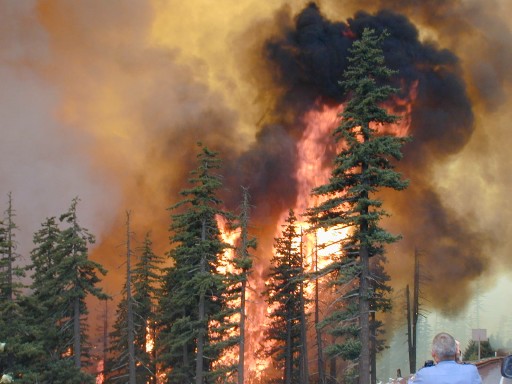
This means that the real impact of forests on global warming is the risk they pose when consumed in fires - during which they expell huge amounts of carbon, particulate matter, NOx, and SOx into the atmosphere.

For the full story, click the title link below to the Biopact site. Excerpts of their article are below:

------------------
Idea that forests are 'carbon sinks" no longer holds

New research now shows that instead of carbon sinks, some forests emit more carbon than they store. Forests can do little to improve the future climate or to lower the atmosphere's carbon levels. What they can do is make global warming worse.

This is the conclusion of a Canadian and American team of forest scientists that went into the woods in northern Manitoba to measure the carbon cycle of a forest ecosystem. They wanted to measure carbon going into and out of a living forest, to learn how effectively the forest was sucking carbon dioxide out of the atmosphere and storing it.

The results of this scientific work are congruent with research done in other forest types, most notably in tropical forests where the same observation was found: forests contribute more CO2 to the atmosphere than they store.

The consequences of these scientific results are manifold: forest nations will not be able to enjoy the benefits brought by the United Nations Framework on Convention on Climate Change because forests can no longer be filed as 'carbon sinks'. Re- and afforestation efforts are no longer a certain quick fix to climate change (they do have many other benefits, though), and large fossil fuel burning utilities who now often contribute financially to such efforts to appease their conscience, must rethink their strategies.


technorati , , , , , , ,

October 23, 2006

Terra Preta: Black is the New Green

In August I cited an article on Terra Preta that focused on an organic method of sequestering carbon in the soil.

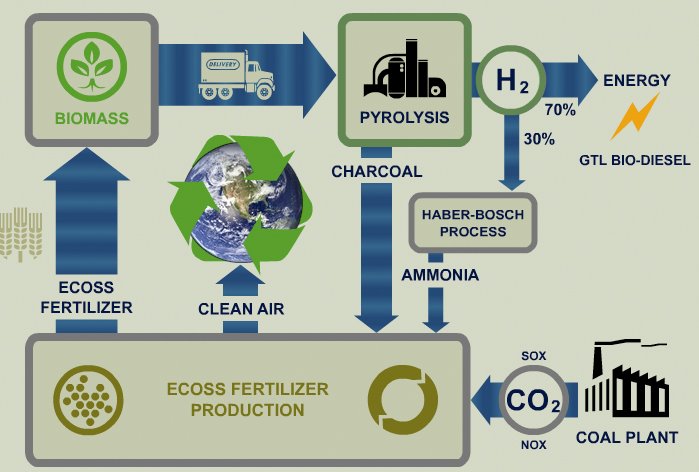
On the World Changing website, I recently ran across an article and a conversion technology animation involving pyrolysis and the generation of charcoal for the production of a high carbon fertilizer. Such a process would not only add to the sustainability of soil for the cultivation of healthy crops, but also provide a carbon sink alternative to geosequestration methods.

--------------------------
Terra Preta: Black is the New Green
by David Zaks and Chad Monfreda
Worldchanging

Carbon sequestration faces some major hurdles. Technical geosequestration methods could pump large amounts of CO2 deep underground but are still under development. On the other hand, natural methods that store carbon in living ecosystems may be possible in the short term but require huge swathes of land and are only as stable the ecosystems themselves. An ideal solution, however, would combine the quick fix of biological methods with the absolute potential of technical ones. Terra preta may do just that, as a recent article in the journal Nature reveals.

The difference between terra preta and ordinary soils is immense. A hectare of meter-deep terra preta can contain 250 tonnes of carbon, as opposed to 100 tonnes in unimproved soils from similar parent material, according to Bruno Glaser, of the University of Bayreuth, Germany. To understand what this means, the difference in the carbon between these soils matches all of the vegetation on top of them. Furthermore, there is no clear limit to just how much biochar can be added to the soil.

Claims for biochar's capacity to capture carbon sound almost audacious. Johannes Lehmann, soil scientist and author of Amazonian Dark Earths: Origin, Properties, Management, believes that a strategy combining biochar with biofuels could ultimately offset 9.5 billion tons of carbon per year-an amount equal to the total current fossil fuel emissions!

Biofuels are touted as 'carbon neutral', but biofuels and biochar together promise to be 'carbon negative'. Danny Day, the founder of a company called Eprida is already putting these concepts into motion with systems that turn farm waste into hydrogen, biofuel, and biochar.

The Eprida technology uses agricultural waste biomass to produce hydrogen-rich bio-fuels and a new restorative high-carbon fertilizer (ECOSS) ...In tropical or depleted soils ECOSS fertilizer sustainably improves soil fertility, water holding and plant yield far beyond what is possible with nitrogen fertilizers alone. The hydrogen produced from biomass can be used to make ethanol, or a Fischer-Tropsch gas-to-liquids diesel (BTL diesel), as well as the ammonia used to enrich the carbon to make ECOSS fertilizer.

Terra preta's full beauty appears in this closed loop. Unlike traditional sequestration rates that follow diminishing marginal returns-aquifers fill up, forests mature-practices based on terra preta see increasing returns. Terra preta doubles or even triples crop yields. More growth means more terra preta, begetting a virtuous cycle. While a global rollout of terra preta is still a ways away, it heralds yet another transformation of waste into resources.


technorati , , , , , , ,

September 30, 2006

WORLDWIDE: The Poor as Producers

Who believes that the inbalance of have and have-not nations can be the basis for substantive change in the new millennium?

The BioPact unites EU citizens and African citizens who work towards a common bioenergy future, in which the EU couples part of its green energy policies to its humanitarian and development policies in Africa. We also monitor biofuels and bioenergy news coming from the developing world in general.


As the interdependence of continental ecologies throughout the world becomes more apparent, the importance of initiatives like BioPact's needs support. I remind readers of the great vision of this consortium by inviting them to read their recent article about the field of development economics and C.K. Prahalad's views as presented in his book The Fortune at the Bottom of the Pyramid: Eradicating Poverty Through Profits. Below is a mere fragment of the introduction.

-----------------
The rural poor as energy producers - a critique of the "bottom of the pyramid" development discourse
from BioPact

At Biopact, our original interest in the bioenergy sector stems from professional engagements in the (poor parts of) emerging economies and from working in the field of development economics. Simply put, it quickly became apparent to us that the potential for the production of biofuels in the South offers a genuine way to tackle poverty. The simple reasoning is that:

(1) energy prices and GHG emissions costs worldwide are rising sharply (oil prices tripled in under 3 years time with no serious declines in sight for the long-term; carbon-markets are being introduced on a planetary scale)

(2) biofuels offer an immediate alternative to fossil fuels and there is an ever growing global demand for them; contrary to other renewables (like wind or solar), the energy and carbon-neutrality coming from bioenergy can be traded physically as a commodity as well as virtually in the form of carbon credits (this is important because it allows producers to play on two markets at the same time)

(3) poor farmers in the South have a competitive advantage (land, labor, climate) and can thus boost their incomes by becoming energy producers who can sell to us competitively. A simple proposition.


It is crucial that we stress this productive capacity of the poor and their ownership over it. Of the 3 billion people that live on less than two dollars a day, some 70% live in rural areas with more than half of them being farmers. With moderate capital interventions and basic knowledge and tech transfers, they can diversify into energy production over which they retain control.


technorati , , , , , , ,

September 27, 2006

Microdiesel: Bacteria engineered to produce biodiesel

Add another word to your vocabulary - "microdiesel" - as in biodiesel fuel produced by using micro-organisms engineered for fuel production. Like enzymatic and bacterial catalysts mentioned elsewhere on this blog, this new process expands the range of feedstock that can be employed in biofuel production.

Thanks to Biopact for identifying the online reports on this technology. Use the links here for more details.

-------------------
New Fuels from Bacteria
from Science Daily

A breakthrough in the production of biofuels has been developed by scientists in Germany. Research published in the September 2006 issue of Microbiology, a Society for General Microbiology journal, describes how specially engineered bacteria could be used to make fuel completely from food crops.

Microdiesel, as the scientists have named it, is different from other production methods because it not only uses the same plant oils, but can also use readily available bulk plant materials or even recycled waste paper if engineering of the production strain is more advanced.

Also, it does not rely on the addition of toxic methanol from fossil resources, like many other biodiesels. The bacteria developed for use in the Microdiesel process make their own ethanol instead. This could help to keep the costs of production down and means that the fuel is made from 100% renewable resources.

"Due to the much lower price of the raw materials used in this new process, as well as their great abundance, the Microdiesel process can result in a more widespread production of biofuel at a competitive price in the future", says Professor Steinbüchel.


technorati , , , , ,