December 21, 2005

Californians Struggle Over Conversion Technology

The Los Angeles County Solid Waste Management Committee/ Integrated Waste Management Task Force is responsible for coordinating the development of all major solid waste planning documents prepared for the County of Los Angeles and its 88 cities in Los Angeles County. Consistent with these responsibilities and to ensure a coordinated and cost-effective solid
waste management system in Los Angeles County, the Task Force also addresses issues impacting the system on a Countywide basis. The Task Force has been steadfast in its support of AB 1090, the California Assembly Bill to update terminology, heirarchy status, and diversion credit for "conversion technologies" in California. Below is the text from their publication "Inside Waste" publicly distributed during the Summer of 2005. Assembly debate on the bill is scheduled for the first quarter of 2006.

------------

Conversion Technology Report to the Legislature Salvaged

The Task Force has been a consistent advocate for evaluating and implementing conversion technologies as an alternative to landfilling and incineration for many years. Currently, 40 million tons of residual solid waste (the material remaining after recyclables have been extracted) are landfilled each year in California. Instead of being landfilled, this waste can be converted into useable products, clean-burning fuels, and renewable energy. Conversion technologies can address the State’s growing solid waste management needs, including lessening our dependence on landfills and imported fossil fuels, reducing greenhouse gas emissions, and bringing our State closer to a “zero waste” sustainable future.

AB 2770, signed into law in 2002, directed the Waste Board to conduct studies in order to determine the environmental feasibility of conversion technologies, assess their relative impacts, and ascertain their potential affect on the recycling market in California. On March 15, 2005, the Waste Board capped off the results of a two-year effort involving two studies completed in conjunction with the Universities of California at Riverside and Davis, and adopted a comprehensive report which found that conversion technologies “can result in substantial environmental benefits for California” while complementing and enhancing California’s recycling market. The report helped to place conversion technology in the proper perspective; it recommended a number of sound and impartial improvements that would allow the legislature and other decision makers to consider conversion technology based on the merits of its relative benefits and impacts.

However, on April 19, the Waste Board buckled under intense political pressure from an environmental group* and certain key members of the State legislature who held up the confirmation process of Waste Board Chair Rosario Marin and Waste Board Member Rosalie Mule unless they “reconsidered” the adopted report. As a result of this pressure, the Waste Board voted to remove any information or recommendation not specifically required in AB 2770, purging significant portions from the report including a recommendation to consider providing diversion credit to jurisdictions utilizing conversion technology. Because many local jurisdictions voiced opposition and concern to these revisions at the May 11 meeting, the Waste Board amended their April 19 decision. In a significant victory for proponents of conversion technologies, the information and recommendations eliminated from the original report will be made available in a separate public document, providing an independent corroboration by the State Waste Board to the positive aspects of conversion technologies the Task Force had been promoting. The Task Force would like to thank cities and all other groups and individuals who sent letters of support to the Waste Board and spoke at the May 11 meeting. Because of the hard work of local jurisdictions, agencies, and non-profit organizations, conversion technologies are gradually becoming a reality.

Our next step is to continue advocating for passage of legislation, such as AB 1090, that advances the development of conversion technology. AB 1090, written based in part on the recommendations of the original report, would correct inaccurate definitions of conversion technologies in the current statute and provide jurisdictions utilizing conversion technology facilities with diversion credit, an important financial and regulatory incentive for facility development. Joint legislative committee hearings for AB 1090 are scheduled to be held this summer and/or this fall, and it will take significant grassroots support to overcome entrenched opposition to this Bill. The Task Force asks that stakeholders continue to send letters to their state representatives expressing support of conversion technology, and legislation like AB 1090 that will help make conversion technologies a reality in California the way they have become a reality in Europe and Japan.

*Californians Against Waste

Well-to-Wheels Analysis of Advanced Fuel/Vehicle Systems

Conducted in May, 2005, this cross-discipline study tabulated data that compares different fuel/vehicle systems for Well-to-Wheels energy usage and emissions. Below is the background behind this study. The title is linked to the entire report of 238 pages.

----------------------

Well-to-Wheels Analysis of Advanced Fuel/Vehicle Systems — A North American Study of Energy Use, Greenhouse Gas Emissions, and Criteria Pollutant Emissions

Norman Brinkman, General Motors Corporation
Michael Wang, Argonne National Laboratory
Trudy Weber, General Motors Corporation
Thomas Darlington, Air Improvement Resource, Inc.

An accurate assessment of future fuel/propulsion system options requires a complete vehicle fuel-cycle analysis, commonly called a well-to-wheels (WTW) analysis. In this WTW study, we analyzed energy use and emissions associated with fuel production (or well-to-tank [WTT]) activities and energy use and emissions associated with vehicle operation (or tank-to-wheels [TTW]) activities. Energy resources, such as petroleum, natural gas (NG), coal, and biomass, as well as the energy carrier, electricity, are considered as feedstocks to produce various transportation fuels, including gasoline, diesel fuel, hydrogen (H2), ethanol (EtOH), compressed natural gas (CNG), methanol (MeOH), and Fischer-Tropsch (FT) diesel. The propulsion systems evaluated were spark-ignition (SI) engines, compression-ignition (CI) engines, hydrogen fuel cells, and fuel processor fuel cells, all in non-hybrid and hybrid electric configurations. This study updates and supplements a previous (2001) North American study, conducted by GM and others (General Motors [GM] et al. 2001), of energy consumption and greenhouse gas (GHG) emissions associated with advanced vehicle/fuel systems (GM Phase 1 North American study). The primary purpose of this Phase 2 study is to address criteria pollutant emissions, including volatile organic compounds (VOCs), carbon monoxide (CO), nitrogen oxides (NOx), particulate matter with a diameter smaller than 10 microns (PM10), and sulfur oxide emissions (SOx). We also updated the vehicle modeling for energy consumption with the latest powertrain maps and added some additional propulsion systems, such as hydrogen internal combustion engines (ICEs).

Brazil and Japan Link Up on Ethanol

Thanks to Green Car Congress, here are two background stories from earlier in 2005 that report on the growing interest in Japan to expand imports of Brazilian ethanol.

-----------------

Brazil and Japan Link Up in Biofuel Pact
4 February 2005

Brazil’s Ministry of Agriculture, Livestock, and Supply and the Japan Bank for International Cooperation (JBIC) are developing a bilateral program to increase the production of ethanol and biodiesel in Brazil and its supply to the Japanese market.

Beginning later this spring, Japanese and Brazilian technicians will create a detailed profile of Brazil’s agro energy sources and develop plans for the expansion of ethanol production in Brazil.

In 2003 the Japanese government regulated a law that authorizes the mixture of up to 3% of alcohol with gasoline.

Now their interest has turned to financing long-term projects capable of increasing Brazilian production and guaranteeing the continuous and regular exportation of this product to Japan.

This will allow Brazil to accumulate exportable surpluses to supply the Japanese market, which, at the outset, already presents a demand of 1.8 billion liters per year.

The future bilateral agreement should also provide incentives to the production of biodiesel in Northeast Brazil.

-----------

Japan and Brazil Cooperating to Promote Ethanol Use
26 May 2005

Bloomberg. Japanese Prime Minister Junichiro Koizumi and Brazilian President Luiz Inacio Lula da Silva agreed on the need for more non-governmental cooperation to promote ethanol use, according to a statement released in Tokyo by the Ministry of Foreign Affairs.

Japan expects to introduce more vehicle fuels containing ethanol, and will pursue ongoing talks with Brazil.

Japan is turning to ethanol as a fuel additive as one measure to help it meet its goal for reducing emissions of greenhouse gases under the Kyoto Protocol. Brazil wants to increase its ethanol exports by boosting sales to Japan, the world’s second-largest gasoline market after the U.S.

Six Japanese prefectures are running tests with ethanol. Currently, gasoline in Japan may contain up to 3% ethanol. Brazil requires gasoline to contain a minimum of 25%.

Separately, Japanese media reported that Mitsui & Co. is working with Brazil’s Petrobras and Vale do Rio Doce (CVRD) to study how to expand Brazil’s exports of ethanol.

Earlier this year, Brazil’s Ministry of Agriculture, Livestock, and Supply and the Japan Bank for International Cooperation (JBIC) announced that they were developing a bilateral program to increase the production of ethanol and biodiesel in Brazil and its supply to the Japanese market.

Asian Investments in Ethanol

Here are three (green) "tea leaves" from the Far East. In unrelated stories posted this week (12/14-21/2005) on the Green Car Congress website, large multi-national investments are being made to increase ethanol production and build Flexible Fuel Vehicles (FFV) in the region. Objective - to provide alternative fuels to meet growing demand for liquid fuel and to meet Kyoto reduced greenhouse gas emissions obligations.

-----------

Indonesian Oil and Gas Firm Building Country’s First Ethanol Plant

Medco Energi International, Indonesia’s largest upstream oil and gas exploration firm, plans to build a $34.13-million ethanol plant in Lampung province in 2006. This will be the first ethanol plant in the country.

The joint-venture facility between Medco and PT Trade Bioenergy Indonesia will have annual production capacity of 60,000 kiloliters (about 16 million gallons US) of ethanol targeted for export, with cassava-derived starch and sugarcane molasses as the feedstocks, Medco said in a statement.

Production will begin by the end of the third quarter of 2007, with the main markets to be Singapore and Japan.

-----------

Petrobras Forms Japanese Ethanol Joint Venture

Petrobras, the Brazilian state-owned oil and gas company, has formed a joint venture company with Nippon Alcohol Hanbai (NAH) of Japan to produce fuel ethanol for the Japanese market. The new venture—Nippaku Ethanol—will be a 50-50 partnership between the two firms and will aim at the Japanese market.

For Petrobras, the JV is a strategic mechanism for further internationalizing its business and entering an important fuel market, thereby opening up other opportunities for fuel distribution in Japan. Japan is looking to ethanol as one of the mechanisms for achieving its Kyoto obligations.

Earlier this year, Japanese Prime Minister Junichiro Koizumi and Brazilian President Luiz Inacio Lula da Silva agreed on the need for more non-governmental cooperation to promote ethanol use.

Japanese law allows three percent ethanol in gasoline, which would mean a market for 1.8 billion liters of the alcohol-based fuel each year. Increasing the blend cap to 10%—as is under discussion—would result in a 6 billion liter market.

Petrobras made its first export shipment of ethanol in July 2005, destined for Venezuela. Initial forecasts are for a monthly shipment of some 25,000 cubic meters (some 6.6 million gallons US). The company had announced earlier in the year that it intended to begin participating in the renewable fuels export market. Petrobras will invest US$330 million in the next five years to develop the requisite transport infrastructure.

-----------

Ford Plans New FlexFuel Engine Plant in Philippines

Ford Motor plans to invest P1.1 billion (US$20 million) to add a flexible fuel engine plant in the Philippines. The engine plant will be Ford’s first flexible fuel facility in the region. Flexible fuel engines run on gasoline or ethanol blends of up to 85% (E85). The facility will produce 100,000 engines over the next five years valued at about US$100 million. Start-up activities will be undertaken in the first quarter next year, with full production to begin before the end of 2006.

We expect that this new investment by Ford will take the Philippine automotive industry to its next level of development by establishing its leadership in the Flexible Fuel technology in the region. Flexible Fuel technology is part of Ford’s global vision on innovation, and with this investment Ford intends to build the Philippines as its ASEAN Center of Excellence in Flexible Fuel Technology.
—Peter Daniel, President of Ford Asia Pacific and Africa

The building of the first Flexible Fuel engine facility in the Philippines is aligned with the Philippine government’s alternative fuel program that seeks to reduce dependence on imported conventional fuel and promote a cleaner environment while potentially spurring agro-industrial investment in the rural areas through the production of ethanol.

The engines from the Philippine plant will be used in the production of Flexible Fuel vehicles (FFVs).

December 17, 2005

CA AB 1090 - 11/16/05 - Results of Independent Study of Emissions

A principal obstacle to the passage of AB 1090 has been the lack of emissions data for conversion technologies. To address this issue, the Center for Environmental Research and Technology of the Bourns College of Engineering of the University of California/Riverside (aka, CE-CERT) undertook emissions tests of three facilities:
1. International Environmental Solutions (IES) plant located in Romoland, California, a pyrolysis facility followed by thermal oxidation for the purpose of power generation
2. BRI Energy's pilot plant in Fayetteville, Arkansas, a gasification facility followed by synthesis gas fermentation of ethanol with cogeneration of electricity,
3. Integrated Environmental Technologies (IET) located in Richland, Washington, a plasma arc gasification facility whose design is primarily for the disposal of hazardous or medical wastes.

All three facilities' emissions tests indicate compliance or near compliance with the air pollutant emissions regulations of several standards. Only IES registered over compliance in any of the tests, but this result could be remedied with the installation of readily available technology prior to future emissions.

-----------------

Evaluation of Environmental Impacts of Alternative Thermal Conversion Technologies Using Municipal Solid Waste Feedstocks

William A. Welch
Principal Development Engineer
Center for Environmental Research and Technology
Bourns College of Engineering
University of California - Riverside

I have been involved over the past few years in alternative conversion technologies for energy production and/or waste reduction.

Today, I am going to speak to my experiences specifically with evaluation of several pilot plant operations in the United States, their emissions test results and where they stand in comparison to existing regulatory limits.

I am specifically going to speak to the International Environmental Solutions plant located in Romoland, California, a pyrolysis facility followed by thermal oxidation for the purpose of power generation, which was tested this summer with an MSW residual feedstock by an independent third party laboratory under a South Coast Air Quality Management District research permit.

The second facility is BRI Energy, which has a pilot plant in Fayetteville, Arkansas. It is a hybrid technology, a combination of thermal and biological conversion technologies. It has an up front gasifier which is a thermal technology followed by a bioreactor containing enzymes that convert the gasifier products into ethanol, with secondary heat that is used for electrical energy production.

The third technology is Integrated Environmental Technologies located in Richland, Washington, a plasma arc gasification facility whose design is primarily for the disposal of hazardous or medical wastes.

I have obtained test results from each of these facilities, and in the case of the first two actually observed the testing first hand and have done my own independent evaluation of those test results.

For comparisons to emission limits, I have looked at similar types of facilities, in particular the US EPA emission limits for starved-air combusters, which are used commonly in MSW incineration; the South Coast Air Quality Management District permit limits for the two incinerators we have here in the South Coast Air basin; and then, German limits. In Europe, they do have limits for gasification facilities using MSW.


The dioxin/furan emissions for all of three facilities (as shown above) were below existing US EPA limits for starved air combusters and German limits for thermal MSW conversion. I’ve not listed the South Coast limits for dioxins and furans because that is performed on a case-by-case basis.


The current U.S. inventory of dioxin and furan emissions to the air (see chart on previous page) shows that the backyard burning of trash is still the largest source of dioxin emissions to the air in the United States at almost 500 grams per year. Medical waste incineration still poses a big concern as far as emissions of dioxins. Municipal waste combustion is the third highest level.

You can go down through more common industrial processes—the coal-fired boilers, cement kilns that use hazardous waste as a fuel supplement, heavy duty diesel trucks, primary magnesium production, industrial wood combustion…and I found it interesting that also on the list is secondary aluminum smelting. Aluminum recycling is also a significant source of dioxin and furan emissions, not subject, however, to waste board oversight.

All of these generated dioxin and furan emissions significantly above the levels of the tested conversion technologies, whose results represented raw data without standard emissions controls.

The pilot plant test results that we have witnessed and have evaluated independently indicate compliance or near compliance with air pollutant emissions regulations. Continuous and periodic monitoring of these processed is recommended. Care must be taken that these facilities are operated properly and monitored such that there is no accidental release of any component into the atmosphere. Further characterization of the solid and liquid residues is recommended. There is a potential for post-process recycling. Those materials that could not be removed up-front for some reason, such as glass and metals, depending upon the feedstock, could potentially be recovered in the char and ash.

——————————

CONTEXT: On November 16, 2005 the California Assembly Natural Resources Committee, Chaired by Hon. Loni Hancock, held a hearing in the Los Angeles City Council Chambers. A distinguished panel of speakers presented a series of arguments advocating the passage of AB 1090 - which would correct language in its predecessor (CA Bill AB 939 in 1989) and provide additional "diversion credits" for waste that is diverted from landfill. This hearing was full of facts from credible sources that are germaine to any debate on the subject of conversion technology - the need, the opportunity, the comparative emissions data, and the overall environmental benefits.

Oak Ridge National Laboratory - BFIN website

This is reprinted from The Energy Blog...

Bioenergy Feedstock Information Network

Oak Ridge National Laboratory (ORNL) recently redesigned its Bioenergy Feedstock Information Network (BFIN), dramatically increasing ease of access to feedstock related data and analysis. The U.S. Department of Energy's Bioenergy Information Network (BIN), housed at ORNL, had become a central location for information related to biomass and in particular feedstocks. Information available at the site includes:

* Reports * Fact sheets * Databases * Presentations * Images * Links * News * Events * Contacts


Biomass feedstock types with information featured on the site includes:

Agricultural residue
Forestry residue
Herbaceous crops
Municipal/Urban residues
Oil crops
Short-rotation woody crops
The new website, renamed Bioenergy Feedstock Information Network (BFIN), is now available publicly at http://bioenergy.ornl.gov

The site's overall design and structure is predicated on primarily two publications: The 2003 Roadmap for Agricultural Biomass Feedstock Supply in the United States and the 2005 Biomass as Feedstock for a Bioenergy and Bioproducts Industry: The Technical Feasibility of a Billion-Ton Annual Supply. The industry segments, outlined in the Roadmap, help to partially structure the site's content into five distinct supply system processes; harvesting, storage, preprocessing, transportation and system integration. The Billion-Ton study provided the structure by which feedstock types were categorized. The study also drives many of the numbers and projections that form the basis for information on the site.

Biomass as Feedstocks for a Bioenergy and Bioproducts Industry: The Technical Feasibility of a Billion-Ton Annual Supply

Published on the U.S. Department of Energy's Bioenergy Feedstock Information Network (BFIN) website is a factual report of the biomass potential of the United States from agricultural and forestry sources. It contains charts and graphs analyzing and organizing the major categories of resources available. While many critics of ethanol as a longterm solution to U.S. liquid fuel needs point to the limits of corn availability to supply sugar fermentation in sufficient quantity, this report accepts the broader view that all biomass, including what we consider agricultural and forestry waste, will be convertible to ethanol through emerging production processes.

----------------

Biomass as Feedstocks for a Bioenergy and Bioproducts Industry: The Technical Feasibility of a Billion-Ton Annual Supply


Biomass is already making key energy contributions in the United States, having supplied nearly 2.9 quadrillion Btu (quad) of energy in 2003. It has surpassed hydropower as the largest domestic source of renewable energy. Biomass currently supplies over 3 percent of the total energy consumption in the United States — mostly through industrial heat and steam production by the pulp and paper industry and electrical generation with forest industry residues and municipal solid waste (MSW). In addition to the many benefits common to any renewable energy use, biomass is particularly attractive because it is the only current renewable source of liquid transportation fuel. This, of course, makes it an invaluable way to reduce oil imports — one of our nation’s most pressing energy and security needs. Biomass also has great potential to provide heat and power to industry and to provide feedstocks to make a wide range of chemicals and materials or bioproducts.

The overall mission of the U.S. Department of Energy’s (DOE) Office of Energy Efficiency and Renewable Energy (EERE) is to strengthen the nation’s energy security, environmental quality, and economic vitality in public-private partnerships that enhance energy efficiency and productivity; bring clean, reliable and affordable energy technologies to the marketplace; and make a difference in the everyday lives of Americans by enhancing their energy choices and their quality of life.

The purpose of this report is to assess whether the land resources of the United States have the potential to produce a sustainable supply of biomass that can displace 30 percent of the country’s current petroleum consumption.

This study found that the combined forest and agriculture land resources have the potential of sustainably supplying much more than one-third of the nation’s current petroleum consumption. Forest lands, and in particular, timberlands, have the potential to sustainably produce close to 370 million dry tons of biomass annually.

Agricultural lands can provide nearly 1 billion dry tons of sustainably collectable biomass and continue to meet food, feed and export demands. This estimate includes 446 million dry tons of crop residues, 377 million dry tons of perennial crops, 87 million dry tons of grains used for biofuels, and 87 million dry tons of animal manures, process residues, and other residues generated in the consumption food products.

In the context of the time required to scale up to a large-scale biorefinery industry, an annual biomass supply of more than 1.3 billion dry tons can be accomplished with relatively modest changes in land use and agricultural and forestry practices.

December 16, 2005

Win-Win-Win for the Environment, Farms, and the Nation

The Energy Foundation is conducting research and promoting the use of biofuels and windpower for rural revitalization and national energy security. Funded by The McKnight Foundation of Minneapolis, Minnesota, their biofuels program "is focused on helping the U.S., and especially the Midwest, become the world leader in advanced technologies for producing biofuels - liquid fuels from crops and agricultural waste."

Visit this site for numerous links to relevant papers entitled:
The New Harvest Wind Power and Biofuels for Rural Revitalization and National Energy Security
Ethanol From Biomass America's 21st Century Transportation Fuel
Growing Energy How Biofuels Can Help End America's Oil Dependence
25 by 25 Agriculture's Role in Ensuring U.S. Energy Independence - A Blueprint for Action
Cultivating a New Rural Economy Assessing the Potential of Minnesota's Bio-industrial Sector
Bringing Biofuels to the Pump An Aggressive Plan for Ending America's Oil Dependence
WTO Legal Impacts on Commodity Subsidies Green Box Opportunities in the Farm Bill for Farm Income Through the Conservation and Clean Energy Development Programs

--------------

Providing liquid fuels from American farmlands is a win-win-win for rural economies, national energy security, and the environment.

The Energy Foundation's new biofuels program is an expansion of The McKnight Foundation-Energy Foundation Upper Midwest Clean Energy Initiative. Funded by The McKnight Foundation of Minneapolis, Minnesota, our biofuels program is focused on helping the U.S., and especially the Midwest, become the world leader in advanced technologies for producing biofuels - liquid fuels from crops and agricultural waste.

Rural America needs new economic development opportunities. At the same time, America faces the challenge of obtaining the affordable, reliable, and clean energy needed for economic growth. America's rural landscape is the place to substantially address both challenges. Converting crops to liquid fuels produces new income streams for farm communities and, by displacing oil imports, improves U.S energy security.

Managed by the Energy Foundation, this initiative is primarily focused on commercializing cellulosic ethanol, an alcohol fuel that can be made from a variety of crop inputs - from corn stover, to wheat straw, to perennials like native switchgrass. Recent studies project that cellulosic ethanol could meet a significant share of U.S. light vehicle gasoline demand with big oil security benefits and large reductions in vehicle global warming pollution.

Toward this vision, the Biofuels Program will consider support for:

• economic analysis of cellulosic ethanol potential;
• environmental analysis of sustainable paths to scale-up cellulosic ethanol;
• development of model policies to rapidly commercialize cellulosic ethanol;
• state and federal decision-maker education efforts; and
• regional networks of farm-leaders interested in advancing ethanol commercialization policies

Our recent white paper, The New Harvest, Biofuels and Windpower for Rural Revitalization and National Energy Security, outlines the rural economic benefits from these new technologies and the most important policies to advance them.

Wisconsin AB 15: Farmers, Conservation Groups Hail Bi-partisan Ethanol Bill Passage

In a display of broad-based agreement, "special interests" from both sides of the aisle came together to push through legislation that will help strengthen Wisconsin's economy while lowering greenhouse gas emissions. Equally impressive is the strong support (73-20) shown for a more farsighted goal of shifting ethanol production from strictly agricultural feedstock to 20% other cellulosic sources by 2020.

Farmers, Conservation Groups Hail Bi-partisan Ethanol Bill Passage

First in nation to support a 20% goal for biomass ethanol from prairie grass, wood waste, and other cellulose sources

Madison—Wisconsin farmers and conservation groups today hailed the passage of AB 15, the Ethanol Mandate Bill by the Wisconsin Assembly sponsored by Representative Steve Freese of Dodgeville by a 54-38 margin. The bill would require 10% ethanol be sold in regular gas by October 2006.

“This is a major Christmas present for Wisconsin’s farm families,” said John Malchine, a farmer and owner of Badger Ethanol of Monroe. “The more fuel we grow and make here, the less we need to import from the Mideast.”

Wisconsin currently imports $13 billion of gas and other fuels, which costs jobs and drains our economy.

"The Assembly deserves praise for supporting a fuel policy that will yield multiple benefits to Wisconsin," said Michael Vickerman, Executive Director of RENEW Wisconsin. "In one fell swoop this vote enhances energy security, reduces greenhouse gases, and strengthens the agricultural industry. We salute Rep. Freese for his energetic leadership on this vital issue, and commend Rep. Berceau for recognizing the need to develop fiber-based sources of ethanol.”

Berceau sponsored an amendment to create a 20% goal for biomass ethanol from prairie grasses, wood waste and other biofuels by 2020, and a process to achieve that goal. This is the first measure in the nation to set a goal for biomass ethanol and passed by an overwhelming 73-20 margin.

“We have a simple choice: get more oil from the risky Mideast or grow more fuel in the Midwest,” Brett Hulsey, President of Better Environmental Solutions, an environmental consulting firm which help draft the amendment. “Homegrown ethanol, especially when made from prairie grass, is a better environmental solution. This bill promotes biomass ethanol with a clear goal and sets up a process to achieve that goal. It also beats drilling for oil on sensitive coastlines or in the Arctic National Wildlife Refuge.”

Farmers, Conservationists Hail WI Ethanol Bill Passage, Page Two
A new study, “The New Harvest: Wind Power and Biofuels for Rural Revitalization and National Energy Security" by the Energy Foundation, shows that a major commitment to biofuels like ethanol, energy efficiency, and smart growth could replace all gasoline for cars, truck, and light duty vehicles by 2050. This could account for eight million barrels of oil a day, three times what we now import from the Persian Gulf. (See the report at www.ef.org.)

“Developing biomass ethanol can help restore our native prairies, protect our streams with buffer strips, and help farmers to earn income while using more conservation practices,” said Andy Olsen, Policy Advocate for the Environmental Law and Policy Center. It also reduces greenhouse air pollution. Biomass ethanol from prairie grass, corn residue, wood waste, and other natural resources can increase ethanol production and reduce greenhouse air pollution by 57-70%, according to a new study published in Environmental Science and Technology. University of Toronto engineers compared the life-cycle energy costs of low-sulfur reformulated gasoline and 85% ethanol fuel (E-85) over short and medium term in everyday driving scenarios. The research concluded that E-85 fuel cut greenhouse air pollution by 57% from prairie grass and 65% from corn residue over gasoline by 2010 and by 70% by 2020.

The bill now moves to the Wisconsin State Senate and will be taken up in the New Year.

December 15, 2005

Wisconsin AB 15: Ethanol Cuts Greenhouse Gas

Wisconsin's State legislature is considering the passage of a bill (AB 15) to mandate "that the minimum specifications for automotive gasoline must require that automotive gasoline contain not less than 9.2 percent nor more than 10 percent ethanol." In support of this bill, surveys have been conducted that provide statistics about the impact of ethanol on greenhouse gas emissions.

---------------

Wisconsin Clean Energy News

IMMEDIATE RELEASE
December 14, 2005

New Study Shows Ethanol Can Cut Greenhouse Air Pollution, Increase Energy Security

Madison—Better Environmental Solutions and RENEW Wisconsin today released a new study showing ethanol from prairie grasses and corn residues or stover can reduce our reliance on risky foreign oil and cut dangerous greenhouse air pollution.

“Biofuels like ethanol can save lives, jobs and money by cutting greenhouse air pollution and helping our family farmers,” said Brett Hulsey, President of Better Environmental Solutions, an environmental consulting firm. “We have the choice to get our fuel from the risky Mideast or help our farmers produce it in the Midwest.”

In the just-published article in Environmental Science and Technology, engineers at the University of Toronto compared the life-cycle energy costs of low-sulfur reformulated gasoline and E-85 ethanol over short and medium term life-cycles in everyday driving scenarios. The research concluded that E-85 fuels created 50% less greenhouse air pollution than their RFG counterparts on the short-term (10 years) to 70% or better when assessed over medium-range timeframes (20 years).

“Apart from conservation, the most effective strategy for managing energy price volatility and reducing atmospheric pollution is to substitute locally produced biofuels for the petroleum we import,” said Michael Vickerman, Executive Director of RENEW Wisconsin. “Passing AB 15, the ethanol bill currently before the Legislature, would be a worthy milestone toward that end.”

Wisconsinites import almost $10 billion in gas and other energy sources each year, costing at least 200,000 jobs.

“The more we invest now in developing Wisconsin’s renewable energy resources, the healthier and more secure the state’s economy and citizens will be in the decades to come,” Hulsey said.

Wisconsinites import almost $10 billion in gas and other energy sources each year, costing at least 200,000 jobs.

BetterEnvironmentalSolutions.Com is an environmental consulting firm dedicated to practical solutions today for a better tomorrow and promoting clean energy to save lives, jobs and money. RENEW Wisconsin promotes clean energy strategies to power the state’s economy in an environmentally responsible manner.

MORE INFORMATION
Brett Hulsey, President
Better Environmental Solutions
Brett@BetterEnvironmentalSolutions.com
608.334.4994

Michael Vickerman
Executive Director
RENEW Wisconsin
mvickerman@renewwisconsin.org
608.255.4044

Wisconsin AB 15: Biofuels In Our Future

As many biofuels skeptics are learning, there is more than one way to produce ethanol - "Don't stop with corn." Here is an editorial in a Midwestern newspaper that casts the issue in a proper light - think beyond the present technology toward development of a breakthrough solution.

In a turnaround, the editorial department of The Capital Times decided that Wisconsin Assembly Bill AB 15 (a measure to mandate that automotive fuel in Wisconsin gasoline contain roughly 10% ethanol) deserved their support. Ethanol is a great renewable fuel, so focus should be on supporting development of production techniques that further reduce costs and increase benefits. The next challenge is to identify the right combination of feedstock and production process that makes economic sense for each market.

-------------
Biofuels In Our Future

The Capital Times :: EDITORIAL

Tuesday, December 13, 2005

Last winter, when a bill was introduced in the state Legislature that would require a 10 percent ethanol blend be sold at all Wisconsin gas stations, we expressed reservations. Proponents claim E-10 would reduce fossil fuel use but, in fact, manufacturing ethanol from corn is a very energy-intensive process.

Today, however, promising advances in research and a willingness on the part of state officials, particularly Gov. Jim Doyle, to endorse the broader field of biofuels have changed our view.

We now support Assembly Bill 15, with a caveat: Don't stop with corn. We endorse this bill as a step toward the eventual manufacture of ethanol from a variety of non-corn sources, including switch grass, municipal waste and wood waste. Researchers here in Madison and elsewhere are developing the enzymes needed to produce ethanol from these sources. The next challenge is to make that process cost-effective.

An ethanol mandate would help spur such efforts and encourage Wisconsin to become a leader in the emerging and economically promising biofuels field.

Already, researchers at Badger State Ethanol in Monroe are looking at techniques to power the plant with corn fiber instead of natural gas. In addition to manufacturing ethanol, which it sells for about a dollar less a gallon than regular gasoline, the plant also markets the fuel's byproducts of carbon dioxide and distillers grains.

Besides being a homegrown fuel, ethanol offers benefits that include optimizing engine performance and reducing some of the toxic chemicals in gasoline. In the near future, more of us will be driving flex-fuel vehicles powered by an E-85 mixture. U.S. automakers, along with Nissan, are offering 20 flex-fuel models for 2006. On average, their greenhouse gas emissions are 25 percent lower than those of cars running on regular gasoline. Wisconsin has 18 E-85 gas stations on line as well as four ethanol plants, with several more in the works.

By encouraging biofuel use, countries like Brazil and China are notably cutting their use of oil. The U.S. remains shamefully behind -- instead continuing to give massive tax breaks to the oil industry, thereby assuring our continued gluttonous consumption of a polluting, and finite, fuel. Consider this: The true cost of a gallon of gas would be $7 or more without the federal subsidies. E-10 opponents who complain about the modest 50-cent per gallon ethanol subsidy conveniently ignore the much larger incentives enjoyed by the oil industry.

The Legislature should mandate E-10 with an eye toward a future vibrant bioeconomy using renewable resources. Other Midwest states recognize this growing potential and Wisconsin should not lag behind.

December 14, 2005

EU Launches Biomass Action Plan

The European Union is aggressively pursuing policies that will insure ample non-fossil fuel sources are developed over the next few decades. Below are excerpts from their Communication from the Commission of the European Communities.

Excerpts from the EU Biomass Action Plan:

Energy is key in helping Europe achieve its objectives for growth, jobs and sustainability. High oil prices put the spotlight on Europe’s increasing dependency on imported energy.

The Union needs to respond strongly to this challenge. The central importance of energy policy in helping Europe to meet the challenges of globalisation was confirmed by the Union’s heads of state and government at the informal Hampton Court summit in October 2005.

With this in mind, the Commission is carrying out a fundamental review of its energy policy. This will be the subject of a Green Paper in spring 2006, with three main objectives – competitiveness, sustainability and security of supply.

Essential elements of this policy are, within the context of stronger economic growth, the need to reduce energy demand; increase reliance on renewable energy sources, given the potential to produce them domestically and their sustainability; diversify energy sources; and enhance international cooperation. These elements can help Europe to reduce dependence on energy imports, increase sustainability and stimulate growth and jobs.

This action plan sets out measures to increase the development of biomass energy from wood, wastes and agricultural crops by creating market-based incentives to its use and removing barriers to the development of the market. In this way Europe can cut its dependence on fossil fuels, cut greenhouse gas emissions and stimulate economic activity in rural areas.

This communication sets out a coordinated programme for Community action, including measures to improve demand for biomass; improve supply; overcome technical barriers; and develop research.

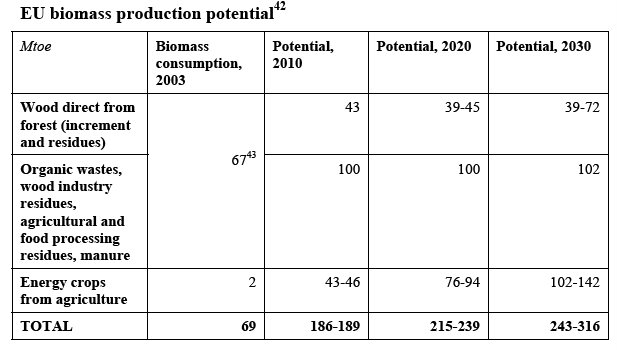
EU biomass production potential

The first column of the table shows the quantities of EU-produced biomass used for energy purposes today. The following columns show the potential contribution in 2010, 2020 and 2030. The potential for 2010 is 2½ times the contribution today. The potential for 2020 is 3 to 3½ times the contribution today, and the potential for 2030 is 3½ to 4½ times that of today.
Forests, wastes and agriculture all make a big contribution to this potential for growth. The increase from forestry comes from an increase both in fellings and in the use of residues. The increase from agriculture is driven by the reform of the common agricultural policy.


Research priorities - transport biofuels

The main area of research is second-generation biofuels made from various biomass resources and wastes, e.g. bioethanol, biodiesel, DME. The technical feasibility of converting cellulose material (straw/wood) and organic wastes into bioethanol and biodiesel has been demonstrated. But costs need to be brought down and technology needs to be further developed and demonstrated for commercial-scale production (over 150 000 tonnes a year). If this can be done, second-generation biofuels should offer three major advantages:
• they will secure a higher market share for biofuels by allowing the use of a wider range of raw material;
• the cultivation process (if any) could be less environmentally intensive than for ordinary agricultural crops;
• this lower intensity will be reflected in lower greenhouse gas emissions from cultivation.

D.O.E. on Synthesis Gas Fermentation

The U.S. Department of Energy (D.O.E.) has defined "Synthesis Gas Fermentation" (or syngas fermentation) as a scientifically recognized method of producing cellulosic ethanol separate from the more widely know method called "enzymatic hydrolysis."

The promise of syngas fermentation is that it is applicable to the conversion of a much broader range of feedstock (including urban, agricultural, and forestry waste) than either sugar fermentation or enzymatic hydrolysis. As a production technology, it is also much more energy efficient, faster, and more economical(1) than the other two.

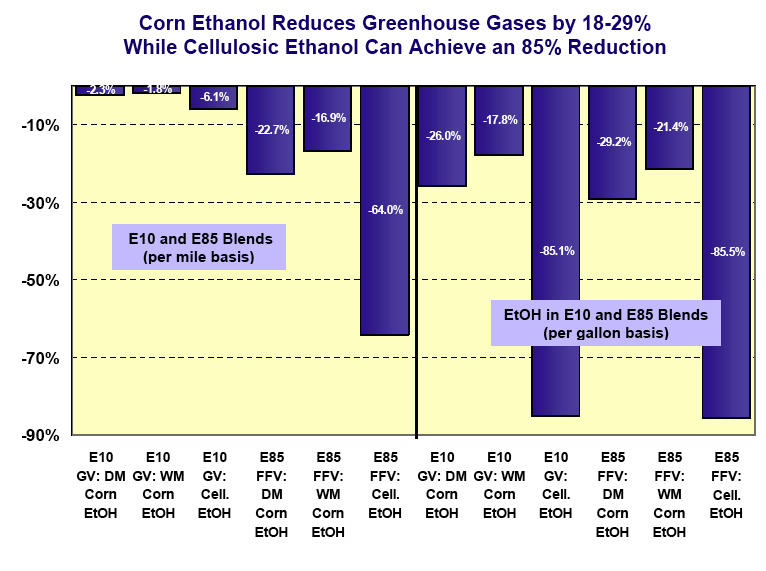
According to D.O.E. studies conducted by the Argonne Laboratories of the University of Chicago, one of the benefits of cellulosic ethanol over sugar-fermented ethanol is that it reduces [greenhouse gas emissions] (GHG) by 85% over reformulated gasoline. By contrast, sugar-fermented ethanol reduces GHG emissions by 18% to 29% over gasoline

From the U.S. D.O.E. website.....

Synthesis Gas Fermentation

Biomass can be converted to synthesis gas (consisting primarily of carbon monoxide, carbon dioxide, and hydrogen) via a high temperature gasification process. Anaerobic bacteria are then used to convert the synthesis gas into ethanol. Bioresource Engineering Inc. has developed synthesis gas fermentation technology that can be used to produce ethanol from cellulosic wastes with high yields and rates.

Background
Biomass can be converted to synthesis gas, which consists primarily of carbon monoxide (CO), carbon dioxide (CO2), and hydrogen (H2), via the gasification process. Gasification technology has been under intensive development for the last 2 decades. Large-scale demonstration facilities have been tested and commercial units are in operation worldwide. The problems with the application of gasification have been economic, not technical. In the past, the product from gasification has been electricity or heat source, and the low value of these products in today's market is insufficient to justify the capital and operating costs. However, if gasification is coupled with the production of a higher value liquid fuel, the combination could be a viable alternative energy technology.

After gasification, anaerobic bacteria such as Clostridium ljungdahlii are used to convert the CO, CO2, and H2 into ethanol(1). Higher rates are obtained because the process is limited by the transfer of gas into the liquid phase instead of the rate of substrate uptake by the bacteria.

Commercial Status
BioEngineering Resources, Inc.
Bioengineering Resources, Inc. (BRI) has developed syngas fermentation technology that can be used to produce ethanol from cellulosic wastes with high yields and rates. The process of combined gasification/fermentation has been under development by BRI for several years. The feasibility of the technology has been demonstrated, and plans are under way to pilot the technology as a first step toward commercialization. The conversion of a waste stream, the disposal of which is costly, into a valuable fuel adds both environmental and economic incentives. The yields can be high because all of the raw material, except the ash and metal, is converted to ethanol. BRI has developed bioreactor systems for fermentation that results in retention times of only a few minutes at atmospheric pressure and less than a minute at elevated pressure. These retention times result in very economical equipment costs(1,2). The biocatalyst is automatically regenerated by slow growth of the bacteria in the reactor.

References
1Klasson, K.T.; Elmore, B.B.; Vega, J.L.; Ackerson, M.D.; Clausen, E.C.; Gaddy, J.L., "Biological Production of Liquid and Gaseous Fuels from Synthesis Gas." Applied Biochemistry and Bioengineering, Vol. 24/25, 1990, pp. 857-873.

2Vega, et al. 1989, Proprietary Reports.

More on BRI Energy available at Green Car Congress, 07/09/05

December 10, 2005

CA AB 1090 - 11/16/05 - Results of URS Conversion Technology Research

The Los Angeles City Council contracted URS Corporation to conduct a study to identify technologies that would help it reach its landfill diversion goals through conversion technologies. URS Corporation Vice President Daniel F. Predpall reports that mature technologies already in operation from Europe and Japan already meet all California permit requirements and that AB 1090 should be enacted to enable these conversion technologies to become employable options for solid waste management.
——————————

HEALTH IMPACTS OF CONVERSION TECHNOLOGIES IN CALIFORNIA

Daniel F. Predpall, Vice President - Power Business Line
URS Corporation


URS has recently released several comprehensive technical reports on technologies that can convert MSW to energy. In these studies we evaluated over fifteen different thermal and biological processing technologies and roughly 200 suppliers of these technologies. Members of our staff who have designed and operated these facilities and hold patents for them conducted these evaluations. I would classify these staff as experts in this area. As a result of these studies we have identified a number of technologies that were specifically designed to process MSW in relatively large quantities.

Examples of these technologies exist today and are successfully operating in Europe and Japan. I am totally confident that, based upon the studies that we have conducted during the past four years, conversion technologies such as those that are specifically designed to process MSW, will meet all permit requirements in California.

Furthermore, we expect that the emissions for these technologies will be well below existing regulatory limits and health risks will be acceptable. Conversion technologies will enhance recycling of MSW, because these technologies use the more homogeneous post-recycled residues as a feedstock. It is important to realize that no solid waste disposal or processing method is risk free.

For example, landfilling of MSW results in air pollution and in some cases contamination of our water. All life cycle impacts of solid waste management options must be evaluated before rendering judgment about acceptability of the particular alternative. When we do this we will adopt technologies that will provide environmentally sustainable solutions that will maximize benefits to our communities and minimize environmental burdens. In summary, the conversion of MSW into energy can offer a potential solution to two needs in California, generating desperately needed renewable energy using MSW, which. by the way, represents a virtually unlimited supply of a low-cost feedstock, and slowing the practice of burying our garbage, which then contaminates our water and air.

The legislature should include conversion as another solid waste management option and thereby demonstrate the performance of these systems, and keep California in the forefront of energy and solid waste management in this country.

——————————

CONTEXT: On November 16, 2005 the California Assembly Natural Resources Committee, Chaired by Hon. Loni Hancock, held a hearing in the Los Angeles City Council Chambers. A distinguished panel of speakers presented a series of arguments advocating the passage of AB 1090 - which would correct language in its predecessor (CA Bill AB 939 in 1989) and provide additional "diversion credits" for waste that is diverted from landfill. This hearing was full of facts from credible sources that are germaine to any debate on the subject of conversion technology - the need, the opportunity, the comparative emissions data, and the overall environmental benefits.

CA AB 1090 - 11/16/05 - R.E.N.E.W. L.A.’s Need for Regulatory Relief

In this presentation, Los Angeles Councilmember Greig Smith addresses the need for clarification of terms in current State regulations to enable his ambitious landfill diversion plan (see "R.E.N.E.W. L.A. - Jumpstarting Waste Reform in L.A." article 08/05) to proceed with development. He also outlines the environmental and employment benefits to Los Angeles for implementation of "R.E.N.E.W. L.A."
——————————

LOCAL GOVERNMENT PERSPECTIVE

Hon. Greig Smith, Member, City Council
Chair, Ad Hoc RENEW LA Sub-Committee, City of Los Angeles


We introduced in Los Angeles City Council two months ago a program called RENEW LA. It stands for Recovering Energy, Natural Resources and Economic Benefit from Waste. It is a shifting, new paradigm from the traditional AB 939 programs, which most cities are involved in, to the next level of waste disposal. And that is zero waste. Not zero trash, but zero waste. We believe that by the year 2025 we can eliminate 90% of our trash from dependence on landfills.

There are six main features to RENEW LA.

First of all, sustainability. Los Angeles like most cities in California is a mature city. We don’t have the luxury of wide open canyons and places to dispose of our trash, nor do we desire as a city to any longer engage in that technology, which destroys our earth and pollutes our communities.

Resource and Conservation. Certainly the reduction in the use of natural resources is important in our society today, particularly in California. Environmental protection is paramount to anything we do as a city.

Renewable Energy. The City of L.A., like the state of California, has a 20% renewable energy program in force. We are moving that forward to the year 2010 from 2017. Our trash can provide a valuable asset to that. In fact, we believe we can provide 330 MW to the energy production in Los Angeles, which is about one-third of its RPS requirement.

Economic Benefit is an important part of this, as is Environmental Justice. Anything we do, obviously environmental justice is a major issue.

Currently in the City of Los Angeles, we have a trash problem of some 9.3 million tons of trash per year. 5.8 million tons are recycled. That’s a 62% diversion rate, one of the best in the state of California, and 3.5 million tons are landfilled at a cost of about $87 million. What is left over is about 14,000 tons per day, of which the City government itself picks up 3500 tons per day.

We will increase our current effort in recycling from 62% to an estimated 70% or 75% through the use of additional MRFing and conversion technology facilities. The remainder will be used to create energy, fuels, compost and biochemical products.

We conducted a program through our URS company contract, which identified five technologies that would be useful to the city in achieving its goals. Contrary to what some environmental groups say, many of these are mature technologies and not simply theories. There are over 170 plants in operation in Europe and another 70 in Japan, so they are mature technologies with long track records.

Our projections show that we can dispose 93% of our trash by 2025, but in doing so it is very important to state that AB 939 took us to the first level, the first paradigm of dealing with trash. In 1990 the City of Los Angeles was disposing of 3,500 tons of trash per day. Today, fifteen years later, with a 62% diversion rate, we are landfilling 3,500 tons of trash per day, the exact same amount. And the reason is, our growth. All we managed to do is divert our growth rate, and so we want to take it to the next level.

In the City of Los Angeles environmental justice is a major factor. In our RENEW LA plan, each part of the city will handle its own trash. We have seven basic regions of the city. Each region will have its own conversion technology plant, from the richest areas of the San Fernando Valley to the poorest areas of South Central, so that each area handles it own trash.

Looking at traditional landfilling in Los Angeles, the average tipping fee is around $25 per ton at the local landfills. At we look at the other hauling and transfer facilities, the price gets up to around $60 per ton. As you look at the County’s rail haul proposal, you get up to $70 to $100 per ton in the year 2011. The County Sanitation Board is moving toward as the primary disposal method for Los Angeles County. In our URS study, the cost of disposal with conversion technologies ranged between $20 and $60 per ton, so their costs are competitive with current local landfilling practices.

On the environment, conversion technologies are much cleaner in almost every respect than current landfilling technologies or other mass burn facilities. They create less truck traffic, less congestion, less NOX, SOX and greenhouse gases. They provide green energy to make us less dependent on fossil fuels. Our analysis says that we would produce 400,000 tons less emissions each year by converting to conversion technology plants.

AB 939 created 600 new businesses in Los Angeles, some 8,000 jobs and $2 billion in revenue. Conversion technologies in our analysis create ten times more jobs than current landflling operations. We’ve got green collar jobs increasing the tax base, increasing the job base in the City of Los Angeles.

We believe LA is a great case study of what should be done in California and the United States. We are the largest city in the United States to take this step.

We urge you to pass AB 1090, because AB 1090 will help us reach our goal. The correct placement of conversion technologies in the waste disposal hierarchy, correct definitions of such terms as “conversion technologies” and “gasification” and diversion credits will be important factors to us as we build these plants.

——————————

CONTEXT: On November 16, 2005 the California Assembly Natural Resources Committee, Chaired by Hon. Loni Hancock, held a hearing in the Los Angeles City Council Chambers. A distinguished panel of speakers presented a series of arguments advocating the passage of AB 1090 - which would correct language in its predecessor (CA Bill AB 939 in 1989) and provide additional "diversion credits" for waste that is diverted from landfill. This hearing was full of facts from credible sources that are germaine to any debate on the subject of conversion technology - the need, the opportunity, the comparative emissions data, and the overall environmental benefits.

CA AB 1090 - 11/16/05 - Background for Conversion Technology Bill

On November 16, 2005 the California Assembly Natural Resources Committee, Chaired by Hon. Loni Hancock, held a hearing in the Los Angeles City Council Chambers. A distinguished panel of speakers presented a series of arguments advocating the passage of AB 1090 - which would correct language in its predecessor (CA Bill AB 939 in 1989) and provide additional "diversion credits" for waste that is diverted from landfill. This hearing was full of facts from credible sources that are germaine to any debate on the subject of conversion technology - the need, the opportunity, the comparative emissions data, and the overall environmental benefits.

These introductory remarks by the Chair of the California Integrated Waste Management Board, trace the brief background of conversion technology legislation in and the need for updating guidelines for diverting municipal solid waste (MSW).
——————————

THE STATE OF WASTE IN CALIFORNIA

Hon. Rosario Marin
Chair, California Integrated Waste Management Board


The future of waste and resource management in California is the Board’s overarching mandate and we have been diligent in the effort to stay abreast of trends and technologies to ensure that the health and safety of the public and the environment are protected.

The Integrated Waste Management Board, with its local government and industry partners, has come a long way. In 2004, California achieved a 48% diversion rate, and I project that we will be at 50% this year, 2005. Given that the mandate for diversion rests on local governments and the board, and given that there are very few mandated producer responsibility programs, you must agree that this has been a monumental accomplishment.

While we have come so very far, it appears that we might be right back where we started way back in 1989. Today, we are facing some of the similar challenges that we were facing then. It appears to me that we are relying on old methods and old technologies to face even bigger and greater challenges.

When then-Assemblymember Sher wrote AB 939 in 1989, the main impetus was the threat of running out of landfill space, as well as the huge amount of resources that were thrown out as trash every day. At that time, California’s population was about 30 million people and we generated 49 million tons of trash. However, we only diverted about four million tons despite disposing of about 45 million tons. That’s about a 10% diversion rate.

In 2005, California’s population has now grown to over 36 million people, an increase of six million. However, we generate over 78 million tons of waste, that’s up from 49 million back then, but we divert 37 million tons of disposal. However, that means that we still dispose of almost 41 million tons of material every year. That’s 41 million tons of potential resources that clearly have no sustainable market.

Even if we continue to divert half of our generated waste from disposal, and even if we decrease our disposal, with the growth in population, we will be faced with a management crisis at some point. Sooner or later we are going to run out of space.

The US Census projects that by the year 2030 California will be home to more than 46 million people. State and local governments will be responsible for providing basic services for an additional ten million people in the next 25 years--and that includes waste management services.

If we estimate that waste generation will remain pretty constant at a little less than two million tons per year per one million in population, then the state will be faced with the management of an additional 20 million tons of waste. This will put waste generation at about 100 million tons per year--100 million tons of potential resources that should not be landfilled and should be used for their higher and best use. What those uses are will be spurred on by public policy drivers that are somewhat different than what they were back in 1989.

What policy makers are faced with now are more than just landfill space and finding better uses for resources that might otherwise be wasted. We are faced now with vanishing open space, increased costs for energy, increasing dependence on foreign sources of fuel, controlling greenhouse gas emissions, increasing pressure to stop the export of potentially harmful materials and so forth.

There are no new landfills being planned in California, and as you are aware, it would take between ten and twenty years to plan, site and construct, even if you could find somewhere to put it.

Many jurisdictions are beginning to say “no” to the import of waste from other jurisdictions. Lawsuits, local initiatives and even legislative action to ban the import and import and export of waste are being initiated around the state.

We really do not have the luxury of waiting to find long-term waste management options. We need to explore new avenues that show promise as they have in other parts of the nation and the world.

We need to find new markets for larger quantities and different types of waste streams and we must start this process now.

I feel it is our shared duty, our shared responsibility to look beyond today and to the future. In looking into the future of waste management, I find that we must provide the courage to examine all means, all technologies and all ideas of managing our resources. My obligation, our obligation, is to meet the demand of the future by thinking beyond, to know that there are alternatives to landfill disposal. We cannot continue doing as we have always done, because if we do, we will forever be battling the same issues, facing the same old challenges. We must be given the opportunity to explore, to be able to say we have examined every opportunity and every technology that has been made available.

We must do it courageously and cautiously, with our mandate of protecting public health and safety and the environment as our paramount objective. With this obligation come many challenges, but if we are successful in our efforts, we will provide for a much better California for future generations--and that, after all, is our shared, sacred mission.

——————————

December 9, 2005

Biomass Coordinating Council Established

New Group Seeks to Bring Biomass Energy, Fuels and Products Together

The American Council On Renewable Energy (ACORE) on December 6, 2005 announced a new initiative named the Biomass Coordinating Council (BCC), and expansion of the Power-Gen Renewable Energy & Fuels (PGRE) trade show to feature biofuels.

BCC, a new entity with joint membership in ACORE, will work to accelerate the adoption of renewable biofuels, biopower and biobased products into mainstream American society through policy initiatives, convening, networking and communications. These efforts will enable BCC to further the goals of reducing dependence on imported oil, a cleaner environment and expanded markets for rural America.

Bill Holmberg, Chairman of BCC stated that, "BCC is the biomass focus of ACORE that recognizes the importance of the biomass industries as important partners in advancing renewable energy. It is an important time for ACORE and the industry especially since US refinery capacity shortages are somewhat offset by over 130 biorefineries now providing refined biofuels to help reduce gasoline and diesel usage. The numbers of operating biorefineries in the world is increasing weekly."

"The Renewable Fuels Association is pleased to be a member of BCC and ACORE, and to be involved in the Power-Gen Renewable Energy and Fuels Conference," stated Bob Dinneen, President, Renewable Fuels Association. "The U.S. ethanol industry is growing at a tremendous rate. Currently, there 94 ethanol plants in operation with a combined production capacity of well over four billion gallons annually. In addition, there are 27 plants in construction and eight plant expansions underway that will add more than 1.5 billion gallons of production capacity in the coming year. As we grow, it is important to work closely with other renewable energy technologies. This conference will provide us all with a unique opportunity to share ideas on working together in our common interest to promote national security, increase US industrial productivity, create millions of new jobs and stimulate the economy while better protecting the environment."

BCC promotes all renewable and sustainable uses of biomass, including: biofuels such as ethanol, methanol, biodiesel and other biofuels for surface transportation, maritime, and aviation use; using biomass to generate electricity and thermal energy; and to replace petrochemical-based products, such as plastics, solvents, lubricants, adhesives, and fertilizers. BCC supports use of all biomass feedstocks including waste streams and also recognizes that enhancing the soil and saving water are vital to the sustainability of biomass industries.

BCC membership is attained by joining ACORE, and identifying a principal interest in biomass. BCC and ACORE provide a common platform for the wide range of interests in the renewable energy community, including renewable energy industries, associations, utilities, end users, professional service firms, financial institutions, nonprofit groups, universities and other educational organizations, and government agencies.

Bud McFarlane, Chairman, Energy & Communications Solutions LLC remarked that, "Bill Holmberg, Chairman of Biomass Coordinating Council (BCC), has been a critical factor in activating my interest in promoting biofuels and other alternative fuels to free America from its dependence on foreign oil. BCC and ACORE have been leaders in advancing this cause from a national security perspective. The bringing together of national security experts, representatives from the auto, oil, and cutting-edge biofuels industries at the Power-Gen Renewable Energy and Fuels Conference, for the first time, is a major step forward."

"I am looking forward to highlighting the major benefits of flexible fuel vehicles (FFVs) at the biofuels and hydrogen track of the Power-Gen Renewable Energy and Fuels Conference," stated Phil Lampert, Executive Director, National Ethanol Vehicle Coalition. "There are close to 6 million FFVs on the road from Ford, Daimler Chrysler and GM being produced every day. The main thrust of the National Ethanol Vehicle Coalition (NEVC) is to greatly increase the E-85 (85% ethanol and 15% gasoline) fueling stations to meet the demands of these vehicle owners. We are pleased to be part of BCC and ACORE, and appreciate the support Bill Holmberg has provided the ethanol industry and NEVC from the outset of the industry."

For further information:
American Council On Renewable Energy

December 5, 2005

Encouraging Innovation in Conversion Technology


A new book, published this month in the United Kingdom, encourages legislators "to adopt institutional frameworks, including decentralised government, that encourage innovation, foster enterprise and enable individuals to develop strategies and technologies to cope with changing circumstances." This collection of articles questions whether we can expect to effectively accomplish greenhouse gas emissions goals by using governmentally imposed penalties for violators of arbitrarily established limits. Their arguments easily apply to other government initiatives and programs including those affecting recycling and waste conversion.

Below is a book summary published by the Sustainable Development Network...

Carrots, Sticks and Climate Change: A primer on down-to-earth ideas about climate policy

published Tuesday 6 December 2005
ISBN 1-905041-12-8
Price £12.00

Policymakers are being pressured to`address the threat of climate change. Most of the focus so far has been on ‘sticks’, in the form of government restrictions on greenhouse gas emissions. This book argues that ‘carrots’ are a more humane and cost-effective way for policymakers to address climate-sensitive problems.

Like it or not,we live in a world characterised by scarce resources. All decisions have costs and tradeoffs, and people make decisions about what costs to bear and which tradeoffs to make, and how, in response to incentives. It is here that social science – specifically, economics – can make an important contribution to the climate debate.

The book’s contributors argue that
• The world’s poorest people are most vulnerable to climate – that is to say, they suffer because of the prevailing weather, not changes in the climate per se.
• Global agreements that seek by government fiat to restrict greenhouse gas emissions are costly, ineffective against climate-sensitive problems, and would perpetuate poverty. In short, they are unsustainable.
• A more cost-effective, and more humane, solution is to tackle today’s problems which may be exacerbated by climate change – including malaria, food production, biodiversity loss, water shortages, coastal flooding and other problems.
• A broad adaptive strategy would not only provide insurance against climate sensitive problems, but it would have spill-over benefits for achieving sustainable development. The UK government’s own climate studies support this approach.
• In the 20th century, attempts to plan national economies failed dismally, destroyed the environment and harmed millions of people. Climate control by global and national governments would likely have the same consequences.
• The primary long-term solution to climate vulnerability is for all countries to adopt institutional frameworks, including decentralised government, that encourage innovation, foster enterprise and enable individuals to develop strategies and technologies to cope with changing circumstances.

December 3, 2005

CA AB 1090 - Support is Widespread

Below is a current list of municipalities, organizations, and associations that have either submitted letters of support for AB 1090 or appeared in support of the Bill at the April 22, 2005 hearing of the Assembly Natural Resources Committee in Sacramento and/or their hearing November 16, 2005 in Los Angeles.

The breadth of the support demonstrates that many associations representing a host of interests have analyzed the bill and found it to be important, environmentally safe, and corrective in its impact on resolving waste, energy, financial, employment, and environmental issues facing the State of California.

Municipal Organizations:
- League of California Cities
- Southern California Association of Governments
- California State Association of Counties
- San Gabriel Valley Council of Governments
- Los Angeles County Board of Supervisors
- Orange County Board of Supervisors
- Greig Smith, 12th District Councilmember, City of Los Angeles
- Santa Barbara City Council
- Ventura County
- Valley Industry and Commerce Association of the San Fernando Valley
- Santa Barbara County
- City of Hemet
Labor Organizations:
- California State Building Trades Council
- International Union of Operating Engineers
- California State Pipe Trades Council
- California State Association of Electrical Workers
- Western States Council of Sheet Metal Workers
Utilities:
- Department of Public Works
- Integrated Waste Management Task Force/Los Angeles County Solid Waste Management Committee
- County Sanitation Districts of Los Angeles County
Associations:
- California Agricultural Council California
- Farm Bureau Federation
- California Rice Commission
- Solid Waste Association of North America, California Chapters
- BioEnergy Producers Association
Companies:
- Republic Services (one of the nation’s leading waste management companies)
- Waste to Energy
- BRI Energy, LLC
Environmentalists:
- Ed Begley, Jr.

CA AB 1090 - VICA Supports Conversion Technology

On September 1, 2005, the Valley Industry and Commerce Association of the San Fernando Valley of Los Angeles County wrote a position paper supporting AB 1090, a California state Bill concerning Solid Waste Diversion Credit for Conversion Technology. Their paper is a concise explanation of the background and merits of the bill...

_____________________________________________________

Position Paper Supporting AB 1090 Solid Waste Diversion Credit
for Conversion Technology

Position: The Valley Industry and Commerce Association strongly supports the concept of providing diversion (recycling) credit for conversion technologies, as proposed by AB 1090 (Matthews). AB 1090 is a two-year bill which will not be heard again until January 2006, but since interim hearings on the issue are anticipated to occur this fall, VICA felt that it was appropriate to take a position at this time.

Providing diversion credit for conversion technologies recognizes that our municipal solid waste stream is a resource capable of producing electricity, fuel and other byproducts (such as liquid fertilizer), which reduces our dependence on declining fossil fuel reserves and can help to preserve space in existing landfills. The issue of establishing conversion technology plants throughout the City of Los Angeles is also discussed in Councilmember Greig Smith’s RENEW LA plan.

Background: Many people know that organic materials--also known as biomass--can be used to produce compost and mulch. But organic materials can also be used to produce electricity, fuel, other industrial products and paper. Each year, California generates over 20 million tons of organic waste, of which about 6 to 8 million tons are composted and mulched. Out of this, about 1.5 million tons are used as feedstock for the traditional biomass-to-energy industry.

But what about the almost 15 million tons now landfilled each year? These materials including wood that cannot be composted, and low-value paper residuals from material recovery facilities for which there is no recycling market demand, currently are sent to landfills. New conversion technologies such as hydrolysis, gasification, and anaerobic digestion have the potential to address these materials. AB 939, as passed in 1989, does not allow recycling credit for conversion technology. Unlike in 1989, today’s new technologies convert various kinds of wastes, like agricultural wastes, wood-based wastes, and other post-recyclable municipal solid waste (MSW), in a non-combustion environment, into positive uses.

AB 1090 seeks three changes in the law that would help promote these technologies, as follows:

• Conversion Technology Definitions: Definitions would be added for “conversion technology” and “conversion technology facility” which distinguish them from disposal and incineration. Corresponding amendments would also be made to the “transformation” definition, and to the “gasification” definition to correct scientific inaccuracies in the statute.


• Placement of Conversion Technologies in the Integrated Waste Management Hierarchy: This bill would update the integrated waste management hierarchy by replacing the Act’s “Recycling and composting” tier with a new tier designated as “Recovery through recycling, composting, conversion technology or other beneficial use technologies”. This change would distinguish conversion technologies from disposal and incineration in the priority of waste management practices, but would not automatically qualify these technologies for diversion credit.


• Diversion Credit for Conversion Technology Facilities: The final section of the bill would add a provision allowing local conversion technology projects to be eligible for diversion credit, consistent with conditions adopted by the California Integrated Waste Management (CIWMB) in 2002. Specifically, it provides that diversion credit may be granted on a case-by-case basis if the Board holds a public hearing in the jurisdiction in which a facility is proposed and makes specified findings regarding compliance of the project with all State minimum standards, its preservation of the recycling infrastructure, and its environmental and economic enhancement of the local integrated waste management system.


AB 1090 amends the Integrated Waste Management Act to incorporate new and emerging non-combustion thermal, chemical and biological technologies. These amendments reflect over five years of research, study and public input by the California Integrated Waste Management Board (CIWMB), in conjunction with the UC Davis and UC Riverside. The amendments adapt some of the findings and recommendations of the recently completed studies mandated by Matthews’ bill AB 2770 of 2002.

Economic Impact: Passage of AB 1090 will provide local governments with additional approaches to diverting waste from landfills by encouraging the implementation of conversion technologies.

November 19, 2005

CA AB 1090 - Ed Begley, Jr. Supports Conversion Technology

California AB 1090 is crucially important state legislation in California to amend language in solid waste regulations (drafted in 1989). The current language impedes the development of conversion technologies in this state. The new language in the bill would reprioritize the waste management hierarchy to include conversion technologies, redefine these technologies more accurately, and allow jurisdictions that use conversion technology facilities to obtain diversion credit toward meeting their 50 percent diversion goal.

Below is noted environmentalist Ed Begley, Jr.'s letter to Chairperson Loni Hancock registering his arguments in support of California AB 1090...

I believe in the sustainability of our planet and I attempt to live my belief by consciously reducing, reusing and recycling. In this “built-in-obsolescence” society, reuse and recycle have limits, as do our landfills, necessitating that we find alternatives for managing our municipal solid waste. As much as I wish that we as a society could “get it” and all of us reduce, reuse and recycle for all of our benefit, I recognize that to be an unfulfilled dream. The next best thing is to recognize that science has found an answer in the alternative technologies described in AB 1090.

Alternative “conversion technologies,” or CTs, are no longer a figment of a creative mind and even though R & D for turning trash into fuel is incomplete, the technologies for creating green power from MSW are not only proven but is in operation right here in our own state of California (the fifth largest economic power in the world). However, those advanced technologies are being restricted by antiquated language of AB 939.

These technologies will be better served by the expanded language of AB 1090. When Byron Sheer authored AB 939 it was truly a giant step toward sustainability for our state and it set an excellent standard for the nation; but after time change is inevitable. It is now time for that progressive scientific change. By allowing AB 1090 to move forward you can take credit for a leap to sustainability as well as reducing landfill emissions and dependence on foreign or domestic oil.

China and India are on our doorstep announcing their intention to out-compete the U.S. through their advancements in technology. Please recognize that the antiquated paradigm of treating solid waste as “trash,” i.e., burying it in the ground creating pollution in the air, land and water, needs to change. That “trash” is a resource, a valuable commodity completing the cycle of birth to birth/cradle to cradle.

I recognize and applaud my colleagues in the environmental arena for the benefits their efforts and work over these many decades of Earth Days have accomplished. Perhaps the lack of a defining difference between pyrolytic conversion and incineration has clouded the ability of the non-scientific community’s mind to understand the difference. We now have that specific definition as a result of Juniper Consultancy of the United Kingdom stating that “conversion operations MUST enable sampling and (to the degree necessary) cleaning of the intermediary products. This one step making certain that intermediary gas, liquid and/or oil products from bio-conversion can be sampled and cleaned as necessary, prior to their use, enables the critical information feedback loop whereby contaminate management can be implemented in process.” International Environmental Services, a facility in Romoland, California, whose technology meets this definition, has all its testing data on record with the SCAQMD including a preliminary evaluation on its Health Risk Assessment as being less than one in a million.

More scientific information provided by the Argonne National Laboratory, America’s leading laboratory for the study of emissions from liquid fuels, reports that a gallon of cellulosic ethanol, in either E-10 or E-85, will reduce greenhouse gas emissions by 85% as compared to reformulated gasoline. Cellulosic materials include municipal solid wastes.

Please consider comparing the environmental performance of conversion technologies against other methods of recycling, such as smelting plants that are not subject to the same repressive statutory and regulatory restrictions. In addition, consider the economic impact on California’s labor force of exporting recycled materials to China, when they could be put to better use here at home.

When recyclers export materials to China, municipalities receive credit for diverting wastes from landfills. When green waste is used as alternate daily cover, these same agencies get credit; but if you use the same green waste to produce low-cost green electricity and liquid energy for California’s citizens, municipalities do not get a diversion credit. These inequities need correcting.

The positive environmental impacts of conversion technologies, therefore, are far-reaching. California needs domestically produced liquid energy. Its utilities need additional sources if they are to meet their mandates for cost-effective green power. AB 1090 requires that the California Integrated Waste Board approve each and every new technology. This is our safeguard.

The concept that today's waste streams can become tomorrow's liquid energy and electric energy supersedes all other solutions in our quest for energy independence. These worthy goals can be achieved through your support of AB 1090, which updates a statute written in 1989, and will enable the state to properly administer technologies developed in and for the 21st Century.

I urge you to support AB 1090 as written to create a greener California and a path to zero waste.

Sincerely,
Ed Begley, Jr.

CA AB 1090 - Solid Waste and Conversion Technology

California AB 1090 is crucially important state legislation in California to amend language in solid waste regulations (drafted in 1989). The current language impedes the development of conversion technologies in this state. The new language in the bill would reprioritize the waste management hierarchy to include conversion technologies, redefine these technologies more accurately, and allow jurisdictions that use conversion technology facilities to obtain diversion credit toward meeting their 50 percent diversion goal.

Below is my letter to members of Assembly Natural Resouces Committee in support of the passage of AB 1090...

I am a native Californian, father of four, a resident of the San Fernando Valley, living in the shadow of the Sunshine Canyon Landfill. Like you, I am willing to endure the smog, the health-hazards, the economic and cultural challenges that plague this great state for the privilege of participating in their solutions.

I am immensely proud of the leadership role that California plays in the development and dissemination of new technologies that transform the world - in agriculture, aerospace, civil engineering, energy, computers, communications, media, and entertainment. “Eureka!” is a very apt motto.

I consider AB 1090 to be a linchpin whose passage will immediately draw billions of dollars in fresh investment into California to address multiple environmental problems and what our governor purports is the "defining issue of our time" - our renewable energy future.

We can change a cascading environmental liability (inefficient waste conversion) into a cascading asset with this bill. At the cost of updating a few choice words on an otherwise out-dated regulation, California can lead in unleashing a paradigm shift – cleanly converting agricultural, forestry, and urban waste into green power and renewable fuels. This shift will provide long-lasting solutions to growing problems of state-wide and world-wide significance – including greenhouse gases emissions, global warming, landfills, unemployment, and our dependence on dwindling fossil fuel resources.

What is the risk of passing AB 1090? Nothing that can’t be controlled by environmental regulations that are already in place. We don’t need the “perfect” conversion technology solution and we can’t wait until one is found. We need to act now to ensure that good people are supported (not obstructed as is the case without this bill) in their efforts to develop and perfect solutions.

What is the cost of NOT passing AB 1090?

• More landfills, more sewage spread on agricultural lands.
• More hazards from aerobic and groundwater seepage.
• Mounting costs to farmers for removal of their wastes.
• More fires in forests whose diseased timber is left in place because of undeveloped conversion options.
• More dependence on foreign fuels - and more friction between dependent cultures.
• More exposure to the corrupt decision-making of energy and electricity markets.
• More greenhouse gas emissions, more smog.

A delay means the loss of opportunity for California to lead a new paradigm shift in environmental and energy sciences. Turning waste into energy could save California billions in imports, bolster our agricultural industry, increase employment, and improve our quality-of-life in myriad ways.

Please don't "waste" this opportunity. Lead now by voting “YES” on AB 1090.

October 9, 2005

A Manhattan Project for Conversion Technology


There is a riveting and extremely important non-fiction book that was published this year by New York Times columnist Thomas L. Friedman called "The World is Flat: A Brief History of the Twenty-First Century."

His thesis is that developing countries (primarily India, China and other Asian countries) are apt to reach parity with the U.S. in the next generation or two because of the "flattening" of opportunity arising from changes in communication and their motivation to succeed in areas we have become complacent, namely science and engineering.

Here's an EXCERPT that relates directly to developing alternative fuels and reducing greenhouse gases (page 283)...

"...it is not easy to get people passionate about the flat world. It takes some imagination. President Kennedy understood that the competition with the Soviet Union was not a space race but a science race, which was really an education race. Yet the way he chose to get Americans excited about sacrificing and buckling down to do what it took to win the Cold War--which required a large-scale push in science and engineering--was by laying out the vision of putting a man on the moon, not a missile into Moscow.

"If President Bush is looking for a similar legacy project, there is one just crying out--a national science initiative that would be our generation's moon shot: a crash program for alternative energy and conservation to make America energy-independent in ten years. If President Bush made energy independence his moon shot, in one fell swoop he would dry up revenue for terrorism, force Iran, Russia, Venezuela, and Saudi Arabia onto the path of reform--which they will never do with $50-a-barrel oil (!)--strengthen the dollar, and improve his own standing in Europe by doing something huge to reduce global warming. He would also create a real magnet to inspire young people to contribute to both the war on terrorism and America's future by again becoming scientists, engineers, and mathematicians.

"I have consistently been struck that my newspaper columns that have gotten far and away the most positive feedback over the years, especially from young people, have been those that urged the president to call the nation to this task. Summoning all our energies and skills to produce a 21st century fuel is George W. Bush's opportunity to be both Nixon to China and JFK to the moon in one move."

ISAF 2005: Alcohol Fuel Flexibility - Progress and Prospects

NOTE: The International Symposium on Alcohol Fuels held its 15th annual meeting Sept. 26-28, 2005 in San Diego, CA. There were many important and timely papers and presentations delivered at the event for which I will provide abstracts.

Thomas MacDonald of the California Energy Commission provided evidence that "alcohol flexible fuels vehicles" (a.k.a., Flex-Fuel Vehicles - FFV - that run on blends of gasoline and ethanol) "represent a mature, low-cost technology option for reducing reliance on petroleum transportation fuels." Should FFV development and infrastructure continue and expand, "alcohol fuel flexibility offers an achievable and inexpensive means of adding motor fuel supply diversity and of substituting alcohol fuels for gasoline."

The most obvious evidence of this is taking place in California. Pollution considerations in metropolitan areas of the state created substantial interest in additives that would oxygenate gasoline to combust more of each gallon while reducing harmful emissions. MTBE's were the initial additive backed and implemented by the petroleum refiners. However, MTBE's could not be stored without leakage, which fouled water resources - the cure being worse than the disease. At the end of 2003, California banned MTBE's in favor of more plentiful and benign ethanol. As a result 5.7% of all gasoline sold in California is actually ethanol as mandated by regulations, approaching one BILLION gallons per year. Currently 99% of this ethanol is imported into California from other states. This E6 (6% ethanol) gasoline runs without modification in all gasoline engines as would for any blend containing up to 10% ethanol (E10).

How costly would it be to modify current models of automobiles to make them FFVs? MacDonald states that "the incremental cost to the industry of producing full model lines of FFVs has been reduced to a very nominal amount, $100 per vehicle or less by some industry estimates." Because of FFV demand in Brazil and the Midwestern U.S., most major manufacturers of automobiles (including Ford, GM, Chrysler, and Volkswagen) offer FFV versions of their most popular automobiles.

He offers Brazil as an example of a society that has made a commitment to a fully ethanol/gasoline FFV fleet after 30 years of ethanol and infrastructure development. In Brazil, the average price of gasoline is 1.66 times the average price of ethanol. By 2007, all new automobiles sold in Brazil will be FFVs.


He concludes that "further national initiatives and investments aimed at expansion of FFV production and E85 fueling infrastructure need to be part of a clear overall national agenda for petroleum reduction and a specific straegy for the role of ethanol as a transportation fuel."

October 8, 2005

ISAF 2005: Greenhouse Gas Emission Results of Fuel Ethanol

NOTE: The International Symposium on Alcohol Fuels held its 15th annual meeting Sept. 26-28, 2005 in San Diego, CA. There were many important and timely papers and presentations delivered at the event for which I will provide abstracts.

Michael Wang of the Center for Transportation Research of the University of Chicago provided a paper and presentation on work sponsored by the U.S. Department of Energy. The title of the paper is "Updated Energy and Greenhouse Gas Emission Results of Fuel Ethanol." He stated that their research revealed that corn-based ethanol achieves energy and GHG emission reduction benefits relative to gasoline primarily because of:

1 - Improved productivity of U.S. corn farming in the past 30 years. Ethanol yield has been increased from less than 2.5 gallons per bushel of corn in the 1980s to 2.7 gallons in 2005.

2 - Reduced energy use in ethanol plants over the past 20 years. During that time, per-gallon energy use has been reduced by more than 30% in wet milling plants and by more than 40% in dry milling plants.

3 - appropriate treatment of ethanol's co-products. Another key finding was that cellulosic ethanol, which can be produced from feedstocks such as woody or herbaceous biomass, offers much larger energy and GHG emission reduction benefits than corn-based ethanol.

The figure below was used to illustrate the energy inputs used to produce and deliver a million British Thermal Units (Btu) of ethanol (EtOH) and petroleum gasoline to a refueling station.

As you can see, the fossil energy input per unit of ethanol is lower—0.74 million Btu fossil energy consumed for each 1 million Btu of ethanol delivered, compared to 1.23 million Btu of fossil energy consumed for each million Btu of gasoline delivered.

Another key finding he presented was that ethanol has a positive benefit in greenhouse gas (GHG) emissions reduction. On a per gallon basis, corn ethanol reduces GHG emissions by 18% to 29%, while cellulosic ethanol has an even greater benefit with an 85% reduction in GHG emissions.


Guide to abbreviations used:
BTU = British Thermal Units
Cell. = Cellulosic
DM = Dry Mill Process Ethanol
E10 = 10% Ethanol blend
E85 = 85% Ethanol Blend
EtOH = Ethanol
FFV = Flexible or Flex Fuel Vehicle
LPG = Liquified Petroleum Gas
NG = Natural Gas
RFG = Reformulated Gasoline
WM = Wet Mill Process Ethanol