November 18, 2006

Renaissance of the Forest Products Industry

Often maligned as a exploiter of America's forests, the Forest Products Industry (FPI) may be "behind the times" in some contexts, but it has great potential for leading the paradigm shift to renewable energy (both electricity and biofuels), reducing greenhouse gases, upgrading the nation's workforce, reducing dependence on fossil fuels, and suppressing the spread of tree diseases and forest fires due in part to global warming.
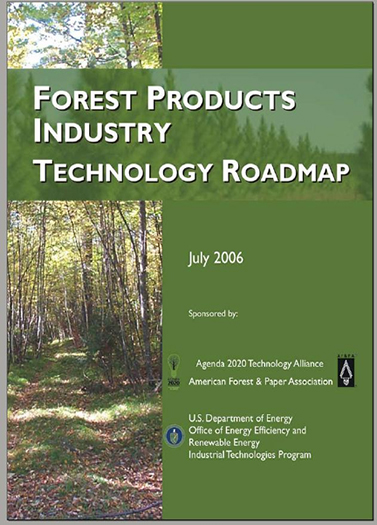
Recently released is the Forest Products Industry Technology Roadmap which provides a framework for reinventing and reinvigorating the industry through technological innovations in processes, materials, and markets. The 2006 update of the publication captures the Agenda 2020 Technology Alliance* vision and translates it into a set of focus areas and R&D priorities for each Agenda 2020 technology platform. The Roadmap provides a summary of priority technical challenges and research needs of the U.S. forest products industry, and highlights opportunities for partnerships with researchers and funding organizations.


Seven Technology Platforms Provide Focus for RD&D
1. Advancing the Forest “Bio-Refinery”
2. Sustainable Forest Productivity
3. Breakthrough Manufacturing Technologies
4. Advancing the Wood Products Revolution
5. Next Generation Fiber Recovery and Utilization
6. Positively Impacting the Environment
7. Technologically Advanced Workforce

As the publication states, the inescapable truth is that "America is the world’s largest producer and consumer of forest products. The industry is a vital contributor to the domestic economy, particularly in rural areas where many pulp and paper mills are located. In 2004, U.S. paper and wood products companies posted annual sales of close to $260 billion and employed almost one million Americans. Despite decades as a global leader, the industry is increasingly challenged by international competitors, who in some cases enjoy economic advantages in wood, labor, and environmental costs. Other competitive pressures include the growing use of electronic communication and advertising, product substitution, an aging process infrastructure, few technology breakthroughs, and scarcity of capital for new investments."

The time for a technological renaissance is now. Not only is demand for change the greatest that it has ever been, but also the "aging process infrastructure" of the industry is reaching the end of its lifecycle. Due to be replaced are Tomlinson boilers and other biomass- or fossil fuel-based boilers that are used for energy production and chemical recovery.

The FPI is calling for new investment in what it calls "Forest Biorefineries." Utilizing emerging technologies, these "optimized forest biorefineries would produce new streams of biomass-derived, high-value chemicals, fuels, and electric power while continuing to meet the growing demand for traditional wood, pulp, and paper products. This evolution could more than double economic returns on the industry’s manufacturing assets, create a significant U.S. manufacturing base for renewable transportation fuels, and help meet the nation’s need for clean, diverse, domestic energy supplies."

In addition to fulfilling functions such as providing combined process heat and power and/or recovering the pulping chemicals for re-use, the gasifiers would produce syngas, consisting largely of hydrogen and carbon monoxide. Depending on the economics of the situation, the syngas could then be burned in gas turbines to produce steam and power, used as a replacement for fossil fuels (such as natural gas in a lime kiln or fuel oil in a power boiler), or converted into transportation fuels, including Fischer-Tropsch liquid fuels or pure hydrogen.

*The Agenda 2020 Technology Alliance is an industry-led partnership with government and academia that holds the promise of reinventing the forest products industry through innovation in processes, materials and markets. Initiated in 1994 in partnership with the U.S. Department of Energy (DOE) to improve energy efficiency in the industry's manufacturing processes, Agenda 2020 is now organized as a membership alliance to accelerate research, demonstration and deployment of breakthrough technologies.


technorati , , , , , , ,

November 15, 2006

U.S. D.O.E.: 5-year Plan for Biomass Conversion

The U.S. Department of Energy has embarked on a long-term, systematic program to convert biomass into fuels, chemicals, materials and power. Earlier this year the D.O.E. Biomass Program released their 2007-2012 plan for orchestrating the development of feedstock infrastructure, sugar research, thermochemical conversion, products development, and integrated biorefineries. The full document is a crystal ball of business opportunities for venture capitalists, utilities, municipalities, research institutions, and compatible businesses.

What's missing is any reference to "urban" waste (unrecyclable municipal solid waste) as feedstock which is estimated to be 40 million tons per year in California alone and which, unlike other feedstock, is a mounting social liability in urgent need of diversion.

-------------------
U.S. Department of Energy: Energy Efficiency and Renewable Energy (EERE) Biomass Program

The U.S. Department of Energy (DOE) Biomass Program develops technology for conversion of biomass (plant-derived material) to valuable fuels, chemicals, materials and power, so as to reduce dependence on foreign oil and foster growth of biorefineries. Biomass is one of our most important energy resources. The largest U.S. renewable energy source every year since 2000, it also provides the only renewable alternative for liquid transportation fuel. Biomass use strengthens rural economies, decreases America's dependence on imported oil, avoids use of MTBE or other highly toxic fuel additives, reduces air and water pollution, and reduces greenhouse gas emissions. Today's biomass uses include ethanol, biodiesel, biomass power, and industrial process energy.

Tomorrow, biorefineries will use advanced technology such as hydrolysis of cellulosic biomass to sugars and lignin and thermochemical conversion of biomass to synthesis gas for fermentation and catalysis of these platform chemicals to produce slates of biopolymers and fuels. To expand the role of biomass in America's future, the DOE Office of the Biomass Program fosters biomass technologies with a balanced portfolio of research and development. While there are various other technologies for biomass conversion, the following graphic shows those that the Biomass Program is concentrating on, as outlined in its Multi-Year Program Plan.


Here are some excerpts from the plan:

-----------------------
U.S. D.O.E. Biomass Multi-Year Program Plan

2.1.1 Biomass Program Technology Elements
The Biomass Program is structured around five R&D technology elements. The first four elements focus on core research and development (R&D) that emphasizes enabling technology for biorefineries. The fifth element focuses on integrating these core technologies into specific commercial biorefinery scenarios, or pathways.
• Feedstock Interface Core R&D. Focused on developing new sustainable agricultural and feedstock infrastructure technologies and methods that will be required to supply lignocellulosic feedstocks to future large-scale biorefineries.
• Sugars Core R&D. Focused on fundamental and applied research and technology development for producing low-cost sugars from lignocellulosic biomass.
• Thermochemical Conversion Core R&D. Focused on developing cost-effective, efficient thermochemical technologies for producing intermediate products (e.g., syngas, pyrolysis oil) from lignocellulosic biomass and biomass-derived biorefinery residues.
• Products Core R&D. Focused on converting low-cost sugars and thermochemical platform intermediates into fuels, chemicals, and heat and power.
• Integrated Biorefineries. Focused on demonstrating and validating the integration of the technologies and systems developed in the four Core R&D platforms in commercial-scale biorefineries.

Biomass Resource Potential

This full resource potential could be available by mid-21st century when commercial-scale biorefineries are likely to exist. This annual potential is based on a more than seven-fold increase in production from the amount of biomass currently consumed for bioenergy and bio-based products. The existing feedstock supply infrastructure—harvesting, collecting, storing, preprocessing, and transporting—will need to be expanded significantly (>3.5 times today’s corn industry) to accommodate this large increase in biomass production.

The Feedstock Platform and Feedstock–Sugars Interface
The Feedstock Platform and Feedstock–Sugars Interface R&D focus on developing the new technology and methods necessary to produce and supply over one billion tons of biomass feedstock per year in a sustainable manner at $35/dry ton or less. This will require working closely with USDA, growers, feedstock equipment manufacturers, and processors to bring about the necessary changes in the agricultural and forestry systems and to form the integrated partnerships needed to supply fully-operational biorefineries.

Thermochemical Conversion
Thermochemical conversion provides an effective approach for producing fuels and products from a wide variety of biomass feedstocks, because it can readily convert all components of whole biomass, including lignin (a residue of fermentation process) and spent pulping liquors, to intermediate building blocks. Conversion of the lignin (typically 20%-30% of the biomass) to products is essential to achieve high efficiencies and added value in the biorefinery. Unlike the sugar fermentation processes, thermal processes are "omnivorous" in this regard and can convert all biomass feedstocks or residues to gas or liquid intermediates. In addition, in cases where there is low water availability, high lignin content, degradation during harvest, or diffusely distributed resource, which is a significant fraction of the available biomass resource; thermochemical conversion can provide a means to access the entire energy content of the 1.3 billion ton/year biomass resource.


technorati , , , , , , ,

November 14, 2006

The Social Costs of the Status Quo

Joel Makower, an excellent green business writer and lecturer, recently wrote an article titled A Stern Warning on Climate (and a Word about Wedges). Here are some expanded comments that I have made to his article...

When it comes to building new energy infrastructure there are costs and then there are social costs. For instance, TXU plans to build 11 coal-fired plants for Texas because they cost less than cleaner coal gasification plants. However, the social costs of coal combustion, even today's advanced technology versions, are incalculable if they increase ghg emissions, dependence on fossil fuels, and centralization of energy production.

What's interesting about the Stern Review on the Economics of Climate Change is that it focuses attention on social consequences that will arise if we ignore social costs. California, with its groundbreaking Global Warming Solutions Act, is starting to place caps and monetary value on carbon emissions through a carbon credit system. That will generate investment capital for new, more expensive but more socially responsible technologies to be deployed that may very well save us from some of the consequences of global warming.

Improving infrastructure stimulates the economy rather than depresses it - the inverse is also true. California voters just passed a staggering array of infrastructure bond measures because they understand the social costs of decaying infrastructure.

Clean conversion technologies are emerging that can reduce waste while producing biofuels and generating green electricity without further fouling the air, water, or land. Putting the brakes on emerging technology deployments by using environmental fear-mongering to suppress necessary regulatory reform could mire us in the status quo when we can least afford it.

Militant idealists of the environmental movement are going to have to suspend their cynicism about technology for us to achieve the goals listed in the Science Magazine article Stabilization Wedges: Solving the Climate Problem for the Next 50 Years with Current Technologies:
• Double the fuel economy of 2 billion cars worldwide from 30 mpg to 60 mpg
• Cut electricity use in all homes, offices, and stores by 25 percent
• Replace 1,400 large coal-fired power plants with gas-fired plants
• Increase solar power 700-fold to displace coal
• Increase wind power 80-fold to produce hydrogen for cars
• Add 100 times the current production of ethanol

The status quo dependence on raw combustion and centralized production is the enemy - not the emerging technologies, municipalities, utilities, or venture capitalists who take the investment risk to reduce the social costs of old technologies and outdated regulations.


technorati , , , , , , , ,

November 13, 2006

Cellulosic Ethanol RD&D - Mascoma Corp. Raises $30 Million

Cellulosic ethanol investment is upon us.

While gasoline and ethanol prices have substantially retreated from this summer's highs, it is clear to investors that the longterm future of cellulosic ethanol is secure. There is still a war going on, great insecurity over supplies of oil, and mounting demand for new technologies that will stem the growth of greenhouse gases.

Following the spiking inflow of money for corn sugar fermentation facilities that has dominated ethanol investment so far, this second phase will center on cellulosic feedstock conversion and could be quite substantial. Since the feedstock (agricultural and forestry waste) is cheaper than corn and can be procured from a broader geographic range of sources, research-oriented companies are competing to establish an unshakeable grasp on licenses, feedstock contracts, buyer commitment, and sources of investment.

One of the emerging biofuel technologies is "enzymatic hydrolysis" which exploits the use of enzymes to break down cellulosic feedstock into a glutinous syrup that can be fermented into ethanol. A pioneer institution of this process is Dartmouth College whose Thayer School of Engineering has been working on breakthrough enzymes and bioprocess technologies for decades. Through an exclusive license with Dartmouth, a company based in Cambridge, Mass called Mascoma Corp. has access to the research results.

I recently talked to Colin South, President of Mascoma, which has just announced their success at raising $30 Million to continue R&D and build new demonstration facilities as they develop plans for commercial deployment.

“We are entering a new and exciting phase,” said Mascoma President and Director Dr. Colin South. “With this second round of funding completed, we are focused on further developing our production technologies and processes to make fuel ethanol from cellulose a practical and sustainable reality for consumers.”

According to their website Mascoma is working on:
• Bioengineering of the ethanol-producing microbes to reduce the number of steps in the conversion process
• Developing and deploying cellulosic ethanol conversion systems tuned for appropriate processes for different feedstocks
• Partnerships on enzyme and pretreatment technologies
• Partnerships to develop and operate ethanol plants across various sites and feedstocks
• Continually improving ethanol production processes and rapidly scaling-up unique technologies, process improvements, and cost reductions

The financing was led by General Catalyst Partners, with additional participation from Kleiner Perkins Caufield & Byers, Vantage Point Venture Partners, Atlas Venture, and Pinnacle Ventures, as well as existing investors Khosla Ventures and Flagship Ventures.

You can read the full text of their press release by visiting:Mascoma Corporation Raises $30 Million in Series B Funding Led By General Catalyst Partners


technorati , , , , , ,

November 11, 2006

Expanded Recycling - a Key to Cutting Fossil Fuels and Global Warming

What is "expanded recycling?"

To governmental agencies and utilities "expanded recycling" means changing regulations so we can move more trash from the black bin into the blue bin... or making more pre-sorted pickups available from multi-family dwellings (apartment buildings and condos). Some (Californian's Against Wastes and other environmental groups) see it as reducing the source of waste - reducing packaging while manufacturing products out of more biodegradable and recyclable materials. To them it also means holding manufacturers accountable for recovering their spent products and reusing their components. Certainly "expanded recycling" is all of these.

But to a growing legion of waste management professionals expanded recycling can also be achieved through biomass conversion technologies (CTs). According to their preferred waste management hierarchy, after the source of waste has been reduced and reused, and as much of the trash has been recycled and composted as possible, the bulk of the residual should be recycled molecularly using clean conversion technologies.

How big is this mountain of residuals? In spite of our best efforts at recycling, it is as big as it was when recycling started back decades ago - roughly 40 million tons per year in California. Why?... because of population growth and expanded consumption of packaged goods. Since most of these goods are imports, reducing or redesigning the source of waste is an unreal expectation without draconian change in consumer behavior and trade regulations.

Isn't halting growth good enough? No - because the only "ultimate" solution now is landfills and they are filling up fast. Los Angeles Co. Department of Sanitations' gargantuan landfill in Puente Hills (13,200 tons per day or approximately 65% of their responsibility) will run out of room within seven years. Their backup site is 200 miles away. That means using a new expensive "waste-by-rail" train system to ship the residuals to the desert. That will require the equivalent of a 3-mile long train each day!

So time is running out. Currently under evaluation for deployment of a new CT facility by the Los Angeles Department of Public Works are a number of suppliers - one supplier using anaerobic digestion, two using waste-to-fuel technology, and six using thermal technology. Using various clean biological and thermal processes they seek to recycle as much as 85% of the residual waste volume by converting it into its molecular components and reforming them into synthesis gas, sugars and oils, low sulfer diesel, and "green" chemicals.

The synthesis gas (primarily CO and H2) could be combusted - but a cleaner more cost-effective alternative would be to ferment it into ethanol or reap the hydrogen - the cleaner air renewable fuel alternatives for ending gasoline dependence. The thermal technologies would also provide a clean alternative source of steam for co-generating electricity.

What relevance is "expanded recycling" to global warming and California's AB32? Landfills reek methane (21 times more toxic than C02 as a greenhouse gas) and although modern landfills capture much of this gas, they have been identified as one of the principal targets of the carbon cap legislation. Other major targets are electrical power plants, oil refineries, and utilities. By using conversion technologies, positive emissions impacts can be made on all of these - fewer fossil fuel burning power plants; less dependence on high-polluting oil and oil refining process; more reliance on cleaner fuel vehicles and hybrids; fewer landfills and cleaner wastewater and solid waste disposal. A side benefit - the use of noisy, polluting trucks and trains to haul trash from sorting centers to landfills will be cut by an estimated 60%.

The utilities - mostly LA/Department of Public Works and LA/Department of Sanitation - need public understanding and support for their efforts to permit and deploy conversion technologies. These people are heroes in my book because in an age of increasing media exploited cynicism they are in the background valiantly solving problems. Warrantless legal battles with local communities and idealists puts a counter-productive strain on problem-solving. These problems are real and their social costs are mounting.

The status quo is the real enemy. We, the public and its media, need to support "our soldiers" on the front line - the utilities.


technorati , , , , , , , , , ,

November 8, 2006

Investor's Roundup of Leading Cellulosic Ethanol Companies

Here's a website I have just found that joins Konrad Imielinski's GoG2G: Converting Green to Green blog for those interested in investing in Cellulosic Ethanol start-ups.

A company called "Vandershield Research" has titled their website Cellulose Ethanol Headquarters. Its mission: "To promote the environment and investor wealth by promoting cellulosic ethanol."

Making money and saving the environment are not mutually exclusive. The knowledgeable investor can become rich and feel good about it by investing in cellulosic ethanol. The more you know about cellulosic ethanol, the more money you'll make and the better you'll feel about the environment. This site is designed to give investors information to help make wise choices.
-Victor Vandershield


They have saved me the trouble of producing a list of many of the leading cellulosic ethanol companies, along with their stock symbol links for easy investment research:

• Abengoa ABGOF Constructing the world's first commercial scale cellulosic ethanol biorefinery in Babilafuente (Salamanca), Spain. Commissioning is expected to start by the end of 2006. In 2006 Q4, a partnership was announced with Dyadic.
• Archer Daniels Midland ADM is agressively studying how to produce cellulosic ethanol out of parts of the corn kernal that are traditionally not used for ethanol.
• Bioengineering Resources Inc. (BRI) Developed a process that uses gasification, fermentation and distillation to produce ethanol and electricity from a wide array of carbon-based wastes.
• BlueFire BFRE Plans to use the Arkenol Technology Process (which has been used in Izumi, Japan since 2002) for creating cellulosic ethanol.
• Broin The largest dry mill ethanol producers in the US, The Broin Companies are collaborating with Novozymes in the research and development of cellulosic ethanol technology.
• Celunol Purchased a biomass-to-ethanol system from SunOpta which is scheduled to be in production in Jennings, LA by the spring of 2007.
• Ceres Privately-held plant biotech company utilizing genomics technologies to develop energy crops, such as switchgrass, for cellulosic ethanol.
• Diversa DVS Partnering with Dupont and researching multiple enzyme "cocktails" to break down cellulosic biomass. Also looking for enzymes in the guts of termites in an attempt to capitalize on the insect's ability to convert wood to energy.
• DuPont Developing cellulose ethanol technology and planning a demonstration plant.
• Dyadic DIL Spent over a decade of R&D in the design and development of enzymes for the increasingly efficient extraction of sugars from biomass. In 2006 Q4, a partnership was announced with Abengoa.
• Genahol Has plans to open cellulose ethanol plants in Long Beach, CA, Chandler, AZ, Columbus, OH, and Orville, OH.
• Globex GLXI Developing supercritical fluid (SCF) which will be used along with enzymatic hydrolysis for the production of cellulosic ethanol.
• Green Star Products Inc. GSPI Developed a waterless continuous flow process reactor system which will be used in upcoming cellulose ethanol plants planned for North Carolina and the Northwest.
• Iogen Corp. Operates a demonstration scale facility to convert biomass to cellulose ethanol using enzymatic hydrolysis technology. Full scale commercial facilities are being planned. It is very likely they will annouce plans for an Idaho plant that will make ethanol from wheat straw.
• Kergy The Colorado based company, funded by Khosla Ventures, claims it can produce more cellulosic ethanol for a given amount of energy expended than is possible with any other competing process. Just as noteworthy: The design allows them to "bring systems to sources where biomass is most plentiful, instead of having to transport biomass to a central processing site."
• Nova Fuels (maker of Novahol) Develops biomass-to-fuel conversion facilities (that use gasification technology) with joint venture partners.
• Novozymes NVZMF Developing enzymes that can convert cellulose into simple sugars, for fermentation into fuel ethanol. Has had collaboration/partnerships with Abengoa and Broin.
• PureEnergy Developed a two-stage dilute acid hydrolysis technology process which will be used in the forthcoming Green Star Products, Inc projects.
• SunOpta STKL Built the first cellulosic ethanol plant 20 years ago, in France. In June 2006, SunOpta said it would build the first cellulosic ethanol plant in China. Recently sold a biomass-to-ethanol system to Celunol in what will likely be the first commercial cellulosic ethanol plant in the United States.
• Virgin Fuels In September 2006, Sir Richard Branson pledged an estimated $3 billion to fight global warming. A large chunk of that is expected to be invested in cellulosic ethanol research and production.
• Xethanol XNL Recently announced aggressive plans for its new BlueRidgeXethanol company to begin producing cellulose ethanol in Spring Hope, NC by Feb. 2007 using acid hydrolysis. Plans to construct a 50 million gallon per year cellulosic ethanol plant in Augusta, GA which would begin producing ethanol by mid-2007.


technorati , , , , , ,

November 6, 2006

Forests: Carbon S(t)inks?

Biopact reports that research on the carbon sequestering capacity of forests is challenging long cherished beliefs that they are 'carbon sinks" that suck more carbon-dioxide out of the atmosphere than they emit. The idea that planting or retaining more trees will automatically compensate for greenhouse gases released elsewhere is apparently a myth.

Still, the net CO2 contribution of forests is far lower than that of simply burning fossil fuels, so planting new energy trees (either as part of a re- or afforestation effort) to use them as bioenergy feedstocks to be used instead of coal, gas or oil, remains a good strategy to tackle climate change.

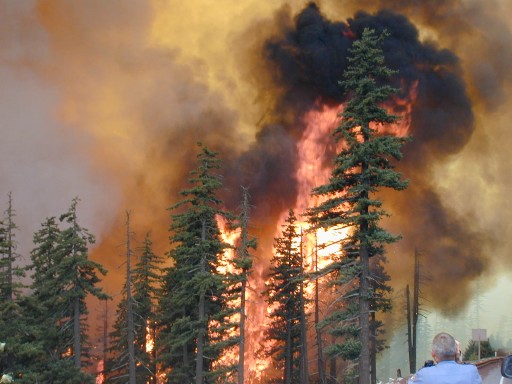
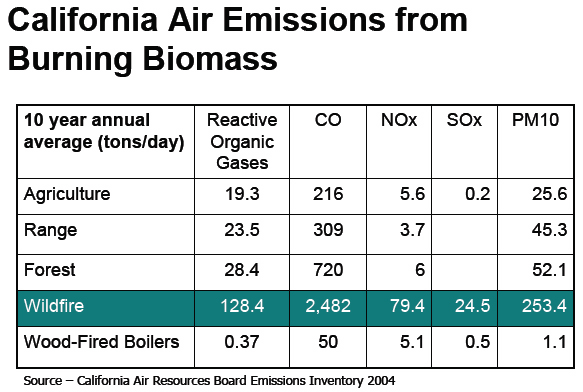
This means that the real impact of forests on global warming is the risk they pose when consumed in fires - during which they expell huge amounts of carbon, particulate matter, NOx, and SOx into the atmosphere.

For the full story, click the title link below to the Biopact site. Excerpts of their article are below:

------------------
Idea that forests are 'carbon sinks" no longer holds

New research now shows that instead of carbon sinks, some forests emit more carbon than they store. Forests can do little to improve the future climate or to lower the atmosphere's carbon levels. What they can do is make global warming worse.

This is the conclusion of a Canadian and American team of forest scientists that went into the woods in northern Manitoba to measure the carbon cycle of a forest ecosystem. They wanted to measure carbon going into and out of a living forest, to learn how effectively the forest was sucking carbon dioxide out of the atmosphere and storing it.

The results of this scientific work are congruent with research done in other forest types, most notably in tropical forests where the same observation was found: forests contribute more CO2 to the atmosphere than they store.

The consequences of these scientific results are manifold: forest nations will not be able to enjoy the benefits brought by the United Nations Framework on Convention on Climate Change because forests can no longer be filed as 'carbon sinks'. Re- and afforestation efforts are no longer a certain quick fix to climate change (they do have many other benefits, though), and large fossil fuel burning utilities who now often contribute financially to such efforts to appease their conscience, must rethink their strategies.


technorati , , , , , , ,

November 5, 2006

California Energy Commission PIER Grants for Biofuels RD&D


This just in from the California Integrated Waste Management Board - pre-proposal workshop November 15, 2006 - proposals due January 4, 2007:

---------------------
Biofuels Grant Solicitation Release

Local governments may know of individuals, businesses, utilities or research institutions that would be interested in applying for a biofuels renewable energy grant administered by the California Energy Commission. Please forward this information on to any interested parties.

The California Energy Commission's Public Interest Energy Research (PIER) Program supports energy research, development and demonstration (RD&D) projects that will help improve the quality of life in California by bringing environmentally safe, affordable and reliable energy services and products to the marketplace.

The PIER Program annually awards up to $62 million to conduct the most promising public interest energy research by partnering with RD&D organizations including individuals, businesses, utilities, and public or private research institutions. PIER brings new energy services and products to the marketplace and creates state-wide environmental and economic benefits.

The PIER Renewables Program has released a grant solicitation for Biofuels Research Development & Demonstration.

This is a competitive grant solicitation with the intent of accelerating research, development and demonstration of biofuel energy conversion technologies and refineries using lignocellulosic biomass (such as agricultural and forest residues, and urban waste), food waste, beverages, waste grease, purpose-grown or energy crops.

The Program Opportunity Notice, and application documents are posted on the California Energy Commission's website.


technorati , , , , , , , , ,

Harvesting Green Power

The November 13th issue of Business Week features a Special Report on the agricultural development of ethanol. It also has an annotated slide show called Farming for Fuels, From Grease to Grass.

The focus of this article is the conversion of agricultural feedstock into biofuels and how it is transforming American agriculture. Renewable "Green Power" is rejuvenating the profits of farming and helping to stem the exodus of many who would otherwise leave for the city. As stated below, emerging greenhouse gas legislation like California's AB 32, provides farmers with a new income opportunity from selling carbon credits as they plant and grow crops and trees that store carbon as they grow.

But this is only part of the impact that "green power" will play in the decades ahead. We will also see the conversion of unrecycled wastes into biofuels, green electricity, and ethanol. Our forests, brownfields, and wildfire tender boxes will need reassessment as both potential sources of greenhouse gases and as carbon "sinks" - safe renewable havens for storing carbon that would otherwise contribute to global warming. We need to spur research and development in our technical institutions for energy, automotive, and architectural retooling. What we learn now will help to provide new answers to energy, global warming, and waste management problems in years to come.

Here are some excerpts from the Business Week article. I recommend reading it in its entirety:

------------------------
Harvesting Green Power
Business Week, Special Report (November 13, 2006)

Alternative energy, once a cause célèbre for bands of tree huggers, has emerged as a pillar of the nation's strategy for energy independence, economic security, and the battle against global warming. For all the talk of green rooftops on Chicago's skyscrapers and wind farms off the coast of Nantucket, there will be no national transition to "green power" without a widespread conversion of our rural farm economy, with its unparalleled abundance of wind, sunlight, and energy-rich crops.

But this transformation of the farm belt raises a host of concerns. To make even a small dent in imports of oil from the Middle East, an increasing portion of food crops will have to be converted to fuel. That could push up the cost of food on the dinner table. And global warming? Critics of America's budding ethanol economy say that if you factor in all the natural resources needed to cultivate corn and transform it into ethanol, the environmental gains are less than meet the eye.

Pioneers in agricultural biotech say they will soon be able to address some of these worries with better biofuels. But such breakthroughs require heavy investment in research. And given the wild fluctuations in oil prices, which have fallen by more than 20% in the past several months, research funding may not continue at today's heady pace.

"THE NEW CASH CROPS"
If Americans start to buy more energy from the Midwest rather than the Middle East, green energy boosters say it will eventually help stabilize energy prices and shrink oil imports. Over the long term, wind power could grow from less than 1% of the U.S. power supply today to 20%. Ethanol and biodiesel, now around 4% of transportation fuels, could go to 20% or more.

Admittedly these are optimistic projections. Still, in Washington, lawmakers trumpet them as they tout the merits of energy independence. But to farmers, long at the mercy of fickle commodity prices and woefully dependent on government handouts, green mainly means money. Suppose the U.S. were to reduce imports of oil and oil byproducts by 20% and replace that with homegrown biofuels: In the course of one year--assuming prices average about $50 per barrel--farm communities and other biofuel players would reap some $50 billion that, in the past, would have flowed to foreign oil producers.

BANDING TOGETHER
Still, there are harsh reminders that the fortunes of alternative energy remain tethered to oil prices. At $70 for a barrel of oil, it costs $2.60 to make a gallon of gasoline, vs. around $1.25 for ethanol, estimates Paul Ho, a director at Credit Suisse First Boston's (CSB ) energy group. But the gap shrinks as oil prices fall. Most experts figure that oil would have to duck below $30 for months at a stretch before the economics of ethanol stop making sense. Yet even with oil trading at just $60 and ethanol giant Archer Daniels Midland reporting bumper profits, Wall Street is getting skittish. Ethanol stocks like Aventine Renewable Energy Holdings (AVR ) and VeraSun Energy (VSE ) are 42% and 20% off their initial public offering prices, respectively, while producer Hawkeye Energy has delayed its IPO. "People are forgetting the high energy prices in the summer. It's crazy," says Jacob Golbitz, research director for consulting firm HighQuest Partners.

It helps that alternative-energy markets are propped up by state and federal mandates to push more ethanol into fuel tanks and more green power onto the grid. The new nationwide renewable fuel standard, for example, calls for 7.5 billion gallons of ethanol production by 2012. Most experts think demand will far outpace those government-set levels, driven in part by state requirements for biofuels and the growing consumer preference for cleaner gas.

Farmers have other ways to play in emerging green markets. One is trapping carbon emissions by planting long-lived trees that lock up carbon dioxide as they grow. Many companies believe that, in the near future, the U.S. government will soon start to impose caps on greenhouse gases, following the lead of governments in Europe and Asia. If that happens, a market will emerge enabling companies to buy and sell credits--essentially rights to emit.

SHRINKING SUBSIDIES?
While farmers wait for the cellulosic revolution, they're enjoying the spike in commodity prices caused by demand for biofuels. Corn has sold for an average of $2 to $2.50 a bushel since the 1970s. But agrarian economists predict corn prices will hit a new long-term level north of $3. Across a typical year's crop, that's an extra $9billion going to farmers.

That means that Uncle Sam won't have to kick in as much money to support them, since some of the current corn subsidies are based on the price of commodities. "It depends on how high prices go, but subsidies could be cut by $5 billion to $10 billion a year," says professor Christopher Hurt of Purdue University. Still, he admits, some of those savings will be offset by the increasing amount of money the government is spending on biofuel. Today, fuel blenders receive a 51 cents-per-gallon tax credit for ethanol.


technorati , , , , , , , , ,

November 4, 2006

Forest Industry: Bio-Solutions to Climate Change

Is there an environmentally safe role for wood industry byproducts and waste to play in providing sustainable bio-solutions to climate change? Can we really live on less paper, pulp, and lumber? Are substitutes likely to be better environmentally - with equal or less impact on carbon sequestration? What is the responsible thing to do with tree trimmings, black liquor, and bark beetle-infested trees?

Does "saving forests" include thinning them to prevent forest fires - a horrific source of toxic carbon emissions and particulate matter (see below)?

These are some of the questions that are being asked at Forestry Industry meetings like the International Seminar on Energy and Forest Products Industry (30-31 October) held in Rome.

The forest products industry is a major consumer of energy, using 6 percent of total industrial energy use in 2003. But the industry also produces energy, as well as other by-products that can be used for energy generation. It is the only sector that already generates approximately 50 percent of its own energy needs, the majority from renewable carbon-neutral biomass. Energy costs, energy supply and climate change are amongst the core issues impacting on the future of the forest products industry.

Wulf Killmann, Director of Forest Products and Economics at Food and Agriculture Organization (FAO), said that the potential of the forestry industry to help solve energy and climate change needs to be tapped. "Governments have a key role to play in encouraging industries to use cleaner and more efficient energy technologies and in promoting bio-energy."

Here are excerpts from a recent article published by Forest Newswatch:

--------------------
Can the forest products industry be part of a bio-solution to climate change?
Forest Newswatch (subscription)
Friday, 03 November 2006

The global forest products industry can play a significant role in combating climate change by optimizing the use of raw material, increasing efficiency, producing bio-energy and expanding into bio-refinery products while developing the competitiveness of the sector.

This was the conclusion of the International Seminar on Energy and Forest Products Industry (30-31 October), in which intergovernmental and private sector organisations of the global forest product industry joined forces. Participants stressed that well integrated and carefully balanced energy and forest policies around the globe set the stage for these developments. Governments, industry, institutions and society at large each have a role to play and should work together.

"The forest products industry can be part of the solution for climate change if committed to technological changes and energy efficiency," said Neil Hirst, Director of Energy Technology of the International Energy Agency (IEA). "It has the exceptional ability to become a net supplier of a range of energy products and it could, in combination with carbon capture and storage, become an important actor in removing carbon dioxide from the atmosphere."

"Wood and paper products are uniquely renewable and recyclable products that help reducing greenhouse gas emissions by absorbing carbon dioxide from the atmosphere," said Teresa Presas, Chair of the International Council of Forest and Paper Associations (ICFPA). The industry is committed to innovative energy solutions that meet the challenge of climate change, increase efficiency, reduce reliance on fossil fuel and expand the use of renewable energy sources. The industry believes that fibre from sustainable managed forests makes a positive contribution to the world's future energy supply.

"To achieve this", Presas said, "the industry needs enabling policies that support research and innovation, promote demonstration projects and improve the investment climate, specifically in this sector. Moreover there needs to be a level playing field between energy and non-energy uses of wood, considering that all this has to take place within the boundaries of sustainable forest management."

The World Wide Fund for Nature (WWF) would be glad to see the global forest product industry taking a stronger role in the energy and climate change mitigation field, but also sets some requirements.

"WWF considers that sustainable bioenergy has to be part of the global strategy to reduce greenhouse gas emissions, among other measures aiming to reduce the ecological footprint. Credible certification of bioenergy feedstocks with a focus on social and environmental issues - including greenhouse gas calculations - and land use planning are part of the solution to ensure the sustainability of development", said Duncan Pollard, Director of the WWF Forests for Life Programme.


technorati , , , , , , , ,

October 31, 2006

October 2006 Digest

"Clearing the air" with biomass conversion technologies.

With the passage of the landmark Global Warming Solutions Act of 2006 California is poised to take the lead in the national effort to cut greenhouse gas emissions while reducing our dependence on fossil fuels. But will Governor Schwarzenegger be able to use a carbon credits program to implement the legislation? What technologies will come into play? Will Proposition 87 spur development or just add more bureaucratic inertia? It has been an important month for renewable energy - here are some top stories:

General Topics--------------
• Greenhouse Gases as Feedstock?
• Terra Preta: Black is the New Green
• Impact of Global Growth on Carbon Emissions
• Geoplasma Answers Trash Vaporization Questions
• Inventing the BIOstock Services Concept
• Welcome Earthbeat Radio listeners!
• U.S. D.O.E.: Strategies for Reducing Greenhouse Gases
• Ethanol Stocks: Survival of the Fittest

Around the Nation--------------
• CALIFORNIA: Enforcing Greenhouse Gas Emissions Limits
• CALIFORNIA: L.A. Solid Waste Task Force fights for Conversion Technology Reforms in Sacramento
• CALIFORNIA: Air Resources Board tackles Global Warming
• CALIFORNIA: L.A. Politicians Talk Clean Air
• CALIFORNIA PROP 87: Bureaucracy vs. Private Enterprise
• TEXAS: Fossil Fuels... and Fossil Thinking

Around the World-----------------
• L.A. and U.K. Discuss Sustainable Energy

Please forward a link to this digest to anyone you know who would be interested in keeping track of change that will affect us all. They can add their name to the mailing list on the BioConversion Blog.


technorati , , , , , ,

October 29, 2006

Enforcing Greenhouse Gas Emissions Limits

The real, gritty work involved in carrying out what is probably the biggest project in the history of state regulation has begun.
- Daniel Weintraub

Here's a challenge that may put a practical halt to the enforcement of the far-reaching Global Warming Solutions Act of 2006.

The legislators who passed the bill are displeased with how Governor Schwarzenegger intends to bring companies into compliance with its carbon caps. In short, the Democrats and their environmentalist allies want to force companies within each industry to comply across-the-board with the limits contained in the bill.

The Governor, who signed the bill, sees using a carbon credit program as being a more practical way to implement the bill's provisions. Daniel Weintraub of the Sacramento Bee describes it as " a market-based system that allows companies to buy the right to pollute from others who have done more than their share to reduce greenhouse gas emissions. The idea behind such a market is to achieve the desired amount of reduction without crippling a particular industry or company."

It is incumbent upon drafters of the legislation to realize that resistance to change by those who will have to pay for it will ultimately delay its implementation. Imagine the lawsuits that could pit major industries and utilities (electricity generation, oil and gas extraction, oil and gas refineries, cement production and landfills) against the State. They are trying to comply with the provisions of the bill but are prevented from implementing solutions because of failure of the State to reform antiquated regulations and permitting legislation.

The other obvious unintended consequences - companies will leave the state or be force to cut back rather than be faced with fees that will render them uncompetitive within their own industries. Utilities could easily outsource across state borders. These consequences could prove disasterous for California's tax revenues at the state and local level, depressing employment and adversely affecting labor unions. How does that promote the interests of the Democrats political base?

Unless industry-requested regulations and permitting reforms are passed, companies and utilities can effectively argue in court that the California legislature is hamstringing their efforts to deploy solutions to meet the provisions of this bill.

Weintraub has written an excellent article - excerpts are listed below:

------------------
Grit hits the fan on pollution credits
By Daniel Weintraub, Sacramento Bee

California's landmark law to fight global warming by clamping down on greenhouse gas emissions has not even taken effect, and already the Democrats in the Legislature who crafted the bill are at odds with Gov. Arnold Schwarzenegger, who, if he is re-elected Nov. 7, will be responsible for making it work.

Democrats and their environmentalist allies are charging that Schwarzenegger is breaking commitments made during a long summer of negotiations on the bill, AB 32. The governor, they say, is taking steps that could undermine the state's ability to cut greenhouse gases 25 percent by 2020, the bill's ambitious goal.

Schwarzenegger aides counter that the governor is merely trying to position the state's environmental bureaucracy to get a running start implementing the law when it goes into effect Jan. 1.

Behind the confrontation is a fundamental dispute over exactly how California should force its industries to comply with the caps on greenhouse gas emissions as they are phased in during the years ahead.

Democratic lawmakers and most environmental groups want to emphasize state-imposed standards and regulations to limit greenhouse gases.

Industries would be ordered by the Air Resources Board to retool their operations in particular ways to limit the production of carbon dioxide.

Schwarzenegger is not averse to this kind of direct regulation, which opponents characterize as "command and control." But the governor has also insisted that the new regulatory regime include a market-based system that allows companies to buy the right to pollute from others who have done more than their share to reduce greenhouse gas emissions.

The idea behind such a market is to achieve the desired amount of reduction without crippling a particular industry or company.

Now Schwarzenegger has issued an executive order calling on the Air Resources Board, whose members he appoints, to move forward immediately with a market-based system that allows the trading of emissions credits with the European Union and a group of northeastern states that have begun a similar program.

Assembly Speaker Fabian Núñez and Senate Leader Don Perata have objected, saying the bill they passed contemplated emissions trading only after other, more direct measures were taken.

Perata, in a letter to Schwarzenegger, said the order was "ill-timed and unnecessary," and called on the governor to rescind it. But Schwarzenegger's chief of staff, Susan Kennedy, told me in an interview that Schwarzenegger has no intention of backing down.

"The governor is committed to developing a workable cap and trade system that includes market-based incentives," Kennedy said. She added that the two approaches -- direct regulation and the trading of emission credits -- need to be developed into a comprehensive system that offers industry the flexibility it needs to comply in the most cost-effective manner possible.

"This needs to be seamless," she said. "It will be seamless."

This is only the opening skirmish in what promises to be a long and contentious battle over AB 32. The smiles and hugs and bipartisan press conferences that heralded the bill's passage last month are now history. The real, gritty work involved in carrying out what is probably the biggest project in the history of state regulation has begun.


technorati , , , , , , ,

October 26, 2006

Greenhouse Gases as Feedstock?

Will bacteria play THE major role in the production of biofuels and sequestering of carbon dioxide? Patents already exist for strains of bacteria that can convert syngas into ethanol.

New research being funded by the U.S. Department of Energy to study new roles for bacteria. The challenge is to sequence the DNA of certain cyanobacteria that can extract greenhouse gases from the air and, using sunlight, convert them into "thick mats of green biomass, from which liquid ethanol can be extracted." Sounds similar to the idea of using algae as a "breath mint" for smokestacks - but much more refined.

Here are excerpts form an article that appeared in "Washington University in St. Louis News & Information":

---------------------
Sequencing The DNA Of Six Photosynthetic Bacteria To Make Biofuel To Warm Homes And Run Cars
by Tony Fitzpatrick

The United States Department of Energy (DOE) has devoted $1.6 million to sequencing the DNA of six photosynthetic bacteria that Washington University in St. Louis biologists will examine for their potential as one of the next great sources of biofuel that can run our cars and warm our houses.

That's a lot of power potential from microscopic cyanobacteria (blue-green algae) that capture sunlight and then do a variety of biochemical processes. One potential process, the clean production of ethanol, is a high priority for DOE.

A natural at fermentation

"The Department of Energy is very interested in the production of ethanol or hydrogen and other kinds of chemicals through biological processes," said Pakrasi, who also is director of the University's Bioenergy Initiative. "Cyanobacteria have a distinct advantage over biomass, such as corn or other grasses, in producing ethanol, because they use carbon dioxide as their primary cellular carbon source and emit no carbons and they naturally do fermentation. In biomass, yeast needs to be added for fermentation, which leads to the production of ethanol. Cyanobacteria can offer a simpler, cleaner approach to ethanol production." Pakrasi heads a group of nearly two dozen researchers who will do a lengthy, painstaking manual annotation of the gene sets of each organism to figure out what each gene of each strain does.

"The diversity in those sequences will give us the breadth of what these organisms do, and then we can pick and choose and make a designer microbe that will do what we want it to do," Pakrasi said. "We want to tap into the life history of these organisms to find the golden nuggets."

One possible way to produce ethanol using Cyanothece strains is a hybrid combination of the microbe and plant matter where the cyanobacteria coexist with plants and enable fermentation. The model exists in nature where cyanobacteria form associations with plants and convert nitrogen into a useful form so that plants can use the nitrogen product.

Extracting ethanol

At Washington University, Pakrasi and his collaborators have designed a photobioreactor to watch Cyanothece convert available sunlight into thick mats of green biomass, from which liquid ethanol can be extracted.

Pakrasi led the sequencing of Cyanothece 54112 as the focus of a Department of Energy "grand challenge project" that resulted in the sequencing and annotation of a cyanobacterium gene that could yield clues to how environmental conditions influence key carbon fixation processes at the gene-mRNA-protein levels in an organism.

technorati , , , , , ,

October 23, 2006

Terra Preta: Black is the New Green

In August I cited an article on Terra Preta that focused on an organic method of sequestering carbon in the soil.

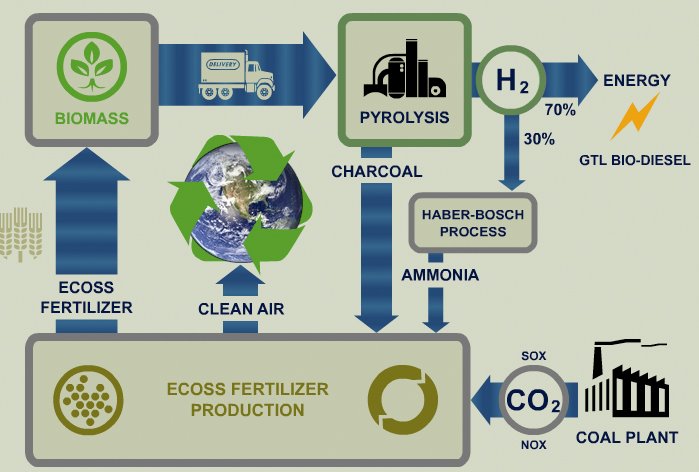
On the World Changing website, I recently ran across an article and a conversion technology animation involving pyrolysis and the generation of charcoal for the production of a high carbon fertilizer. Such a process would not only add to the sustainability of soil for the cultivation of healthy crops, but also provide a carbon sink alternative to geosequestration methods.

--------------------------
Terra Preta: Black is the New Green
by David Zaks and Chad Monfreda
Worldchanging

Carbon sequestration faces some major hurdles. Technical geosequestration methods could pump large amounts of CO2 deep underground but are still under development. On the other hand, natural methods that store carbon in living ecosystems may be possible in the short term but require huge swathes of land and are only as stable the ecosystems themselves. An ideal solution, however, would combine the quick fix of biological methods with the absolute potential of technical ones. Terra preta may do just that, as a recent article in the journal Nature reveals.

The difference between terra preta and ordinary soils is immense. A hectare of meter-deep terra preta can contain 250 tonnes of carbon, as opposed to 100 tonnes in unimproved soils from similar parent material, according to Bruno Glaser, of the University of Bayreuth, Germany. To understand what this means, the difference in the carbon between these soils matches all of the vegetation on top of them. Furthermore, there is no clear limit to just how much biochar can be added to the soil.

Claims for biochar's capacity to capture carbon sound almost audacious. Johannes Lehmann, soil scientist and author of Amazonian Dark Earths: Origin, Properties, Management, believes that a strategy combining biochar with biofuels could ultimately offset 9.5 billion tons of carbon per year-an amount equal to the total current fossil fuel emissions!

Biofuels are touted as 'carbon neutral', but biofuels and biochar together promise to be 'carbon negative'. Danny Day, the founder of a company called Eprida is already putting these concepts into motion with systems that turn farm waste into hydrogen, biofuel, and biochar.

The Eprida technology uses agricultural waste biomass to produce hydrogen-rich bio-fuels and a new restorative high-carbon fertilizer (ECOSS) ...In tropical or depleted soils ECOSS fertilizer sustainably improves soil fertility, water holding and plant yield far beyond what is possible with nitrogen fertilizers alone. The hydrogen produced from biomass can be used to make ethanol, or a Fischer-Tropsch gas-to-liquids diesel (BTL diesel), as well as the ammonia used to enrich the carbon to make ECOSS fertilizer.

Terra preta's full beauty appears in this closed loop. Unlike traditional sequestration rates that follow diminishing marginal returns-aquifers fill up, forests mature-practices based on terra preta see increasing returns. Terra preta doubles or even triples crop yields. More growth means more terra preta, begetting a virtuous cycle. While a global rollout of terra preta is still a ways away, it heralds yet another transformation of waste into resources.


technorati , , , , , , ,

October 22, 2006

TEXAS: Fossil Fuels... and Fossil Thinking

The urgency for developing and deploying clean coal-gasification alternatives to coal combustion could not be any more clear than reading that "154 new coal-fired plants are on the drawing board in 42 states." In the Lone Star State 16 new coal-fired power plants have been announced - 11 by power giant TXU Corp.

According to the article below - "Coal gasification plants can cost up to 20 percent more to build than a conventional plant." It should read "ONLY 20 percent more to build" and TXU should take the coal gasification option. The social costs from CO2 emissions of coal-fired plants have obviously not been taken into consideration. If they are only comparing to the older power plants they will be replacing they should think again - compare the "new and improve" coal-fired plants against the next generation available. Considering that there will be 16 more plants in Texas, even more efficient plants are likely to produce substantially more emissions than their current output unless there is a fundamentally cleaner technology at its base.

One wonders if even a few nuclear power plants would be environmentally preferable compared to the liabilities of the proposed coal-fired plants.

Below are excerpts from a recent Time/CNN Business & Technology article...

----------------------
U.S. Coal Plant Boom Poses Big Environmental and Economic Questions
Should power companies be permitted to build new plants that pollute more but are reliable and less expensive?

A building boom that would add scores of new coal-fired power plants to the nation's power grid is creating a new dilemma for politicians, environmentalists and utility companies across the United States. Should power companies be permitted to build new plants that pollute more but are reliable and less expensive? Or should regulators push utilities toward cleaner burning coal plants, even if it means they will cost more and are based on newer, yet still unproven, technology?

Nowhere do these competing interests play out with such force as in Texas, where 16 new coal-fired plants are proposed — 11 of them by Dallas-based TXU Corp., the state's biggest power company.

"TXU put its stake in the ground and said it will (build the plants) faster and cheaper than anyone else," said Daniele M. Seitz, analyst with investment firm Dahlman Rose. "So they have something to prove." The company is hardly alone, however. Some 154 new coal-fired plants are on the drawing board in 42 states. Texas and Illinois are the only states where 10 or more plants are planned, according to the National Energy Technology Laboratory.

Coal now accounts for about 50 percent of the power generated in the U.S. By the year 2030, that share will increase to 57 percent, according to Energy Department forecasts. The U.S. has the world's largest coal reserves, enough to last for the next 200 to 250 years, analysts believe.

Larry Makovich, managing director for consulting group Cambridge Energy Research Associates, said the urgency to bring more power-generating plants online cannot be understated. "A fundamental reality of the power business is there is no single fuel of choice, so if you are going to survive in the long run, you need to have a good mix of fuels and technologies," he said. "If we are going to keep supply and demand in balance, you're looking at a five-year lead time, so you have to get started building these plants now."

The debate soon could end up in federal court. Dallas attorney Rick Addison recently announced plans to sue TXU, alleging potential violations of the federal Clean Air Act. "It's remarkable and unnecessary the amount of pollutants they are going to put in the air," said Addison, a member of the Houston-based Locke Liddell and Sapp law firm. "The only way to get these issues resolved is at the highest level and reviewed under the appropriate law." The battle lines were drawn April 20, when TXU Chief Executive John Wilder announced the company's plans shortly after much of Texas underwent a rolling power blackout. Since then, each side has assembled a team of backers comprised of affected residents, lawmakers, and lawyers.

Coal gasification plants can cost up to 20 percent more to build than a conventional plant. But they also can be more efficient to operate and save utilities the hassle and expense of adding pollution-control devices. Already, American Electric Power, of Columbus, Ohio, Minneapolis-based Xcel Energy Inc. and Charlotte-based Duke Energy Corp, are reviewing plans to implement this technology. Mike Morris, chairman for American Electric Power, said the pressures on power companies to burn fuel in the cleanest way possible will only gain momentum in coming years.

"From our vantage point we think the technology for clean coal is there," he said. "It can be done, but there is a challenge." For it's part, TXU says turning the coal into synthetic gas remains an unproven technology and not as reliable as burning pulverized coal — the process the company's new plants would be designed to use. Several analysts agree. "For purposes of generating electricity, a pulverized system is well-proven," said John Mead, who heads the Southern Illinois University Coal Research Center in Carbondale, Ill. "Gasification has much more limited commercial experience," Mead said. "There are still some unknowns as to just what the operating costs would be and how reliable would such a system be."


technorati , , , , , ,

October 19, 2006

CALIFORNIA: L.A. Solid Waste Task Force fights for Conversion Technology Reforms in Sacramento

If the recent passage of California AB32 (the "Global Warming Solutions Act of 2006") proved anything it is that there is considerable interest in revising the way the state addresses air quality, energy supply, and waste pollution problems. One hundred years of relying on fossil fuel combustion as the accepted energy paradigm has resulted in wasted energy and a super-consuming culture in which profligate waste is a status symbol.

It would surprise most Californians to learn that there is any debate that new technological approaches need to be developed and implemented without delay. Yet there is not only debate, but subterfuge and bad faith negotiating in the California State legislature that is frustrating the sincere, coordinated, and professional efforts of The Los Angeles County Solid Waste Management Committee (SWMC) to move America's third largest city to a cleaner and more energy self-sufficient future.

In 1990, The SCWMC established the Integrated Waste Management Task Force. The Task Force is comprised of representatives from local government, the solid waste management and recycling industry, and members of the general public, the business sector and the environmental movement.

The Alternative Technology Advisory Subcommittee of the Task Force is responsible for evaluating and promoting the development of conversion technologies to reduce dependence on landfills and incinerators.

On August 18, 2005, the Task Force formally adopted the Subcommittee's comprehensive Conversion Technology Evaluation Report. This Report represents a culmination of 18 months of exhaustive and very expensive research conducted in conjunction with URS Corporation. This report is the first step in the effort to deploy a demonstration conversion technology (CT) facility in Southern California, in order to obtain real-world data on the impacts and benefits of these technologies.

Incredibly, instead of supporting California's largest city in SWMC's efforts to develop conversion technologies (CTs), the State Assembly Natural Resources Committee has ignored the findings of the report including its numerous regulatory change recommendations. No reasons given. Through two rounds of committee review (AB 1090 and AB 2118), this committee has manipulated its meeting agendas and funneled negotiations through unelected organizations with a vested interest in the status quo. It is a blatent attempt to wear down the Task Force of its energy and "starve" a chief lobbyist, the BioEnergy Producers Association headed by Senator David Roberti (ret.), of its war chest.

This blog has recently received a copy of a letter sent to the California Integrated Waste Management Board (CIWMB) in Sacramento confirming the frustration which the Solid Waste Management Committee of the Task Force has been experiencing - "Although California is leading the way, the development of conversion technologies in the State has stalled."

Through a Catch-22 of state regulations no CTs can be deployed in California unless successful air emissions tests are passed within the State. In other words, you have to pass a test in a facility you are not allowed to build - not even simply to run the test. Test results from outside the State do not qualify. Test results of similar technologies do not qualify.

One year ago three CT facilities - a pyrolysis plant in Romoland, California, a pilot syngas fermentation plant in Arkansas, and a plasma arc gasification plant in Richland, Washington - were tested for air quality emissions by the strictly independent Center for Environmental Research and Technology of the Bourns College of Engineering of the University of California/Riverside (aka, CE-CERT). According to Principal Development Engineer William Welch who conducted the report:

The pilot plant test results that we have witnessed and have evaluated independently indicate compliance or near compliance with air pollutant emissions regulations.

In fact, most of the emissions levels were mere fractions on the standards that are sought by the extremely vigilant South Coast Air Quality Management District. The one non-compliant result was for NOx emissions from the Romoland pyrolysis plant. The operators were unaware of the testing standard. Through modification of their syngas scrubbing process, the emissions today are well below the standard and would pass any test with flying colors.

Which proves a very important point. For there to be any advance in substantially changing the hazardous combustion paradigm, we need to deploy investment-worthy solutions, test them, refine them, and test them again. That is the procedure in most states. If the facility cannot be made to comply, it is shut down and the investors, the risk-takers, lose. At no time is the public at any risk.

Unless, of course, the status quo is left to persist - which results in keeping the public health in constant danger until other solutions are deployed. As the parent of four, one with chronic asthma, I have to ask - how can the inertia of the State government be good for curing the status quo?


technorati , , , , , , , ,

October 16, 2006

Impact of Global Growth on Carbon Emissions

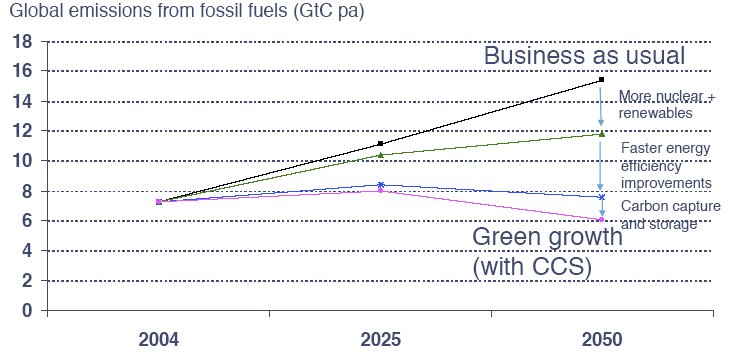
"Business as usual" could could have serious long-term consequences for global energy consumption and carbon emissions. According to a report released by PriceWaterhouse-Coopers (PwC) last month, global carbon emissions from fossil fuels are going to more than double by the year 2050 unless a number of significant policy changes are enacted soon to deploy technological emission reduction measures.

In March 2006, PwC published a report, The World in 2050: How big will the emerging market economies get and how can the OECD compete?, on the rapid growth of the "E7" emerging economies (China, India, Brazil, Russia, Mexico, India, and Turkey). They project the combined economies of these countries could be 25-75% greater than the G7 countries (U.S., Japan, Germany, UK, France, Italy, Canada) by 2050.

The questions unaddressed by that report - what consequences on global climate will that growth cause? What is the need for change?

These questions are covered in a follow-up study, The World in 2050: implications of global growth for carbon emissions and climate change policy released in September. In it, the author provided a baseline estimate of carbon emissions with the current rate of energy efficiency. He then developed five different scenarios incorporating more successively aggressive measures.

It is a sober look at the paths open to us and the need to start implementation. Our leaders must recognize the need to start deploying clean solutions now and adjust them as we go. Civilization cannot afford to squander decades (as we have since the last big oil crisis) holding out for "ideal" solutions. According to PcW:

The analysis also suggests that there could be significant costs to delay, given the time required to develop and implement the necessary technologies and policies. As emissions from the faster-growing emerging economies will almost certainly continue to rise over the next few decades, the G7 economies may need to take the lead in reducing their carbon emissions.

But this should create major new market opportunities, allowing companies in the established OECD economies to specialise in areas of comparative advantage, while their consumers benefit from low cost imports from the emerging economies — a "win-win" outcome rather than "one winner takes all".

A few excerpts:

-------------------------
The World in 2050: implications of global growth for carbon emissions and climate change policy
Report outlines 'Green Growth Plus' strategy that could curb global carbon emissions without significantly reducing long-term economic growth
John Hawksworth, Head of Macroeconomics, PriceWaterhouse-Coopers

The report considers six possible scenarios but focuses most attention on two key possibilities:

• A baseline scenario in which energy efficiency improves in line with trends of the past 25 years, with no change in fuel mix by country; this ‘business as usual’ scenario acts as a benchmark against which to assess the need for change, rather than as a forecast of the most likely outcome; and
• A scenario called Green Growth + CCS, which incorporates possible emission reductions due to a greener fuel mix, annual energy efficiency gains over and above the historic trend, and widespread use of carbon capture and storage (CCS) technologies. Of the scenarios considered in the report, only this ‘Green Growth Plus’ strategy stabilises atmospheric CO2 concentrations by 2050 at what the current scientific consensus suggests would be broadly acceptable levels.

The chart below shows how it might be possible to get from the baseline scenario to the preferred Green Growth + CCS scenario for global carbon emissions in three steps.

1. A shift to a much less carbon intensive fuel mix through increased nuclear and/or renewables supply (more than doubling the current non-fossil-fuel primary energy share to around 30% by 2050) and reduced fossil fuel.
2. Energy intensity reductions significantly faster than historic trends (2.6% per annum rather than 1.6% per annum, which would reduce carbon emissions in 2050 by around a third relative to our baseline scenario).
3. Significant investment in carbon capture and storage (CCS) technology and capacity of the order of 1.5GtC per annum by 2050, which could reduce carbon emissions by a further 20%, relative to our Green Growth scenario without CCS.

John Hawksworth concludes: "Our analysis suggests that there are technologically feasible and relatively low-cost options for controlling carbon emissions to the atmosphere. Estimates suggest that the level of GDP might be reduced by no more than around 2-3% in 2050 if this strategy was followed, equivalent to sacrificing only around a year of economic growth for the sake of reducing carbon emissions in 2050 by around 60% compared to our baseline scenario".

"But if this is to be achieved, it will take further concerted action by governments, businesses and individuals over a broad range of measures to boost energy efficiency, adopt a greener fuel mix, and introduce carbon capture and storage technologies in power plants and other major industrial facilities".


technorati , , , , , , ,

October 14, 2006

Geoplasma Answers Trash Vaporization Questions

On September 10th I drafted an article about a plan to use plasma-arc technology to gasify waste in St. Lucie County, Florida titled FLORIDA: County to Vaporize Trash. In addition to writing my concerns about the emissions from the process, I listed five questions that I wanted to have clarified by the developer, Geoplasma of Atlanta, Georgia. I sent the list to the president of Geoplasma, Hilburn Hillestad, who very graciously sent me the following reply:

----------------------
Response to BioConversion Blog Questions about Trash Vaporization
From Hilburn Hillestad, President of Geoplasma, LLC.

Below you will find our answers to your questions. Thank you for your interest in our proposed facility.

1. Question: How much energy does the plasma-arc use?
Answer:
The plasma-arc facility uses approximately 40 megawatts of energy per hour. This is approximately one-quarter of the total output of hourly energy received from MSW.

2. Question: What will be the source of the plasma-arc energy?
Answer:
The facility will receive its energy from its total output. For St. Lucie, it is expected that the 3,000 tons of MSW processed per day will create 160 megawatts of energy per hour. As stated previously, 40 megawatts will be used to power the facility and the remaining 120 megawatts will be sold to an Electric Utility.

3. Question: What does the energy source emit?
Answer:
See question 5.

4. Question: Is the high heat of the plasma-arc being captured and utilized?
Answer:
Because of the nature of a closed-loop system the heat will be captured and utilized both in the plasma gasification process and later in the production of steam.

5. Question: How are they going to combust the syngas to keep the emissions low?
Answer:
There is no combustion during the gasification process. The Plasma-arc gasification process is a chemical reduction process that converts MSW from its original state to a glass-like aggregate solid at the bottom, and a synthetic fuel gas, also known as syngas, at the top.

Once gasification is over, the syngas is cleaned in a multi-step process, bringing it to levels near natural gas cleanliness. It is then compressed before being used as fuel for a gas turbine.

The gas turbine for this process is a modified natural gas turbine that mixes the cleaned syngas with air from the atmosphere, combusts the mixture and sends the hot gases through a turbine. The turbine spins an electric generator to produce electricity. The discharged hot gases are then passed through a heat recovery steam generator to produce more steam and to cool the hot gases. The cooler exhaust gases are then discharged into the atmosphere via a stack.

Emissions from this process are very similar to natural gas combined cycle plants which are considered to be ‘clean’ and are located and permitted all over the U.S., and for that matter the whole world.


technorati , , , , , ,