July 10, 2006

BRAZIL: Impact of the Ethanol Gold Rush

Biopact Blog has featured a review of a new blog that offers an English language insider's look at Brazil's burgeoning ethanol industry. The author of the blog is Herique Oliveira, a U. of Michigan MBA grad student who grew up in Brazil.

As Laurens Rademakers of Biopact relates, there are numerous interesting articles at Ethablog.

The one that most interested me is one about the impact that world attention to Brazil's ethanol industry has made on that industry and the prices of related commodities and products.

---------------------

ETHANOL GOLD RUSH BEGINS IN BRAZIL

Now it's official: the ethanol gold rush is on in Brazil.

Expect the price of everything in the country related to ethanol to go up substantially in the coming weeks: land, refineries, equipment, and anything else that can be, at least hypothetically, sold to the foreigners who will come streaming into Brazil in search of the fuel the country has been using for over 30 years.

Or so hope many Brazilians, from government officials in Brasilia to farmers in the Brazilian Midwest to businessmen in the city of Sao Paulo. Ever since the June 21st. edition of "Exame" magazine, the Brazilian equivalent of "BusinessWeek", brought a cover story with the headline: "Ethanol - the World Wants It. We Have It", ethanol has been all the rage in the country.

Brazilians have seen ethanol sold at fueling stations ever since the Pro-Alcool program was created by the Federal government in 1975. To a Brazilian, filling up the tank with ethanol is no big deal - many do not see any reason for all the fuss that surrounds the fuel's introduction to markets in the U.S. and the E.U.

But they certainly see the opportunities. They have watched the convergence of factors - 9/11, the Iraq War, political instability in the Middle East, the growing climate crisis - that is associated with escalating oil prices. Now, with the Exame article, they suddenly realize that the rest of the world has no realistic alternative for the coming years but to follow the path they chose to go down 31 years ago.

But the big question I have heard since the article came out is, "Can Brazil really produce enough ethanol for the entire world?" Market insiders know that Brazil has had trouble producing enough ethanol for its own fleet of cars and light trucks, which, at about 15 million, is 23 times smaller than that of the U.S. Can Brazil then serve as energy basket to the world?

-------------------

To read Henrique's opinion on that question, continue to read the article. There are numerous other interesting articles detailing the production and marketing of ethanol in this enigmatic country (at least for most Americans).


technorati , , , , , ,

July 8, 2006

U.S. D.O.E.: Roadmap for Developing Cleaner Fuels

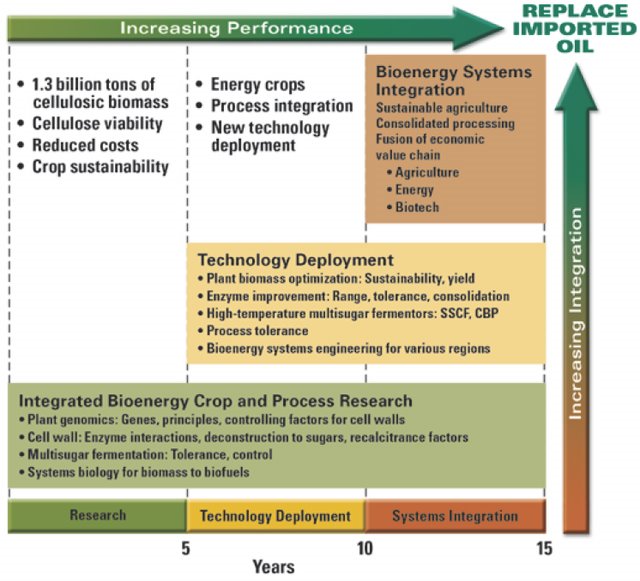
The Department of Energy has just announced the publication of an ambitious, long term, research "road map" for developing technologies for the conversion of biomass to cellulosic ethanol.

The roadmap identifies the research required for overcoming challenges to the large-scale production of cellulosic ethanol to help meet this goal, including maximizing biomass feedstock productivity, developing better processes by which to break down cellulosic materials into sugars, and optimizing the fermentation process to convert sugars to ethanol


The focus is clearly on the longterm development of enzymatic hydrolysis techniques involving enzymatic, genetic, thermochemical, and chemical R&D. The question is, what is the Department of Energy doing to support R&D and deployment of the other major processes for converting biomass to ethanol - synthesis gas fermentation including catalytic conversion of syngas to ethanol?

The D.O.E. appears to be ignoring the potential of converting a whole, vast class of feedstock and blended feedstock options (non-agricultural feedstocks including municipal solid waste, tires, sulfurous coal, etc.). In addition, they are ignoring the relative speed, ease, and cost efficiency of gasification of feedstock to break down molecular bonds prior to fermentation to ethanol. These technologies are crucial for waste diversion and urban participation in cellulosic ethanol production.

We applaud the scope of the D.O.E.'s commitment to cellulosic ethanol R&D, but focusing only on vastly more challenging and expensive processes may significantly delay the funding crucial to the R&D and deployment of more expedient bioconversion technologies. We would like to see a commensurate commitment to funding syngas fermentation and catalytic conversion process.

----------------

DOE Publishes Roadmap for Developing Cleaner Fuels
Research Aimed at Making Cellulosic Ethanol a Practical Alternative to Gasoline

WASHINGTON, DC -- The U.S. Department of Energy (DOE) today released an ambitious new research agenda for the development of cellulosic ethanol as an alternative to gasoline. The 200-page scientific “roadmap” cites recent advances in biotechnology that have made cost-effective production of ethanol from cellulose, or inedible plant fiber, an attainable goal. The report outlines a detailed research plan for developing new technologies to transform cellulosic ethanol—a renewable, cleaner-burning, and carbon-neutral alternative to gasoline—into an economically viable transportation fuel.

“Cellulosic ethanol has the potential to be a major source for transportation fuel for America’s energy future,” Under Secretary for Science Raymond L. Orbach said. “Low production cost and high efficiency require transformational changes in processing cellulose to ethanol. DOE’s Genomics: GTL program is poised to help do just that.”

The roadmap responds directly to the goal recently announced by Secretary of Energy Samuel W. Bodman of displacing 30 percent of 2004 transportation fuel consumption with biofuels by 2030. This goal was set in response to the President's Advanced Energy Initiative.

The roadmap identifies the research required for overcoming challenges to the large-scale production of cellulosic ethanol to help meet this goal, including maximizing biomass feedstock productivity, developing better processes by which to break down cellulosic materials into sugars, and optimizing the fermentation process to convert sugars to ethanol. Cellulosic ethanol is derived from the fibrous, woody and generally inedible portions of plant matter (biomass).

The focus of the research plan is to use advances in biotechnology -- first developed in the Human Genome Project and continued in the Genomics: GTL program in the Department’s Office of Science -- to jump-start a new fuel industry whose products can be transported, stored and distributed with only modest modifications to the existing infrastructure and can fuel many of today’s vehicles.

The new roadmap was developed during a December 2005 workshop hosted jointly by the Office of Biological and Environmental Research in the Office of Science and the Office of the Biomass Program in the Office of Energy Efficiency and Renewable Energy. The success of the plan relies heavily on the continuation of the partnership between the two offices established at that workshop.

“Biofuels represent a tremendous opportunity to move our nation toward a reduced dependence on imported oil,” DOE Assistant Secretary for Energy Efficiency and Renewable Energy Alexander Karsner said. “We fully intend to use all of our resources and talent to support the President’s goal of breaking our addiction to oil, while also enhancing our energy security.”

The report, “Breaking the Biological Barriers to Cellulosic Ethanol: A Joint Research Agenda,” and a fact sheet on the report may be viewed at http://www.doegenomestolife.org/biofuels/.

For more information about the Genomics: GTL program in the Office of Biological and Environmental Research in the Office of Science, see http://www.doegenomestolife.org/. For more information on the Office of the Biomass Program in the Office of Energy Efficiency and Renewable Energy, see http://www1.eere.energy.gov/biomass/.


technorati , , , , , ,

July 6, 2006

U.S. INFO: Seeking Money to Accelerate Energy Innovation


The following article appears in the July 2006 issue of the State Department's electronic journal series Economic Perspectives. The complete issue, titled Clean Energy Solutions, can be viewed on the USINFO Web site.

--------------------

Aid Urged for Commercializing Clean Power-Generation Technologies

Unprecedented, massive innovation must take place to develop, commercialize, and bring to market and large-scale deployment low-carbon technologies that will revolutionize the world.

Moreover, today’s energy and climate policies alone cannot drive clean energy markets at the scale or pace necessary to solidify energy security and stabilize the climate by 2050. We must be more creative in deploying new innovation strategies for all these low-carbon options. Also, current structures for financing and commercializing innovative technologies are failing to deliver these much-needed, low-carbon technologies to market.

Only by simultaneously tackling the twin challenges of accelerating the pace of low-carbon technology innovation and creating broad-scale financing and commercialization can we achieve a planetary energy transformation.

Cellulosic biomass and biofuels: As interest in the production and use of biofuels rises, there is more use of biomass technologies, such as anaerobic digesters and gasifiers, to make power from crops, crop waste, and manure. However, the bioenergy market is relatively nascent and has a way to go to reach the point that signals the rapid and widespread adoption of biomass and biofuels technologies. Further, from a low-carbon perspective, it is widely recognized that using cellulosic (plant-based) biomass is preferable to growing dedicated crops, such as maize, to produce biofuels because harvesting and transporting the dedicated crops increases carbon dioxide emissions. Genomics research may be critical to advance this technology, but it has yet to be harnessed to develop and commercialize high-energy-producing biofuels and energy systems.

To achieve a transformation... several changes must take place:

-- Of the utmost importance, the government, academia and the private sector should coordinate research and development (R&D) with deployment and technology commercialization, rather than treat R&D as a sole area of focus.

-- Debate on low-carbon technologies should take place at various levels (international, sub-national) and within many frameworks for sub-national stakeholders, as well as the United Nations Framework Convention on Climate Change and the G8 Dialogue on Climate Change, Clean Energy, and Sustainable Development.

-- The task of reducing carbon emissions on a global scale should be distributed to all levels of the public and private sectors. This would open the door to the kind of creative problem solving that would address market shortcomings, promote low-carbon technology transfer and information sharing, foster linkages among disciplines, and produce real results.

-- Energy finance must shift aggressively toward new forms of capital accumulation to build the low-carbon energy infrastructure of the future.

-- The G8 investment framework and other forms of international collaboration must answer broader questions on technology innovation and commercialization. Gaps in the innovation chain must be filled in order to shift to low-carbon technologies in both industrialized and developing countries. To produce results, this must be coupled with a significant expansion of resources and distinct budgets. Public-private partnerships need to make it a top priority to accelerate the pace of low-carbon technology innovation and adoption.


technorati , , , , ,

“Super Ethanol” attracting Investment Attention

The market curve for cellulosic ethanol is still at the "bleeding edge" stage for the simple reason that no commercial scale facilities have been deployed. It is remarkable then to see the enthusiasm for cellulosic ethanol that it attracts from some of the most highly esteemed numbers crunchers in the world.

CNNMoney.com just ran an article citing the opinions of former Federal Reserve Chairman Alan Greenspan and others in a position to understand the promising Energy ROI of cellulosic ethanol. More telling is the investment of Goldman Sachs in Iogen, which is certainly an early adopter investment opportunity, but is not the most promising technology in the field.

-------------------

Super ethanol is on its way

NEW YORK (CNNMoney.com) -- Cellulosic ethanol, the biofuel that differs from corn-based ethanol in that it can be made from pretty much any organic matter, has made an impression among people who matter.

Alan Greenspan, the revered former chairman of the Federal Reserve with a big distaste for irrational exuberance, recently sang its praises before a Congressional hearing on energy security. Greenspan said cellulosic ethanol is the only alternative energy source that could be produced in enough volume to make a dent in gas usage.

"You'll get an awful lot of investments [into this technology] coming in, especially if the numbers make sense, which I think they do," he said.


And last month Goldman Sachs, the world's largest investment bank, poured $27 million into Iogen, a Canadian-based biotech specializing in ethanol made from cellulose.

"There are a lot of people who think the technology is there," and could be competitive even if oil prices return to $30 a barrel, said Greg Bohannon, a managing partner at Greenrock Capital, a California-based private equity fund that focuses on renewable energy. "Why would Goldman Sachs invest in a company that's not going to be commercially viable for 10 years?"

John Ashworth, a biomass expert at the Department of Energy's National Renewable Energy Laboratory, said corn could only supply about 12 to 18 billion gallons of ethanol a year, or about 10 percent of the nation's 140 billion gallon-a-year gasoline habit.

Cellulosic ethanol has all the advantages of corn-based ethanol - there is no difference in the ethanol, only in the way it's produced.

But unlike corn-based ethanol, cellulosic ethanol can be made from a variety of things that might otherwise be considered waste -- sewage sludge, switchgrass, plant stalks, trees, even coal -- virtually anything that contains carbon.

Ashworth said there are an estimated one billion tons of such material available in the U.S. every year, enough for 100 billion gallons of ethanol.

While it's not feasible to actually go out and collect every ounce of that one billion tons, he said it's not unreasonable to expect ethanol to replace 40 billion gallons of gasoline in the near future.

"There's a lot of venture capitol out there that's willing to invest in cellulosic ethanol," he said. "You're likely to see some plants built in the next 12 to 18 months."

Entrepreneurs are in fact pressing ahead with ambitious plans.

"We know the technology is proven," said Jim Stewart, a spokesman for Bioengineering Resources Inc., or BRI, an Arkansas-based biofuel outfit. "It's at the point of commercialization."

Stewart said BRI uses a patented bacterial culture to transform organic matter into ethanol, and can produce a gallon of it at a fourth the retail cost of a gallon of gas.

He said the company plans to have 4 plants operating commercially within the next 16 to 18 months, but some industry-watchers believe it will be at least several years before cellulosic ethanol production will become commercially viable.


technorati , , , , ,

ASIA: Linking Asian Climate Change to Energy Future

When bankers in developing countries create funding initiatives to address concern about the impact of energy technology and security on climate issues, it is time to take notice. It could be a public relations move by the Asian Development Bank (ADB) to draw attention to its other investment initiatives, but the facts President Kuroda cites about the upsurge in demand and the possible consequences in GHG emissions and climate change shows sincerity of purpose.

ADB's mission "The work of the Asian Development Bank (ADB) is aimed at improving the welfare of the people in Asia and the Pacific, particularly the 1.9 billion who live on less than $2 a day. Despite many success stories, Asia and the Pacific remains home to two thirds of the world's poor."

Hyping its "Clean Energy Week" as the world's first "carbon neutral conference", the organizers from ADB's Regional and Sustainable Development Department have made preliminary calculations on the amount of carbon produced in putting on the event. This includes carbon dioxide emissions from flights carrying participants, their taxi rides from the airport, electricity for hotel rooms, preparation of meals and refreshments, and lighting and air conditioning at the meeting.

In addition, emissions and consumption will be kept to a minimum with no presentations of meeting notes printed (instead, all papers will be made available online) and participants encouraged to walk from their hotel, neighboring the ADB building.
At the end of the event, the calculations will be finalized and ADB will then purchase equivalent carbon credits from the market.

Below is the full text of their p.r. release...

---------------------------

Asia Critical to Future of Climate Change
Asian Development Bank President Kuroda

Manila, June 20, 2006 (ACN Newswire) - No region in the world is as critical to future climate change as Asia, Asian Development Bank (ASX: ATB) President Haruhiko Kuroda told the opening of ADB's Clean Energy Week today.

"Climate change is a reality that we can no longer ignore and one that we have to take immediate action to mitigate and adapt to," Mr. Kuroda said in opening remarks to the event at ADB's Manila Headquarters.

Over three days, major players in the Asian energy agenda - including representatives of developing countries, donor governments, nongovernment organizations, and the private sector - will discuss, debate and exchange experiences on energy issues and climate change.

"We look forward to working with all our development partners to bring concrete, lasting solutions to the table for slowing climate change and ensuring a sustainable growth path for Asia and the Pacific," Mr. Kuroda said.

The ADB President said while Asia needs energy to maintain rapid growth and continue cutting poverty, energy production and consumption need to move to a more sustainable path.

"Today, the issues surrounding energy conservation, efficiency and security are more important than ever," he said. "While Asia's rapid growth has brought undeniable benefits to the poor, it has also put a serious strain on the environment and on our natural resources, including energy."

In the 30 years to 2003, he pointed out, Asia's energy consumption grew by 230%, compared with the average worldwide increase of 75%. As a result, the share of the region's greenhouse gas emissions has risen from less than one-tenth of global emissions to nearly one quarter. Meanwhile, the rocketing of the price of oil to almost $80 a barrel has elevated the need for energy conservation and efficiency, and the use of renewable energy as key priorities for the region.

Mr. Kuroda said that in response to these challenges, ADB is supporting activities in renewable energy, energy efficiency, and climate change mitigation and adaptation.

These include an Energy Efficiency Initiative, under which ADB plans to expand its program of clean energy projects to $1 billion a year, as well as a planned Carbon Market Initiative (CMI), which will help developing countries address shortages in finance and capacity for adopting cleaner energy technologies.

"We believe the CMI will help shift investment patterns, foster sustainable economic development, and, in the long term, have a positive impact on both energy security and climate change," Mr. Kuroda said.


technorati , , , , , , , ,

June 21, 2006

June 2006 Digest

The resolution of the world's energy problems will require not only the heavy lifting of engineering R&D and deployment, but also regulatory and incentive policy reform, and major investment secured by governmental guarantees.

Here is a Digest of articles posted on the BioConversion Blog during the month of June, 2006.
 
------------------------
 
General Topics--------------
• New NASDAQ Index for Tracking Clean-Energy Companies
• Using Algae to Recycle Flue Gas into Biofuels
• Syngas Fermentation - The Next Generation of Ethanol
• BioEnergy Int'l Licenses Biocatalyst Technology to Purac
• Ecological Community Loan Pool
• Euro Environmentalists Warn Cure Worse than Disease
• Worldwatch: We really are in the middle of a paradigm shift.

Mass Media Reviews--------------
• MOVIE: Who Killed the Electric Car?

Around the Nation--------------

California
• CALIFORNIA: San Diego Gas & Electric Adds Renewable Energy via Biomass

Minnesota
• MINNESOTA: Law Endorses Flexible Fuel PHEV

Around the World--------------
• INDIA: Mandatory Ethanol Blending Now Likely
• JAPAN: From E3 to E10 by 2020
• LAMNET: Latin America Thematic Network on Bioenergy
• AFRICA: BioPact Promotes European/African Energy Collaboration


technorati , , , , , ,

June 18, 2006

AFRICA: BioPact Promotes European/African Energy Collaboration

The new global reality is that we are interdependent on energy supply and demand in ways that have never been so evident. Population increases, mass consumption, the dependence of developing nations on supplies of cheap energy, and environmental consequences - all have grown dramatically since the end of WWII. Add to this communication technology advancement, culture clash, hyperbolic media reporting, and political and religious conflict and it is self-evident that the world needs to collaborate to relieve the pressure.

I recently learned about BioPact - a new blog operated by Laurens Rademakers in Belgium for a collective of European and African citizens working on biofuels and bioenergy. As he writes in one of his posts:

Here at the BioPact we want to expand the discussion about biofuels and take it a step further by looking at the socio-economic and 'geopolitical' effects that the increasing production of ethanol, biodiesel, biogas and biomass will have in the long run. As we have written before, bioenergy offers an opportunity to lift millions of the world's poorest out of poverty. More and more people are beginning to follow our simple proposition of a global, green energy exchange relationship, counting in factors such as social justice, greater access to energy for the poor and a shift from a petro-militarist world towards one where bioenergy dominates.


Below is a collection of links that interested me and might interest readers of this blog:

The Global Benefits of Biofuels - a quick overview
Sneak Preview of the "Biofuels Atlas" - a great planning tool
China to Boost Biomass Energy Through Financial Incentives
EU nations want flexibility on biofuels and bioenergy
The broader view: biorefineries and biomaterials
BP to invest $500 million over 10 years in biofuels research

Couldn't have said it better myself.


technorati , , , , , , ,

June 13, 2006

MINNESOTA: Law Endorses Flexible Fuel PHEV

The Minneapolis-based Institute for Local Self-Reliance has published a press release announcing the signing of the nation's first legislation supporting the development and implementation of flexible-fuel plug-in hybrid electrical vehicles (FF/PHEV). This is extremely good news for Plug-In Partners, a group that is mounting a National Campaign to get automobile manufacturers to build PHEV cars.

The press release is presented in its entirety...

--------------

Minnesota Becomes First State to Endorse an Electric-Alcohol Strategy

Minneapolis, MN – Minnesota Governor Tim Pawlenty has signed into law H.F. 3718, the nation’s first law promoting plug-in hybrid, flexible-fueled vehicles.

The legislation – inspired by the Institute for Local Self-Reliance's report A Better Way that proposed an electricity-alcohol transportation energy strategy, and several articles by ILSR staff published in the Minneapolis Star Tribune in late 2005 – sailed through both houses by a unanimous vote.

“Both conservative Republicans and liberal Democrats understand that this is the only near term strategy available that can cure us of our oil addiction,” notes David Morris, ILSR’s Vice President, who testified as an expert witness before six legislative committees.


The law instructs the state to buy plug-in hybrids on a preferred basis when they become available. It also encourages Minnesota State University-Mankato to develop flex-fuel plug-in hybrid vehicles, and creates a task force consisting of business, government and utility representatives to develop a strategy for using, and producing such vehicles in Minnesota.

A plug-in hybrid can run primarily on electricity, which inherently reduces oil consumption. “Only three percent of our electricity is generated from oil,” Morris observes, “And many states are requiring an increasing percentage of renewable electricity.” Renewable fuels like ethanol would provide the primary energy source for the vehicle’s engine.

“Minnesota has the resources necessary to make flexible fuel plug-in hybrid production a reality," says Frank Hornstein, the bill's chief House author. "We have the research at Minnesota State-Mankato. We have the corn and ethanol industry. We have a growing number of wind farms. And we have the Ford plant."

"Ford has said it will close the plant. The task force can help us develop new opportunities," notes Scott Dibble, the bill's chief Senate author. "We could have a technology developed in Minnesota and built at the Ford Plant, which already runs on renewable energy generated at the plant's hydroelectric dam on the Mississippi river."


technorati , , , , , , , ,

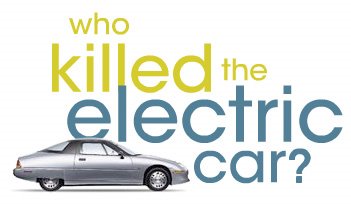
MOVIE: Who Killed the Electric Car?

Q: What DID Tom Hanks, Mel Gibson, Peter Horton, and Ted Danson have in common?

A: They all leased electric cars.

"Leased" not "owned." Past tense... past history. Hint for consumers: next time a car manufacturer refuses to sell you their products, they don't really want ANYONE to keep it.

General Motors EV1 - R.I.P. - b. 1996, d. 2004


There is something eerie about a hunk of metal, rubber, autofluff, and plastic not merely rusting away in someone's front yard or garage, but being scooped out of the hands of its driver and crushed out of existence. Why the finality? Did each car represent some kind of threat - like the futuristic chip in the "Terminator" series? Or a dangerous memory from "Total Recall"?

That's the implication of a new feature length film to be released June 28th titled "Who Killed the Electric Car?" This movie could have been made for public television's exposé "Frontline" series, but the producers and Sony Picture Classics decided to distribute it to theaters like an increasing number of advocacy "edu-tainment" - or "docu-ganda" as The Christian Science Monitor's Dan Wood likes to call them - i.e., Michael Moore's Fahrenheit 9/11" and Al Gore's recent "An Inconvenient Truth".

The intention is to generate outrage and activism - stimulate heat by shining an unforgiving interrogator's light and implying the worst. Build a website, enlist volunteers, make a statement with a grass roots organization - to create a campaign to sell the mov...eh...message and make sure it doesn't happen again.

This film presents a cradle to grave history of a marvelous machine that was too good for Detroit to allow to spawn imitators. It was born out of an idealistic California environmental mandate, killed by the successful appeal by an auto industry frantic to overturn the mandate, and summarily executed by the manufacturer.

Now the domestic manufacturers and their shareholders are paying for this shortsightedness - big time. They have unwittingly ceded the crest of the electric car wave to Japanese-bred hybrids. It's a replay of Detroit's worst nightmare - the oil crisis of the early '70s - that gave Japan and Germany a significant beachhead on the once impregnable American auto industry. How ironic. How deserving.

The auto industry needs a sparkplug. Maybe, having just planted Pixar within the Disney firmament with the success of "Cars", Steve Jobs could be hired to envision the next big thing - "insanely great" automobiles that become the "killer app" that stokes the global paradigm shift to renewable energy.

Maybe the manufacturers would actually sell them this time.


technorati , , , , , , ,

June 12, 2006

LAMNET: Latin America Thematic Network on Bioenergy

Got a bioenergy project you want to develop for Latin America, China, or Africa? Then you will want to know about LAMNET.

The main focus of the (LAMNET) project will be the identification of technological objectives and the development of policy options to boost promotion of decentralised biomass production and biomass based energy generation.


This organization has published a publicly accessible, online LAMNET D@tabase containing information on emerging nations' energy consumption, energy import/export, energy prices, current bioenergy generation, and energy prices - organized by country. Check the dates since much of the information was accumulated in 2001.

----------------

LAMNET: Latin America Thematic Network on Bioenergy

The project Latin America Thematic Network on Bioenergy (LAMNET) is funded by the European Commission in the framework of the specific research and technological development programme ‘Confirming the International Role of Community Research’.

The main objective of LAMNET is to establish a trans-national forum for the promotion of sustainable use of biomass in Latin America and other emerging countries.

This global network of 48 institutions (Knowledge Centres and SMEs) from 24 countries worldwide is set up to face urgent needs for improved and regionally adapted bioenergy applications.

The network is coordinated by WIP-Renewable Energies, Germany, in partnership with ETA, Energia Trasporti Agricoltura, Italy and the European Biomass Industry Association, EUBIA. The Latin American organisations CENBIO (Centro Nacional de Referência em Biomassa), Brazil and UNAM (Universidad Nacional Autónoma de México), México act as coordination support points on the South- and Central American continent.


technorati , , , , , ,

June 10, 2006

Worldwatch: We really are in the middle of a paradigm shift.

Lending more testimony to the recognition that the environmental movement and energy paradigms are going through a interconnected paradigm shift is Worldwatch Insitute's President Christopher Flavin. The opportunity for investors is enormous.

A new report, Biofuels for Transportation: Global Potential and Implications for Sustainable Agriculture and Energy in the 21st Century, sponsored by the German Federal Ministry of Food, Agriculture and Consumer Protection (BMELV), is a comprehensive assessment of the opportunities and risks associated with the large-scale international development of biofuels. It includes information from existing country studies on biofuel use in Brazil, China, Germany, India, and Tanzania.

---------------

Resource crunch favors green tech-Worldwatch

LONDON (Reuters) - Clean water and energy technologies can reap the benefit of a global resources crunch, the President of the Worldwatch Institute Christopher Flavin told a London conference.

"I believe we will look back on this period as being a turning point," Flavin told the Cleantech-sponsored conference on green technology investing late on Thursday.

"We're hitting a perfect storm of (threats to) resources and environmental quality," he said, adding the crunch was being fed by the booming economies in China and India.

The Washington-based Worldwatch Institute is a independent research body that reports on environmental, social and economic trends.

Flavin said China's hunger for raw materials could only continue, given its consumption was still a fraction of the West's -- for example per person oil consumption at less than a tenth of that in the United States.

Burning fossil fuels spews out carbon dioxide (CO2), a heat-trapping gas widely blamed for global warming, and coal is especially polluting.

"The potential for CO2 emissions from China and India is absolutely staggering -- especially as both have limited oil and gas, but vast amounts of coal."

But Flavin saw the environmental threat as a massive opportunity to developers of new, green technologies which either cut industry contribution to climate change, or help adaptation to global warming.

Such technologies can combat dwindling water supplies -- through desalination or water recycling and other methods -- or by improving access to clean energy, whether wind, solar or biofuels.

"I would argue now there is a lot of similarity where we were with oil 100 years ago. This year will be the first that Iowa puts more (corn) into its ethanol plants than it exports. We really are in the middle of a paradigm shift."

Flavin went on to cite growth figures for clean energy consistently above 20 percent per year, compared to oil, gas and nuclear at less than 5 percent.

For example biofuels grew at over 20 percent in 2005, while wind power was consistently growing at 25 to 30 percent, and solar photovoltaics at over 30 percent, he said.

"You'd have to be an idiot not to make money out of biofuels," he told Reuters.


technorati , , , , , , ,

June 7, 2006

Euro Environmentalists Warn Cure Worse than Disease

Both Green Car Congress and AutoOrbis ran this story about European environmentalist cautions against public funding of new biofuel technology deployments.

"Caution" and "safeguards" at the level suggested here empowers the oil-based energy paradigm to remain the status quo. The very companies that need incentives to lead alternative fuel change have two considerations that saps their motivation:
1 - Any innovation will face obstructionism by environmentalists making it more difficult to deploy.
2 - It is more profitable to not solve the problem. Solutions cost money, increase cleaner fuel supplies, and provide alternative consumer choices at the pump which will reduce the price of oil and gasoline.

So, in a very real sense, these environmental groups are unwittingly backing the oil paradigm that is responsible for: increasing dependence on dwindling supplies; polluting at every stage of discovery, production, and distribution; increasing the emission of greenhouse gases; spurring even more frequent price spikes.

Finding solutions means not only R&D but deployment of commercial-scale facilities to work out the kinks. The environmental benefits from working out the problems far outweigh their liabilities - and certainly the obvious consequences of inaction. These programs carry significant financial risk to the investor. This is why R&D and D for warranted alternative energy production programs deserve governmental investment guarantees without the obstruction of idealistic "safeguards". Objective testing, measurement, and analysis will continue to insure that solutions comply with environmental standards.

-------------------

Euro Environmental Organizations Warn on Biofuels
By Mike Millikin

Three European environmental organizations are warning that EU policies promoting biofuels may cause more environmental damage than the conventional fuels they are designed to replace if important environmental safeguards are not put in place.

The three organizations—the European Environmental Bureau (EEB), BirdLife International and Transport and Environment (T&E)—issued their call to the European Commission at the conference, A sustainable path for biofuels in the EU, organized by EEB. The EU energy ministers tomorrow begin debating the EU Biomass Action Plan, published in December.

Climate change and biodiversity loss are among our most pressing challenges. We must urgently reduce the greenhouse gas emissions that drive climate change. But we must tackle climate change and biodiversity loss in tandem. Biofuels are only part of the solution. Unless we produce biofuels sustainably, we’ll end up with more energy-intensive and environmentally damaging farming practices and hasten the degradation of our ecosystems.
—John Hontelez, EEB Secretary General


The three environmental organizations want only biofuels that are produced sustainably and which offer substantive greenhouse gas benefits to be eligible for public support and count towards public targets, such as the EU target of 5.75%.


technorati , , , , ,

June 6, 2006

Ecological Community Loan Pool

Jeff McIntire-Strasburg has written a story about an innovative investment group "for the rest of us" called Ecostructure Financial. As Jeff describes it...

---------------

Ecostructure Financial has created a funding solution for the small-scale eco-preneur with a winning idea: their new Ecological Community Loan Pool. Ecostructure, started by seasoned green businessperson Mark Winstein, has launched its own VC fund, but also wanted to create more opportunities for investors and entrepreneurs operating on smaller budgets. Their solution is a marriage of the community development financial institution model with peer-to-peer lending portal Prosper.com.

"There's a whole wave of companies whose very purpose is to solve an environmental problem, and almost none of those companies have publicly-traded stock," he continued. "If we want to solve these environmental problems, we need to open up a lot more investment to a larger section of people... There are at least 4000 eco-preneurs out there, and for many of them a $25,000 loan would make a really big difference," said Mr. Winstein.


----------------

If we are to see new alternative energy technologies take root, there will need to be a variety of funding and investment vehicles to get them started. To read the entire article, visit Jeff's sustainablog.


technorati , , ,

BioEnergy Int'l Licenses Biocatalyst Technology to Purac

The bioconversion field isn't just dedicated to the production of biofuels - it's technologies can also be used to convert renewable feedstocks, grains and cellulosic wastes into useful specialty chemicals.

See the press release below about a new agreement between catalyst manufacturer BioEnergy International, LLC and Purac Biochem N.V.

-----------------

BioEnergy International Licenses Biocatalyst Technology to Purac, the Largest Lactic Acid Producer in the World

6/6/2006
BioEnergy International, LLC ("BioEnergy"), a developer of biorefineries and proprietary technologies to produce specialty chemicals and fuels from renewable feedstocks, grains and cellulosic wastes, announced today that it has signed an agreement to license one of its proprietary biocatalysts to Purac Biochem N.V., the largest lactic acid producer in the world. BioEnergy has an exclusive research agreement with the University of Florida and Dr. Lonnie Ingram to develop technologies to produce certain biorefined specialty chemicals from sugars and cellulose.

Purac will undertake commercial scale-up trials during 2006 to produce market development quantities of a new product using BioEnergy's proprietary biocatalyst and anticipates strong market interest. Under the terms of the exclusive agreement, BioEnergy will receive research funding and milestone payments prior to commercial production. Assuming successful commercial scale-up, BioEnergy will receive milestone payments and royalties from Purac's future sales and use.

"The signing of this agreement will accelerate the commercialization of our biocatalyst technology and furthers the advancement of our renewable resource-based products and materials efforts," stated Stephen Gatto, Chief Executive Officer of BioEnergy. "Based on the success of our collaboration effort on this project, we look forward to working with Purac to commercialize this technology and explore other opportunities of mutual interest."


"This novel catalyst is just the first of several in our pipeline which BioEnergy has targeted for commercial deployment over the next three to five years," stated Dr. Joseph Glas, Vice President, Research and Development, BioEnergy. "We have a strong partnership with the University of Florida and Dr. Ingram that has led to the development of several promising new biocatalysts for the production of specialty chemicals."


technorati , , ,

June 5, 2006

CALIFORNIA: San Diego Gas & Electric Adds Renewable Energy via Biomass

Kudos to Bull Moose Energy LLP, a Woman Business Enterprise developing energy sources for the renewable energy marketplace. Not because it is a woman-owned business but because it is very difficult for any company to get permits to establish waste-to-energy conversion technology (CT) facilities in California. This is due, in large measure, to the contentiousness of the regulations, permitting, and diversion credit issue within the California Assembly Natural Resources Committee.

The company, based in San Diego, is currently developing projects throughout the country including the Southern San Diego Biomass Energy Facility. They just announced a CT facility that has been contracted with San Diego Gas & Electric. The press release is below:

---------------
SDG&E Adds 20 MW of Renewable Energy via Biomass

SAN DIEGO, June 1, 2006 – San Diego Gas & Electric (SDG&E) today announced that it has contracted to purchase 20 megawatts (MW) of biomass electricity from Bull Moose Energy LLC (BME), beginning in 2008.

“This contract demonstrates SDG&E’s continuing drive to expand its portfolio of renewable resources such as wind, solar and biomass,” said Terry Farrelly, vice president of electric and gas procurement for SDG&E. “We have pledged to supply 20 percent of our customers’ energy needs from renewable resources by 2010.”

The Bull Moose Energy facility, expected to be located in the southern area of San Diego County, will gasify green waste, such as tree trimmings, to generate electricity. The facility is a clean burning system and is expected to divert several hundred tons of waste per day away from county landfills. This will be the first biomass facility announced in California since Gov. Arnold Schwarzenegger signed the recent executive order requiring that 20 percent of the renewable energy purchased by public utilities in California be generated by biomass.
“With the recent improvements in technology, biomass has become one of the cleanest, most low-impact ways to generate electricity,” said Amanda Martinez, Bull Moose Energy president. “The habit of using limited landfill space to discard still-useful byproducts of our everyday life must become a thing of the past. The contract between BME and SDG&E allows San Diego to become a part of the clean biomass energy movement.”

technorati , , , , , ,

June 4, 2006

JAPAN: From E3 to E10 by 2020

AutoOrbis just published this brief report on a review of Japan's energy policy. See also the USDA Foreign Agricultural Service Japan Bio-Fuels Production Report. Here are some excerpts:


----------------------

Japan’s Energy Policy Review; From E3 to E10 by 2020
By Mike Millikin

A review of Japan’s energy policy by the Ministry of Economy, Trade and Industry concluded that the country must improve its energy efficiency by 30% and reduce its dependency on crude oil from 50% today to less than 40% by 2030 to cope with surging oil prices. The ministry released the final version of the review last week.

Japan, with almost no oil reserves of its own, is the world’s third-largest oil consumer after the US and China, according to the US Energy Information Administration. Japan consumed an estimated 5.35 million barrels per day (bpd) of oil in 2004, down from 5.50 million bpd in 2003.

Among the recommendations in the review are boosting the efficiency of cars and appliances, increasing the proportion of crude oil production developed directly by Japanese firms from 15% today to 40% by 2030, and increasing the percentage of ethanol in gasoline from 3% (E3) to 10% (E10) by 2020. The review also suggests maintaining or boosting nuclear energy to contribute 30-40% or higher to total energy production.

One of the main drivers for a biomass policy is Japan’s commitment to reduce its greenhouse gas emissions under the Kyoto Protocol. The country’s first biomass strategy incorporated a 2003 decision to allow blends of up to 3% ethanol (E3).

Japan has been increasing its partnership with Brazil and Brazilian companies over ethanol production and imports.


technorati , , , ,

Syngas Fermentation - The Next Generation of Ethanol

With the price of corn and corn futures rising rapidly in response to this accelerated period of ethanol refinery construction, ethanol contracts, and surging gasoline prices, the search for alternative biomass feedstock and biorefining processes has been given fresh impetus.

In addition to the many benefits common to renewable energy, biomass is particularly attractive because it is the only current renewable source of liquid transportation fuel. The land resources in the U.S. are capable of producing a sustainable supply of 1.3 billion tons per year of biomass. One billion tons of biomass would be sufficient to displace 30% or more of the country’s present petroleum consumption. Biomass as Feedstock for a Bioenergy and Bioproducts Industry: The Technical Feasibility of a Billion-Ton Annual Supply April 2005.


Canadian company Iogen has established an early foothold in securing investment capital and establishing international contracts and feasibility studies for their enzymatic hydrolysis process. Their technology uses a multi-staged process to pre-treat specific feedstock, to use enzymes to break down molecular bonds in the cellulosic material into sugars, and then to convert the sugars into ethanol using advanced microorganisms and fermentation.

In the emerging synthesis gas fermentation field, BRI Energy has developed a patented process using a bacterial bioreactor to convert gasified biomass into ethanol. They have a full functioning gasification to ethanol pilot plant in Fayetteville, Arkansas and have announced plans to deploy two commercial-scale facilities at the Oak Ridge National Laboratory.

Fuel Frontiers, Inc. has teamed up with Startech to use plasma arc technology to convert tires into syngas for conversion to ethanol using a catalyst for a planned New Jersey refinery.

Another company in Canada Syntec Biofuel has developed a proprietary catalyst technology for selective ethanol synthesis. According to their website:

The overall process consists of a thermo-chemical conversion of synthesis gas (syngas) into ethanol in a bioreactor containing a catalyst. Syngas is a mixture of carbon monoxide and hydrogen that can be derived from any carbonaceous material including: natural gas, coal bed methane, landfill gas, digester gas and most importantly biomass gasification.


The Syntec ethanol synthesis process consists of 3 basic steps:

1• Production of syngas (CO, H2) either through steam reforming/ partial oxidation of biogas, landfill gas, or through the gasification of biomass feedstock.
2• Conversion of syngas to ethanol over Syntec catalyst.
3• Distillation of ethanol (high purity).

Their tests to date in a pilot plant has converted landfill gas instead of syngas produced from gasification.

Thanks to James Fraser of The Energy Blog for the press release on the purchase of the Syntec ethanol synthesis process by Netco, a Washington State company based in Vancouver, Canada.


technorati , , , , , , , , ,

June 1, 2006

INDIA: Mandatory Ethanol Blending Now Likely

Thanks to fellow blogger Konrad Imielinski of GoG2G blog for bird-dogging this story about India's attempt to supplement flagging oil supplies by mandating the blending of ethanol with its gasoline.

Currently, India is the world's fourth largest producer of ethanol following the United States, Brazil, and China.

------------------------

Mandatory Ethanol Blending Now Likely

MUMBAI, MAY 8: In view of spiraling crude prices, the Centre plans to make blending of 5% ethanol with petrol mandatory by oil companies from October 2006 and, depending upon its success, expects to increase it to 10% from October 2007.

Oil companies on Monday held talks with ethanol producers and sugar cooperatives from Maharashtra to assess the current position and possible additions in future.


technorati , , , ,

Using Algae to Recycle Flue Gas into Biofuels


Algae - like a breath mint for smokestacks

That's the title the Boston-based Christian Science Monitor headlined their story about a bioconversion technology born at MIT by rocket scientist Dr. Isaac Berzin (pictured at right). Here's writer Mark Clayton's description of the base process:

Bolted onto the exhaust stacks of a brick-and-glass 20-megawatt power plant behind MIT's campus are rows of fat, clear tubes, each with green algae soup simmering inside.

Fed a generous helping of CO2-laden emissions, courtesy of the power plant's exhaust stack, the algae grow quickly even in the wan rays of a New England sun. The cleansed exhaust bubbles skyward, but with 40 percent less CO2 (a larger cut than the Kyoto treaty mandates) and another bonus: 86 percent less nitrous oxide.

After the CO2 is soaked up like a sponge, the algae is harvested daily. From that harvest, a combustible vegetable oil is squeezed out: biodiesel for automobiles. Berzin hands a visitor two vials - one with algal biodiesel, a clear, slightly yellowish liquid, the other with the dried green flakes that remained. Even that dried remnant can be further reprocessed to create ethanol, also used for transportation.


Dr. Berzin is the founder of Greenfuels Technologies Corporation which is marketing their process in a joint initiative with NRG Energy, Inc. - see excerpts from their press release below.

----------

NRG Energy, Inc. Announces Partnership to Pursue Innovative Technology for Recycling Carbon Dioxide Emissions into Biofuel

May 16, 2006--NRG Energy, Inc. (NYSE:NRG) has formed a joint initiative with GreenFuel Technologies Corporation (GreenFuel) and the New York State Energy Research and Development Authority (NYSERDA) to study carbon dioxide (CO2) recycling. The technology takes the flue gas of a power plant and utilizes GreenFuel's innovative, algae-bioreactor technology to effectively recycle CO2 into commercially viable byproducts. NRG's Dunkirk facility, a coal-fueled power plant located in western New York State, will serve as the host site for the study.

NRG's participation in this study is part of "ecoNRG," the Company's ongoing and extensive environmental business effort. In field tests to be conducted at Dunkirk, GreenFuel will utilize a mini-bioreactor system to assess the technical and economic feasibility of its Emissions-to-Biofuel(TM) process that harnesses the photosynthetic processes of algae to consume waste gases and heat from a power plant's air emissions stream, ultimately producing a high energy biomass. This means that in the presence of light, the single-celled algae take up CO2 to produce the energy that fuels plant life--with a general rule of thumb being that two tons of algae remove one ton of CO2. Once the algae are harvested, they can be converted to generate commercially viable byproducts such as ethanol or biodiesel.

technorati , , , , ,

New NASDAQ Index for Tracking Clean-Energy Companies


There's blood in the water. Responding to oil price spikes, governmental legislation and incentives, and recalculated ROI for new technologies, venture capitalists are taking a fresh look at market opportunities that weren't there a year ago. Add to that the drumbeat of news broadcasting of energy-related stories every day - and what stories aren't, somehow, energy-related - investors are throwing themselves into a feeding frenzy hunting down the next big high-return, low-risk kill.

Enter Clean Edge, The Clean-Tech Market Authority. This research and publishing firm has been helping companies, investors, and governments understand and profit from emerging clean-energy markets since 2001. In partnership with NASDAQ, they have established an Clean Energy Index and online tool for tracking breaking information on a broad array of clean technology companies.

Here are some excerpts from a story describing the new index by Andy Kollmorgen of Renewable Energy Access.

---------------------

Clean Edge Teams Up with NASDAQ for New Clean Energy Index

Peterborough, New Hampshire [RenewableEnergyAccess.com] The recently established partnership between NASDAQ and Clean Edge, a San Francisco and Portland, Oregon-based clean energy research and publishing firm, signals the mainstreaming and maturation of renewable energy, said Clean Edge co-founder Ron Pernick in an interview with RenewableEnergyAccess.com last week. The NASDAQ Clean Edge U.S. Index will track the performance of publicly traded U.S. clean energy securities. The new index was made public on May 18, 2006.

After years on the fringes of the energy sector, wind turbines, solar panels, biofuels and related technologies are moving into the mainstream.

The NASDAQ Clean Edge Index tracks stock performance in five areas: renewable electricity generation, renewable fuels, energy storage and conversion, energy intelligence, and advanced energy-related materials. Listed companies must meet certain criteria.

"Working with NASDAQ, we've instituted a number of quantitative screens, including minimum market capitalization of $150 million and average daily trading volume of 100,000 shares," said Pernick. "That's one way of ensuring that we have established and emerging companies that meet key criteria."


technorati , , , , ,